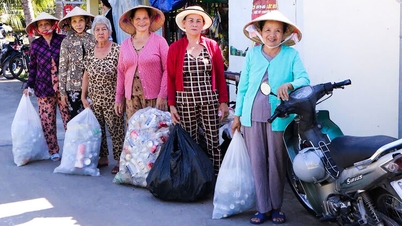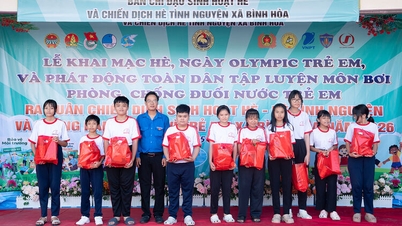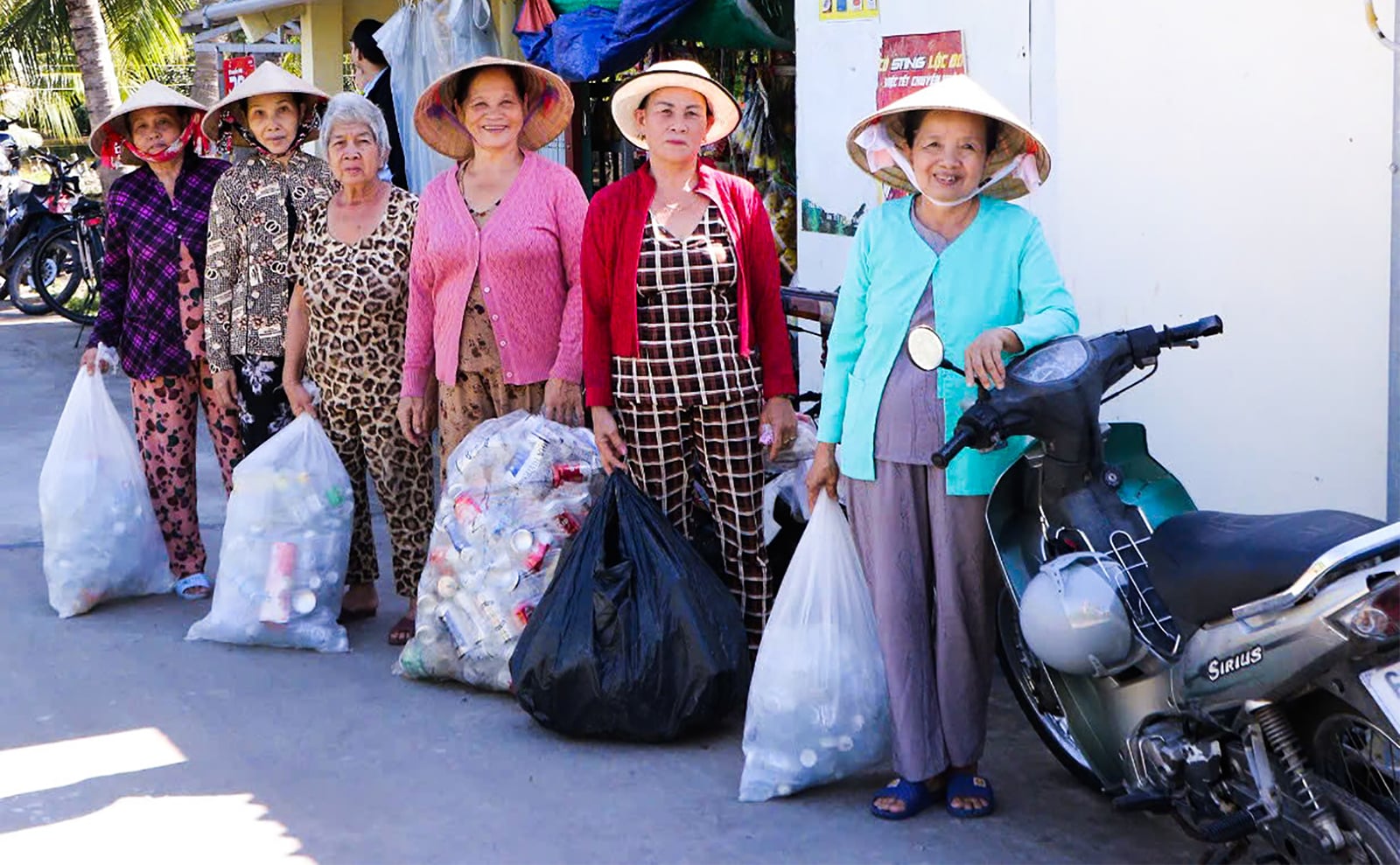
Residents of Vinh Binh commune exchange plastic waste for gifts. Photo: THUY TIEN
From early morning, at the waste exchange point in Hoa Thanh hamlet, Vinh Binh commune, many members, women, and residents brought bags containing plastic bottles, aluminum cans, and other recyclable waste that had been sorted to be weighed and exchanged for gifts. After weighing and recording the quantity, people received essential items for daily life.
According to Ms. Tran Thu Thuy, a resident of Vinh Binh commune, her family used to throw away plastic bottles and containers mixed with household waste or simply discard them after use. Since the local authorities intensified awareness campaigns about the harmful effects of plastic waste and implemented a model of exchanging recyclable waste for gifts, her family has developed the habit of collecting and sorting waste at home. “Our house is tidier, and we no longer leave trash scattered around. In return, we also receive some essential items for daily life, so everyone is happy to participate,” Ms. Thuy said.

According to the Women's Union of Vinh Binh commune, changing people's awareness and habits in environmental protection needs to be done regularly and over the long term. Therefore, along with organizing campaigns to exchange plastic waste for essential goods, the union is promoting propaganda and guiding people to sort waste at source. “We persistently encourage each family to have at least two separate bins for sorting organic and inorganic waste for convenient processing. Sorting waste at source not only contributes to reducing the amount of waste that needs to be processed and saving resources, but also creates favorable conditions for the continued reuse of recyclable materials, fostering environmentally friendly consumption habits,” said Nguyen Cam Tu, President of the Women's Union of Vinh Binh commune.
In Son Hai island commune, the model of exchanging plastic waste for gifts has also been positively received by the people. Instead of throwing away plastic bottles, soda cans, or nylon bags into the environment or burning them, people collect, sort, and bring them to the plastic waste exchange point organized by the Women's Union in coordination with local departments and organizations. The exchange process is very simple: for every few kilograms of plastic bottles, people receive gifts such as sugar, MSG, cooking oil, etc. According to Doan Thi Dieu Cam, President of the Son Hai Women's Union, in the past, plastic waste was usually thrown away or collected and burned. Since the launch of the movement, people have been collecting plastic waste, washing it, and exchanging it for gifts, contributing to maintaining environmental hygiene and building a safe and sustainable living environment.
Through activities closely related to daily life, exchanging plastic waste for essential goods has brought about a shift in people's awareness of waste sorting, collection, and recycling. More plastic bottles, aluminum cans, and other recyclable materials are collected, contributing to a reduction in waste dumped in canals, waterways, and residential areas.
Besides contributing to improving the landscape and protecting the living environment, the model of exchanging plastic waste for gifts also affirms the role of women's associations at all levels in disseminating information and mobilizing people to participate in patriotic emulation movements. This is also a foundation for localities to firmly consolidate environmental criteria and work together to successfully achieve the national goal of building new rural areas and civilized urban areas.



Source: https://baoangiang.com.vn/doi-rac-lay-nhu-yeu-pham-a490956.html