

Located in one of the most beautiful places in Central Vietnam, Bach Ma Mountain is ideally situated, resembling a white horse stretching its legs towards the vast sea. It is about 40km south of the tranquil ancient capital of Hue and about 80km north of the vibrant city of Da Nang ; situated at the southernmost part of the Northern Truong Son mountain range, extending from the Vietnam-Laos border to the East Sea, with an altitude of approximately 1,444m above sea level.


Bach Ma boasts a clean, cool climate year-round, considered one of the most pleasant climates in Indochina; even during the hot and humid days in Central Vietnam, Bach Ma remains pleasantly cool.


For the people of Hue , Bach Ma Mountain can be considered a spiritual mountain, with a legend that gives its name to a general riding a white horse that flew up the mountain; standing on Luong Dien Bridge or Ngu Binh Mountain and looking towards Bach Ma Mountain, gazing at the clouds covering the mountaintop, one can recognize the shape of a thousand-year-old warhorse waiting for its master.

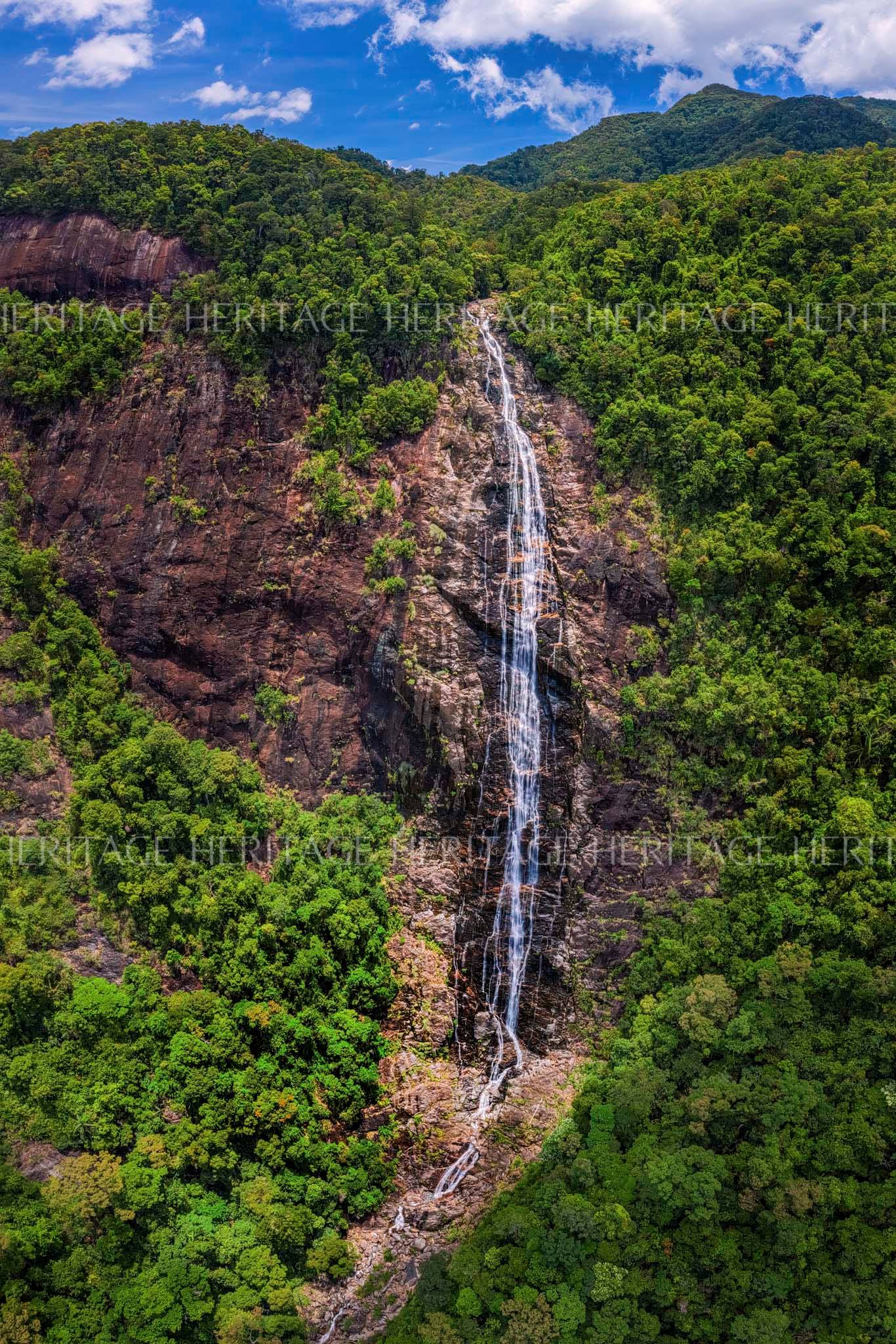
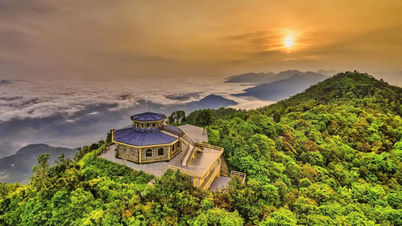
Until 1933, when the French discovered the area, chief engineer M. Girard meticulously planned the construction of Bach Ma as a high-altitude resort, including villas, public facilities, and areas dedicated to reforestation and nature conservation. On the mountaintop, the French built a viewing platform called Vong Hai Dai (Sea View Tower). From Vong Hai Dai, one could observe the entire Hai Van Pass, Tuy Van Mountain, Cau Hai Lagoon, Tu Hien Estuary, Chan May Bay, Truoi Lake with Truc Lam Bach Ma, and even the cities of Hue and Da Nang on clear days.


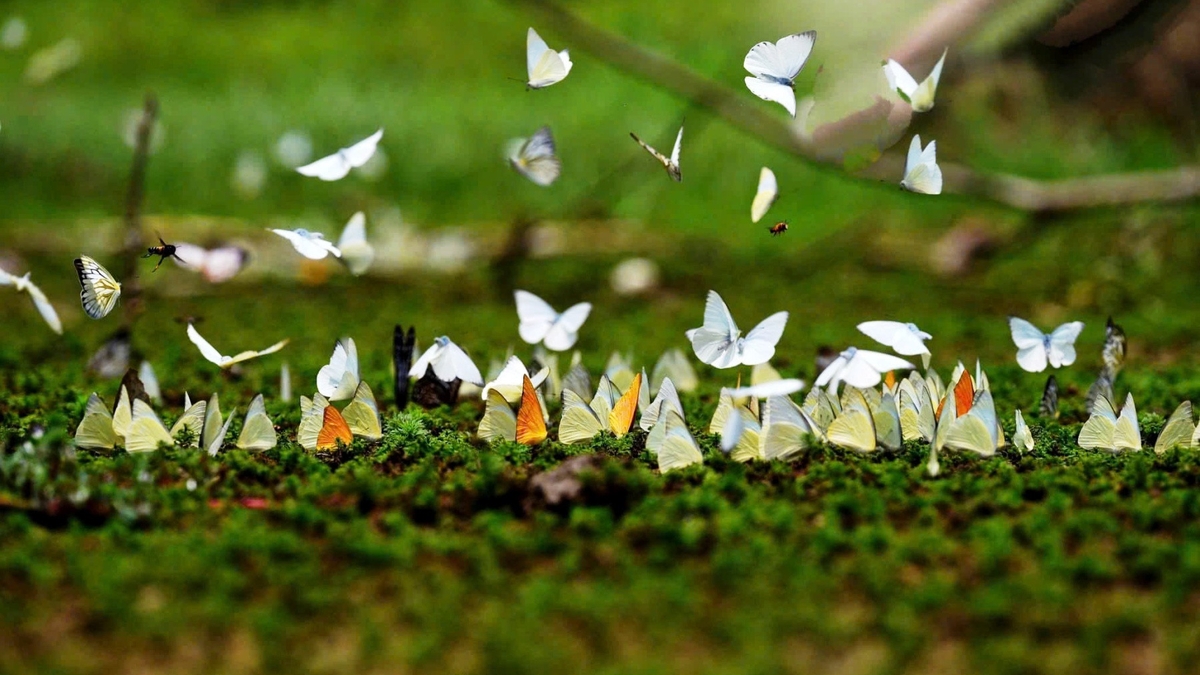
Then, war and time pushed Bach Ma into oblivion, covering the structures built on the mountaintop with moss and ruins until 1991 when the Bach Ma National Park project was restarted and continuously expanded for more than 15 years to its current scale. Today, Bach Ma has become one of the largest national parks with the most diverse ecosystems in Vietnam, with over 22,000 hectares of natural area, of which primary forest accounts for 17,000 hectares. The flora and fauna are also incredibly rich, with more than 900 animal species and about 1,400 plant species. Alongside this, some of the old villas built during the French colonial era have been restored and transformed into resorts welcoming domestic and international tourists, such as the Do Quyen, Kim Giao, and Sao La villas.
Heritage Magazine
![[Photo] General Secretary and President To Lam meets with National Assembly delegates from ethnic minorities.](https://vphoto.vietnam.vn/thumb/1200x675/vietnam/resource/IMAGE/2026/04/20/1776696701056_a1-bnd-8331-3342-jpg.webp)
![[Image] National Assembly discusses the implementation of the socio-economic development plan.](https://vphoto.vietnam.vn/thumb/1200x675/vietnam/resource/IMAGE/2026/04/20/1776696707422_ndo_br_img-20260420-185419-jpg.webp)






















![[INFOGRAPHICS] Phase 2 of the First Session of the 16th National Assembly: Considering and deciding on many important issues](https://vphoto.vietnam.vn/thumb/402x226/vietnam/resource/IMAGE/2026/04/20/1776678933182_20-4-anhquochoi2004.jpeg)























































Comment (0)