

In this context, urban areas are developed on a foundation of green spaces, unique identity, and well-being, creating momentum, increasing attractiveness and competitiveness, adapting to integration trends, capable of responding to climate change, and contributing to improving the quality of life for residents.
Formation of a new urban area on the right bank of the Red River.
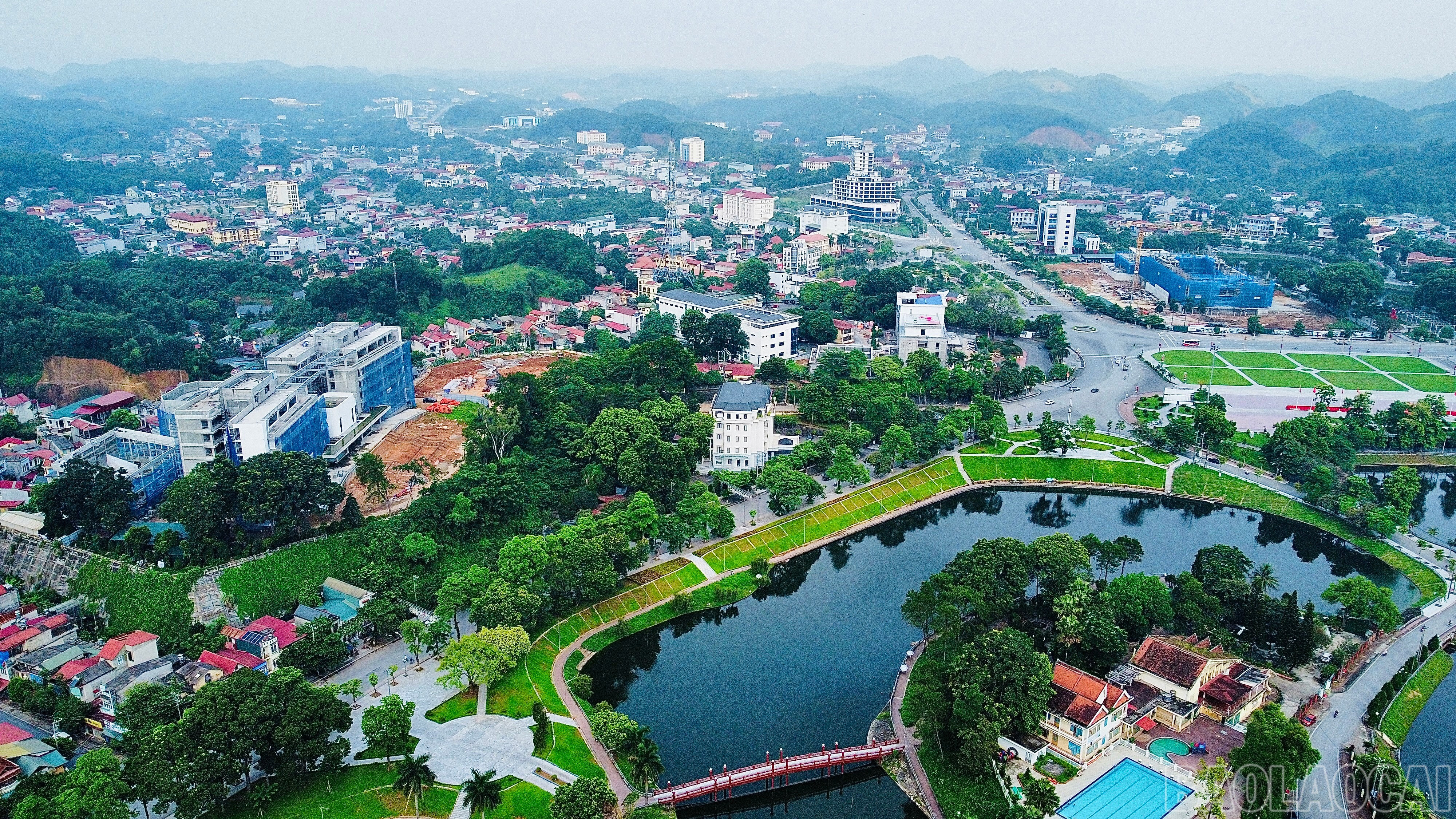
Immediately after leaving the Van Phu interchange on the Noi Bai - Lao Cai expressway and traveling on the road connecting to the center of Yen Bai city, we were amazed by a large-scale urban development project gradually taking shape. The project, called Yen Bai Riverside Urban Area, is being built on a total area of 23.85 hectares, located on Bach Lam Street, Gioi Phien Commune, Yen Bai City. With a total investment of nearly 1,000 billion VND, Yen Bai Riverside Urban Area received its construction permit from the Yen Bai City People's Committee in March 2024 and is expected to be completed in 2025. This is one of the projects demonstrating the urban shift of Yen Bai City from the left bank to the right bank of the Red River.
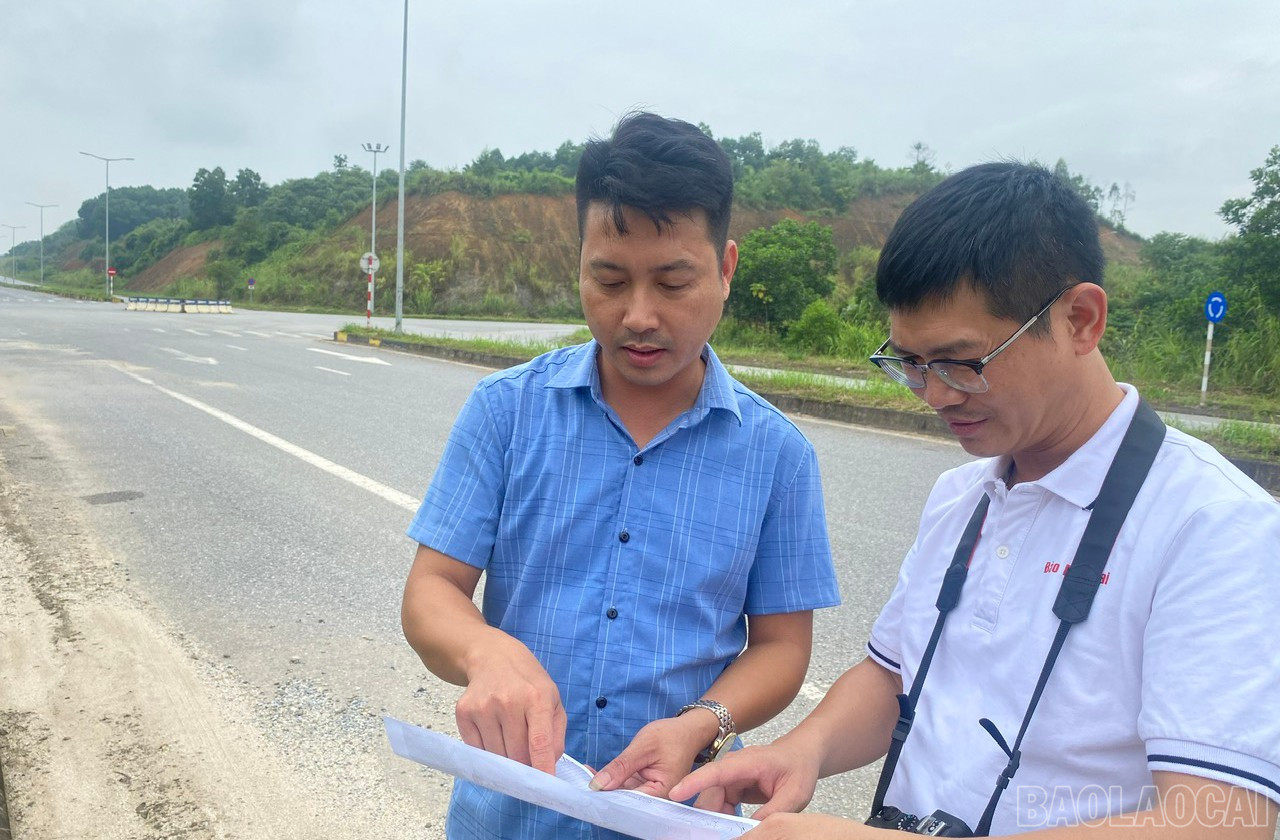
The Red River flows through Yen Bai province, stretching from Lang Thip area (Van Yen district) bordering Bao Yen district of Lao Cai province, through Van Yen, Tran Yen districts, and Yen Bai city. Due to its unique characteristics of varying elevations, frequent large floods, high flow velocity, and numerous landslide risks, urban development along the river is very difficult. However, over several decades, efforts to regulate the river have led to the formation of stable residential areas and the development of urban centers. Besides the largest city, Yen Bai, further north, one can find towns such as Co Phuc, Bao Dap, Mau A, and An Thinh. According to the plan for 2023, seven urban areas will be formed along the Red River, including one type II urban area, two type IV urban areas, and four type V urban areas.
To enhance urban connectivity along the Red River, Yen Bai has invested in constructing north-south and south-north-west roads, connecting Yen Bai's cities with each other and with cities in the region. This aims to leverage the existing and ongoing infrastructure from national transportation routes such as the Noi Bai - Lao Cai expressway, the Lao Cai - Hanoi - Hai Phong railway, and the upcoming Sa Pa airport.
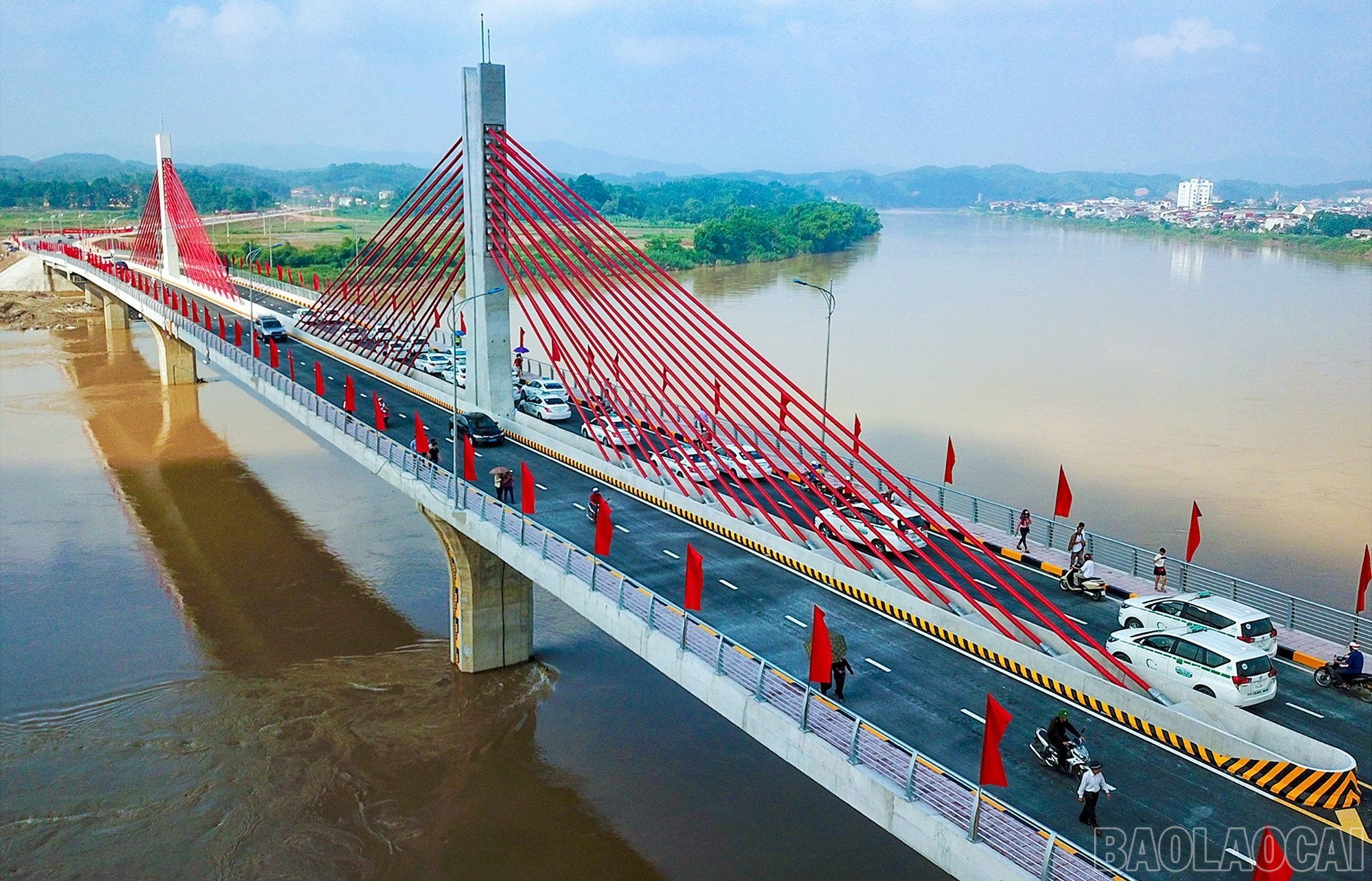
The development of transportation infrastructure has opened up opportunities for urban development, creating momentum for the formation of new urban areas, attracting residents and investors to live, produce, and do business, thereby boosting local economic growth. This policy has been emphasized by Yen Bai city over the years through key projects with a ripple effect throughout the region. Most recently, at the end of 2023, the Gioi Phien Bridge, with a total investment of 650 billion VND, spanning the Red River, was officially inaugurated. Along with existing bridges including the Yen Bai Bridge, Van Phu Bridge, Tuan Quan Bridge, and Bach Lam Bridge, this is the fifth bridge crossing the Red River in Yen Bai city, contributing to connecting the two banks and linking the planned urban area on the right bank of the Red River with the city center, creating a focal point for Yen Bai city.
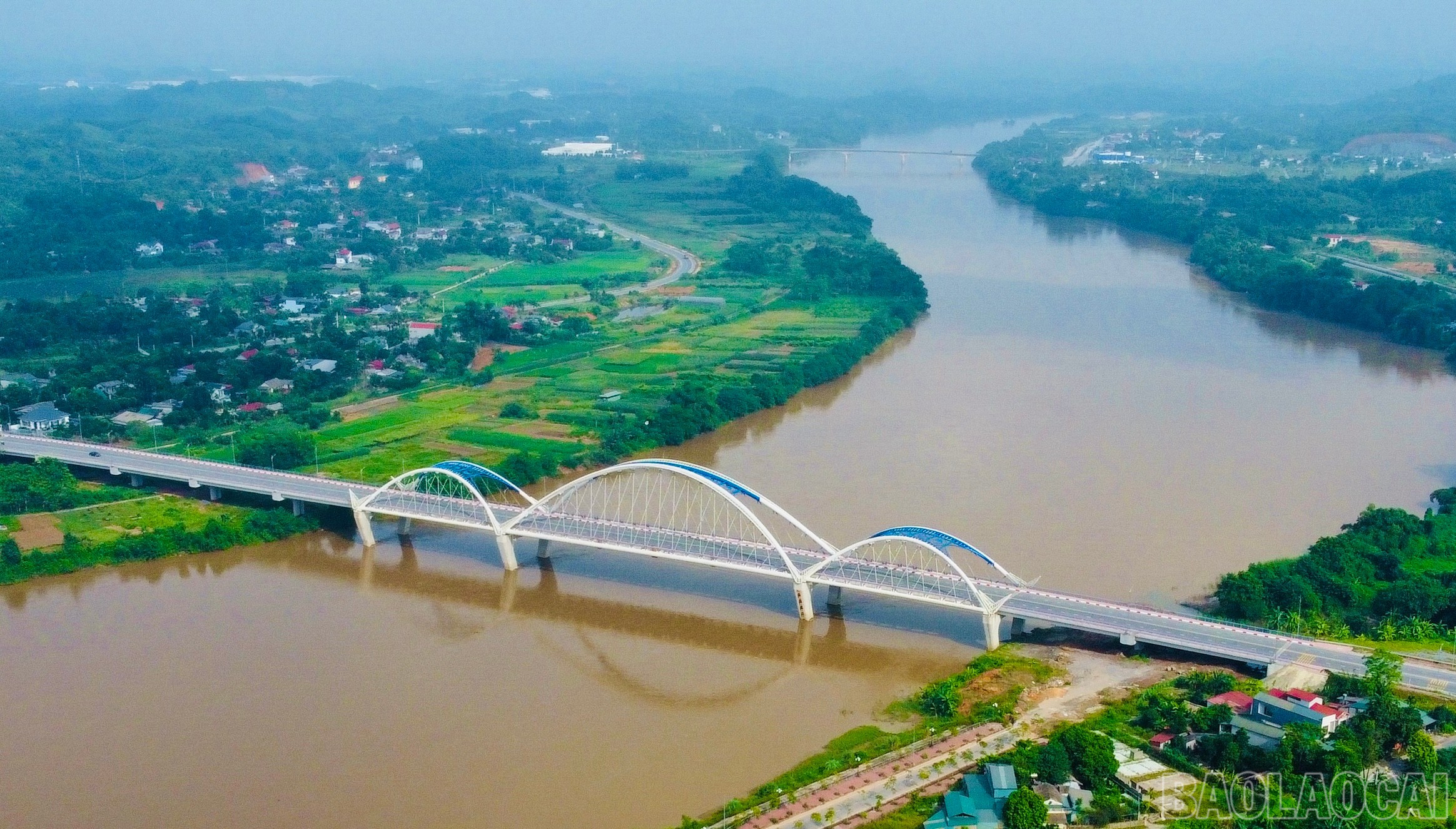
According to the Yen Bai Provincial Department of Construction, the new urban expansion plan for Yen Bai City adopts a new approach, creating development space on the right bank of the Red River. Simultaneously, to build urban areas on both sides of the river, bridges are necessary. Therefore, as the crow flies, the city has five bridges spanning just over 7km. When the plan was announced, it showed urban development along the transportation axes of the three recently constructed bridges, along with the two existing bridges, forming five urban development axes. This was met with approval and support from the public and businesses. The government's investment of 1,000 billion VND in infrastructure will attract thousands of billions of VND in private investment. Thus, "cities will sustain themselves" and cities will generate growth, while the state only invests in basic infrastructure, as Prime Minister Pham Minh Chinh often directs, "using public investment to guide and attract private investment."
Spatial orientation on both banks of the Red River
Yen Bai City, initially formed as an urban residential area along the riverbank, saw its administrative center built in the hilly region about 40 years ago, thus creating a new urban center. Today, with the construction of highways and numerous bridges across the Red River, urbanization is expected to continue in the area along the Red River.
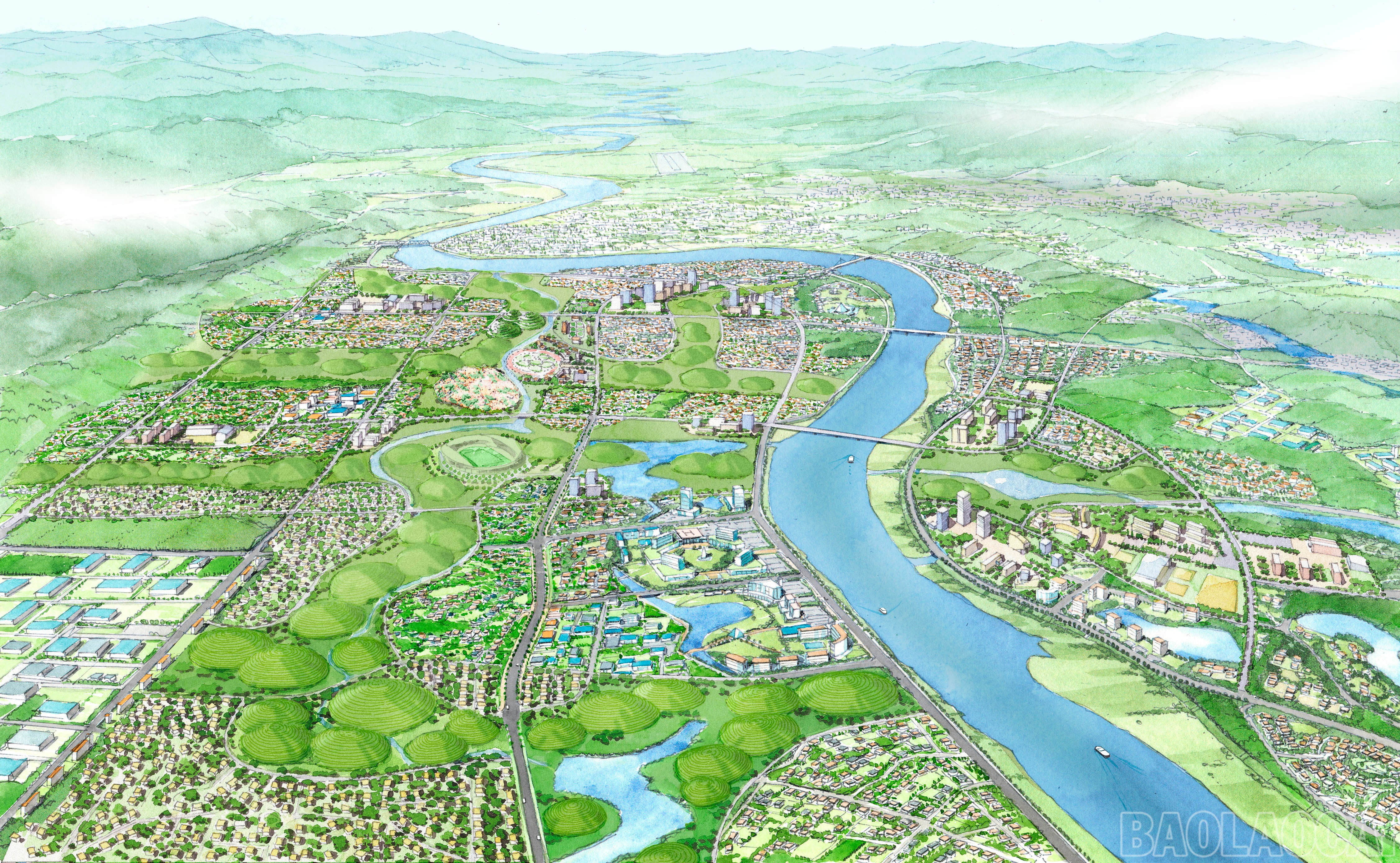
To live up to its status as the "heart" of the Northwest region, Yen Bai province has developed a rational urban development plan for the city on both banks of the Red River, mitigating flood risks and minimizing land development costs; constructing urban areas linked to the creation of green spaces and public areas along both banks of the Red River. The advantages of this plan include the creation of public green spaces along the Red River; strengthening the connection between existing and new urban areas on both sides of the Red River; developing riverside transportation infrastructure; creating a beautiful urban landscape along the Red River, improving the quality of life; and rationally exploiting and utilizing land along the Red River.
The urban spatial development orientation of Yen Bai includes 6 functional zones. Among them, the central urban zone is the development center of the planning area, encompassing existing urban areas and newly developed urban areas with the Red River axis as the dynamic development center. The industrial-service zone at the Hanoi-Lao Cai expressway interchange consists of two industrial-service zones closely linked to the IC12 and IC13 expressway interchanges and the main urban arteries, adjacent to the central urban zone. This zone promotes the development of industry, logistics services, trade, and tourism.
The industrial zone is the southeastern industrial zone of the central urban area, developing on the basis of continued investment in the construction of the industrial zone south of Yen Bai city. The Thac Ba Lake tourism and service urban zone is a zone developing diverse types of ecotourism that promote the natural beauty of Thac Ba Lake; expanding the urban area in Yen Binh town to become a commercial, service, and logistics center for the Thac Ba Lake tourist area. The Van Hoi Lake ecotourism zone is a zone developing tourism and high-tech agriculture and forestry in Van Hoi Lake and the surrounding area. The agricultural and forestry - rural zone comprises areas of agricultural and forestry production and rural settlements located around the urban and industrial zones.
Three main spatial axes form the framework for urban development, including the cultural-tourism axis: The axis from Thac Ba Lake to Van Hoi Lake, passing through the central urban area, connecting tourist areas, new urban areas, commercial and service centers, and industrial centers with the IC12 interchange. This enhances spatial connectivity and economic activities between existing urban areas and new urban areas along the Red River corridor and this axis.
Historical urban development axis: The urban axis connects the existing urban area with future new development centers and with the IC12 and IC13 interchanges. One branch from the IC13 interchange connects the existing urban centers north of the Red River in Yen Bai city and the service and tourism center in Yen Binh town. Another branch connects from the existing urban area across the Red River via Bach Lam bridge to commercial and service centers, industrial centers, and new urban areas south of the Red River.
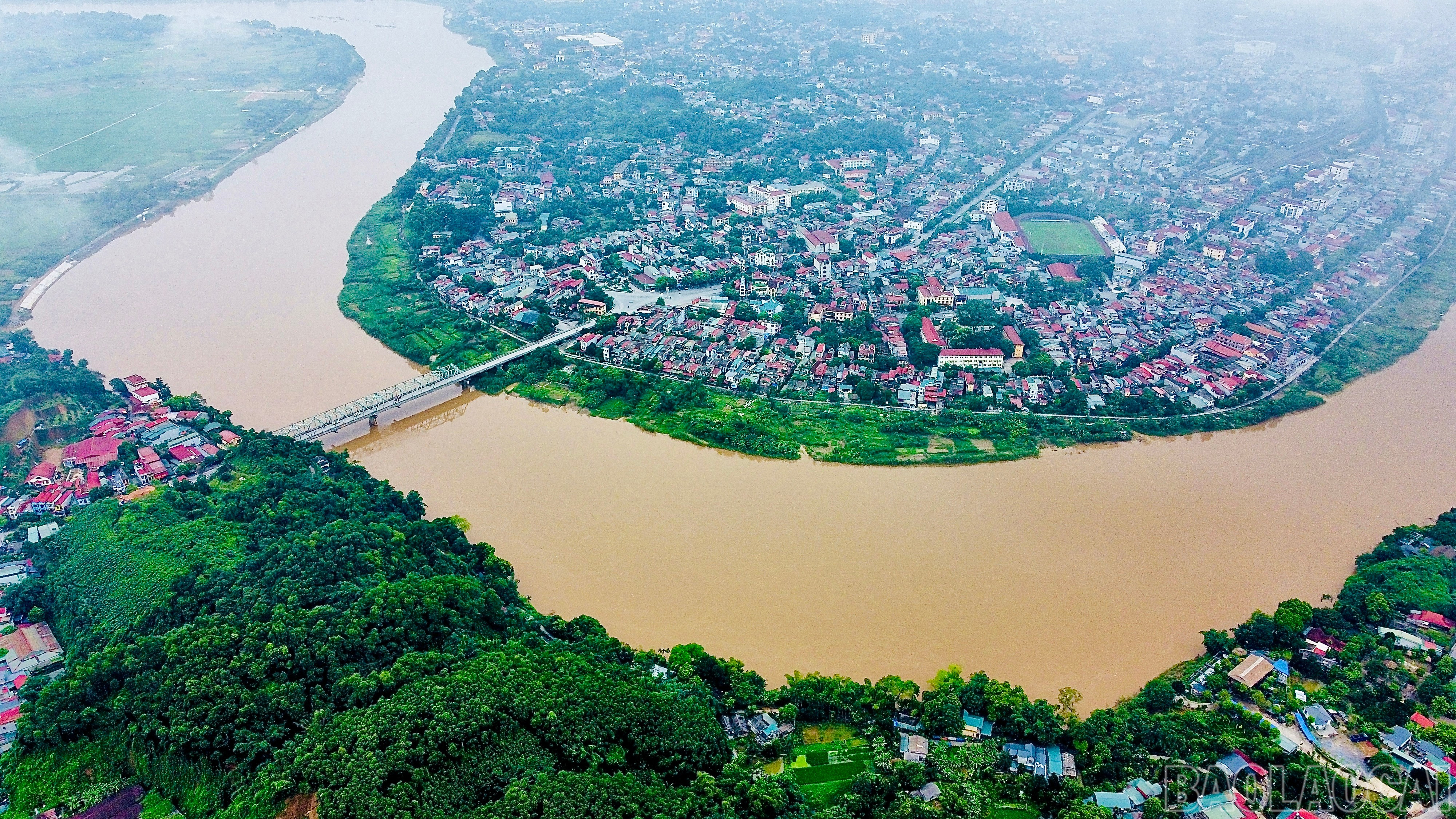
The Red River axis – a dynamic axis: Serving as the framework for the development of modern new urban areas along the Red River, it will become a symbol of the remarkable economic development and strong urbanization of Yen Bai city in the future, realizing an urban structure model oriented towards: “Rational development of the city on both banks of the Red River, limiting flood risks and minimizing land development costs; building urban areas associated with creating a system of green and public spaces along both banks of the Red River.”
Two main transportation axes have been identified: inter-regional transportation axes (expressways and national highways connecting the planned area with economic regions both domestically and internationally) and urban transportation axes (main urban transportation axes in the direction of ring roads and radial routes connecting key urban centers and industrial hubs).
Lesson 3: The Ecological Green Belt in Viet Tri
Source: https://baolaocai.vn/bai-2-xay-dung-thanh-pho-ben-song-post399207.html
![[Photo] General Secretary and President To Lam meets with National Assembly delegates from ethnic minorities.](https://vphoto.vietnam.vn/thumb/1200x675/vietnam/resource/IMAGE/2026/04/20/1776696701056_a1-bnd-8331-3342-jpg.webp)


![[Image] National Assembly discusses the implementation of the socio-economic development plan.](https://vphoto.vietnam.vn/thumb/1200x675/vietnam/resource/IMAGE/2026/04/20/1776696707422_ndo_br_img-20260420-185419-jpg.webp)























































Comment (0)