


Accurate information comes first.
Technology is developing rapidly, dramatically changing how people receive, share, and respond to information. The internet has become a crucial environment for disseminating the Party's guidelines and policies, and the State's laws and regulations. However, the downside of this speed is also very clear. Fake news, misinformation, manipulated images, distorted narratives, and public opinion manipulation can spread very quickly. Sensational, unverified content can appear on the phones of thousands or tens of thousands of people in just a few minutes. Meanwhile, explaining a policy correctly, completely, and convincingly usually requires accurate information, clear sources, and coordination among many agencies.
Information gaps are therefore very dangerous. A correct policy that is slow to be explained can be misinterpreted. A practical policy that is not adequately communicated can be misinterpreted. An ongoing case that is not promptly addressed by official sources can be exploited by malicious actors to spread misinformation, incite unrest, and disrupt public opinion.

In this context, Directive No. 57-CT/TW dated December 31, 2025, of the Party Central Committee on strengthening cybersecurity, information security, and data security within the political system is of great importance. The directive sets forth the requirement to build a safe, healthy, and disciplined cyberspace that effectively serves the cause of national development and defense in the digital age. Regarding the protection of the Party's ideological foundation, this requirement extends beyond protecting technical systems to ensuring that official information flows promptly, clearly, and persuasively.
A notable point is that Directive 57-CT/TW emphasizes the handling of junk SIM cards, fake accounts, anonymity, and the application of identity verification for social media users. This is a necessary requirement to restore order in cyberspace. When each online action is linked to a responsible entity, the digital environment will have less room for false rumors, fraud, defamation, extremism, and subversive rhetoric.
From this, it can be seen that protecting the Party's ideological foundation in the digital age is not just about refuting false information after it has spread. More importantly, it is about proactively bringing accurate information forward. Official information needs to be faster, easier to understand, closer to life, and more in line with the public's new way of receiving information.
According to Dr. Nguyen Thi Huyen Thai, Deputy Head of the Department of Basic Theory at the Nguyen Van Cu Cadre Training School, in modern media, shocking content that generates strong interaction is often prioritized by social media algorithms. The worrying aspect is that some posts disregard accuracy and social responsibility, prioritizing views and profit. Even more dangerous, malicious actors may spread information that is "10% truth and 90% distortion," blurring the lines between truth and falsehood, right and wrong, thereby sowing doubt about the policies and guidelines of the Party and the State.
In reality, information that is repeated many times and shared or commented on by many accounts can easily give the impression that it is the opinion of the majority. For those lacking verification skills, this impression can gradually turn into false belief. Therefore, in the digital space, authentic information must be present at the right time, in the right place, and in the right way.

Being ahead doesn't mean talking more, but rather talking faster, clearer, and more vividly. The same content, if presented in a long, dry text, will struggle to reach a wide audience. However, when transformed into short articles, graphics, videos , podcasts, reports, panel discussions, or interactive social media content, official information will reach the public more naturally, especially young people and frequent social media users.

In Quang Ninh , several social media pages and channels such as "I Love Quang Ninh," "Leng Keng," "Quang Ninh Newspaper and Television," and "Today's Soldier" have contributed to spreading positive information, refuting false information, guiding public opinion, and showcasing good people and good deeds. Notably, these media products are becoming more relatable, moving beyond one-sided reporting and focusing on explanation, dialogue, exemplary behavior, and fostering consensus through accurate information and appropriate presentation.
Lieutenant Colonel Bui Truong Giang, a member of the Secretariat of the Steering Committee 35, Provincial Military Party Committee, affirmed: Official information posted on platforms such as TikTok, Facebook, YouTube... is modernized, using new, creative, and relatable methods that appeal to young people while still ensuring honesty and completeness. To protect the Party's ideological foundation, the top priority remains the method of "using construction to counter," using the good to push back the bad, and using positive information to push back negative and harmful information.
Instead of simply chasing after misinformation to correct it and directly confront it, information channels should proactively provide accurate, timely, and in-depth information from the outset, "greening" the online space with positive information and preventing malicious actors from exploiting and undermining it. "Greening" doesn't mean just saying one-sidedly positive things, but rather readily sharing accurate information to help strengthen social trust. This is how we build "digital resilience" for the community against fake news and distorted narratives.
Strengthening consensus at the grassroots level
Protecting the Party's ideological foundation in the digital space cannot rely solely on a few specialized agencies. The online space is where every citizen can receive, share, comment on, and create information. Therefore, "digital resilience" must be built upon the habits, skills, and responsibilities of each individual internet user.
This requires every official, Party member, civil servant, and public employee to change their mindset. Ensuring cybersecurity is not solely the responsibility of the police force or IT personnel. Every official account, every personal device, every act of sharing documents, comments, and statements on the internet is related to information security and the reputation of the agency or organization. If we are complacent, negligent, use insecure equipment, or exchange official information through inappropriate channels, the risk of information leakage, exploitation, and distortion is very high.

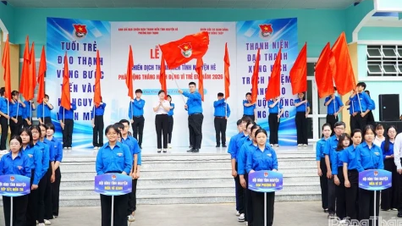
In line with the spirit of Directive 57-CT/TW, Party committees and local authorities in the province have taken concrete actions. In Viet Hung ward, the "30-day intensive campaign to implement the 'Digital Literacy Movement'" attracted widespread participation from officials, Party members, departments, organizations, and representatives of the people in each neighborhood. The ward established 25 community digital technology teams, spearheaded by the Youth Union, along with digital task forces in each neighborhood, forming a network of "Digital Ambassadors" and models such as "Digital Family," "Digital Market - Digital Culture," and "Each Citizen - A Digital Identity." Regular, hands-on guidance and awareness campaigns helped people proactively access and utilize digital technology in their daily lives, from online payments and accessing public services to using digital platforms for learning, work, and production. Most importantly, people better understood and complied with the regulations of the Cybersecurity Law in the new context.
In Hiep Hoa ward, the plan to fully implement the information security measures for the ward's People's Committee will be carried out from March 2026 with a roadmap and solutions that comply with current national technical standards. The contents regarding system management and operation procedures; information security regulations; user access control; account and password management; malware prevention; data backup and recovery will be evaluated and addressed according to regulations by the ward's People's Committee in coordination with the Cyber Security and High-Tech Crime Prevention Department (Provincial Police).

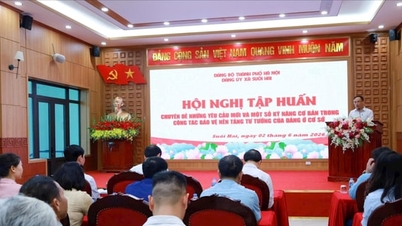
Furthermore, the Steering Committee 35 at all levels in Quang Ninh plays a pivotal role in monitoring public opinion and sentiment; proactively guiding information and combating false and hostile viewpoints. Whenever the country or locality experiences major events, hostile and reactionary forces, as well as political opportunists, often intensify their subversive activities. They exploit issues such as administrative unit restructuring, the operation of the two-tiered local government model, elections for National Assembly and People's Council representatives at all levels, and preparations for the Party Congress to misinterpret, distort, and incite skepticism and division within the national unity. The common thread in these arguments is their exploitation of emotions and lack of information. A major policy, if not fully explained to the people, is easily distorted. A new issue, if information is delayed, can be blown out of proportion and become a hot topic. Therefore, protecting the Party's ideological foundation must be closely linked to propaganda, mobilization, dialogue, and monitoring public opinion at the grassroots level.

In this task, the Vietnam Fatherland Front (VFF) and socio-political organizations also play a very important role. With its extensive network, close to the people, the Front has the ability to reach many social groups, age groups, occupations, geographical areas, religions, and ethnic groups. This is an important channel to listen to the thoughts and aspirations of the people; to explain unclear issues; and to bring official information closer to daily life. Based on the local experience of having just completed the public consultation on the establishment of Quang Ninh city, in accordance with the directives of the Provincial Party Committee and the plan of the Provincial People's Committee, Mr. Pham Van Khai, Chairman of the VFF Committee of Quang Tan commune, said: The VFF of the commune has implemented the motto "clear person, clear task, clear address," ensuring that every thought and aspiration of its members and the people is listened to and reflected promptly. This close and continuous attention has strengthened trust and social consensus at the grassroots level, creating a combined strength of the entire political system.
In this new era, protecting the ideological foundation requires a team of journalists, propaganda officials, policy experts, researchers, and influential figures who are politically sound, theoretically insightful, and practically knowledgeable, while also understanding technology and digital transformation trends to connect with the modern public. Simultaneously, and most importantly, every citizen in the digital society needs to develop the habit of calmly receiving information, avoiding hasty belief or sharing without verification or cross-checking the source. When the capacity to protect oneself against harmful information is enhanced, the people's security posture, coupled with the resolute spirit of Resolution No. 35-NQ/TW of the XII Politburo on "Strengthening the protection of the Party's ideological foundation and combating erroneous and hostile viewpoints in the new situation," will become even more robust.
Source: https://baoquangninh.vn/bai-3-lan-toa-niem-tin-บน-khong-gian-so-3409765.html























































![[Video] Sunset at Lap An Lagoon – Where the sun sets over the fishing nets](https://vphoto.vietnam.vn/thumb/1200x675/vietnam/resource/IMAGE/2026/05/31/1780192137701_beach-landscape-sea-water-nature-grass-745871-pxhere-com.jpeg)



























Comment (0)