


Lesson 2: Maximizing Advantages
Agricultural production in general, and fruit cultivation in particular, in Tien Giang province has made remarkable progress, but the reality shows that it still faces many challenges and risks.
Barriers related to quality, fragmented production and consumption linkages… have been and continue to be internal issues, becoming major challenges in fruit production today.
OUTPUT IS NOT STABLE
Agricultural consumption is a perennial topic, repeatedly discussed in many forums. Although in recent years, the consumption of agricultural products, particularly fruit, has shifted in a positive direction, and agricultural economic thinking has become more clearly defined, especially with positive signs in official exports for certain product groups, this is still insufficient compared to the advantages, potential, and especially the production volume generated by farmers.
Fruit production still faces many challenges and difficulties. |
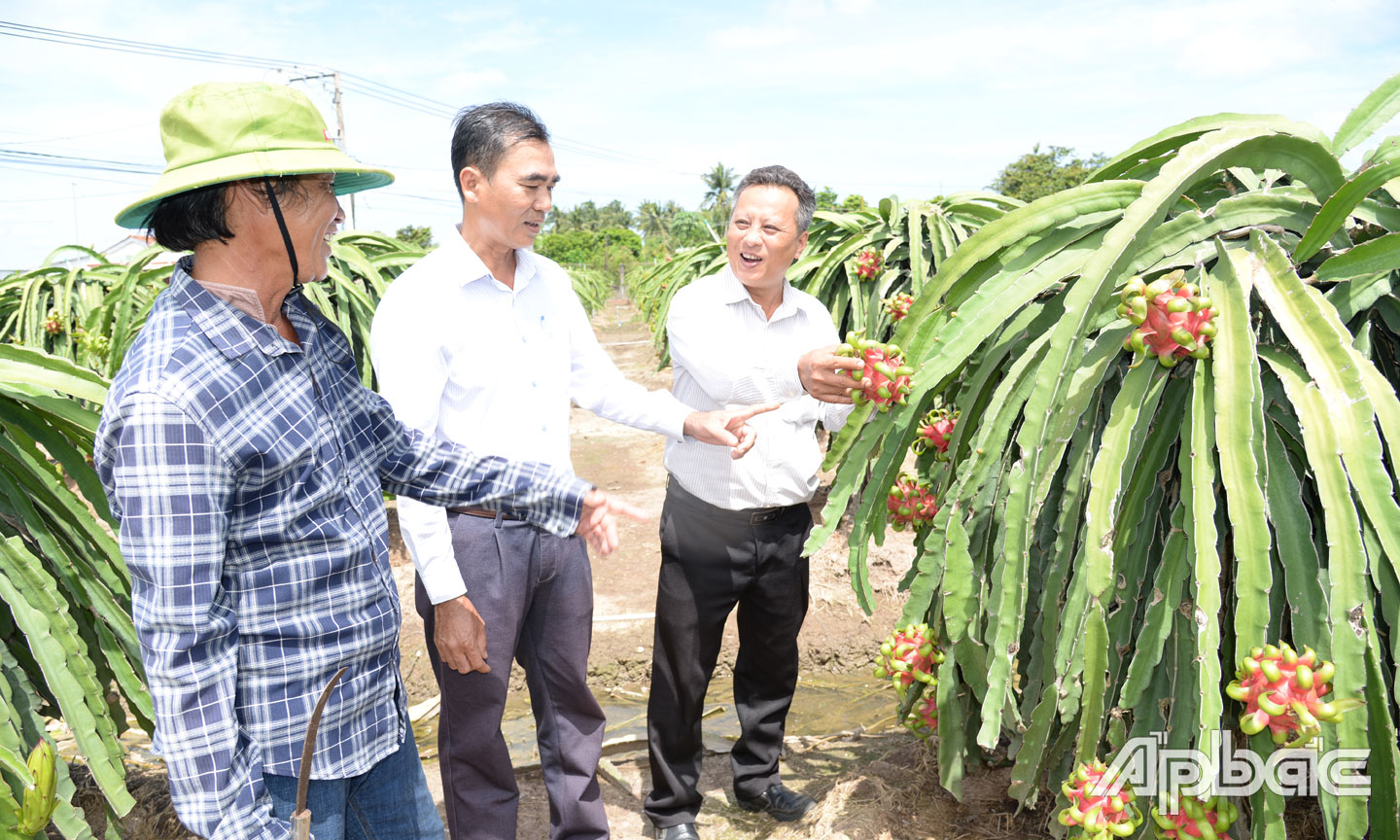
In reality, for a long time, there has been no effective solution to the problem of finding markets for agricultural products, including fruit. Farmers are constantly struggling with the dilemma of "bumper harvest, low prices" and "high prices, poor harvest." Of course, the issue of "rescuing" agricultural products is frequently mentioned as an inherent reality in some sectors.
From a production perspective, farmers seem to have learned their lesson from the old stories. Mr. Huynh Van Han's family (Quang Khuong hamlet, Quon Long commune, Cho Gao district) started growing dragon fruit more than 20 years ago. Currently, his family cultivates 7 acres of red-fleshed dragon fruit, with over 1,000 trees. Initially, Mr. Han grew dragon fruit using traditional methods.
According to the Southern Institute of Water Resources Science , the Mekong Delta is the fruit basket of the whole country. The entire delta region currently has about 400,000 hectares of fruit trees, accounting for nearly 40% of the total fruit tree area in the country. In recent years, fruit production in the Mekong Delta has faced major challenges due to the impact of climate change. According to research conducted by the Southern Institute of Water Resources Science, the 2019-2020 dry season caused hundreds of hectares of valuable fruit trees such as durian and rambutan to die due to drought, salinity, and lack of freshwater for irrigation. Thousands of hectares of other fruit trees throughout the delta have also been severely affected, resulting in reduced yields and quality. In the future, given the impact of global climate change and the increasingly extreme and erratic weather patterns, the Mekong Delta is facing enormous challenges regarding water security. According to Master's degree holder Tran Minh Tuan from the Southern Institute of Water Resources Science, flood flow is fluctuating with a downward trend compared to the past. Prior to 2011, a moderate to large flood occurred approximately every 4-5 years. However, since 2012, minor floods have occurred continuously. In the distant future (30-50 years), the number of years with major floods will be negligible, while the number of years with minor floods and no floods will increase sharply. It is predicted that by 2030, the 4 g/l salinity boundary will increase by an average of 3.34 km compared to the present. |
However, to meet the increasingly high demands of the market, he, like many households in the surrounding area, has gradually switched to producing according to VietGAP standards. According to Mr. Han, dragon fruit prices have stabilized for about 15 years now and provide a higher income than growing rice.
Mr. Han said that dragon fruit has brought a significant economic benefit to the people of Quơn Long commune in particular and Chợ Gạo district in general. However, there are times when dragon fruit harvests well but prices fall, and other years when harvests are bountiful and prices are high.
Therefore, there are years when dragon fruit growers face great difficulties, such as 2021. Dragon fruit farmers are very worried about the prices of agricultural supplies and labor, which are currently very high. People always hope for a stable market for dragon fruit; because when dragon fruit is in season, the price will be low.
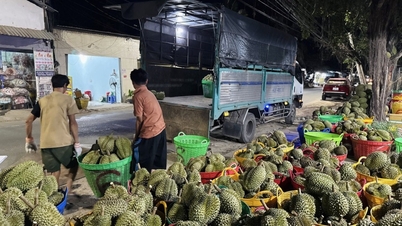
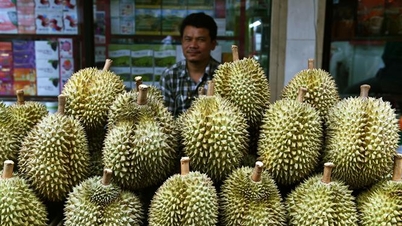
For durian growers, since the Protocol on the official export of durian to the Chinese market came into effect on July 11, 2022, the price of this fruit in the province has remained relatively high, helping farmers reap large profits. Therefore, this has led to a surge in durian cultivation. Durian, but shared joy can sometimes be accompanied by shared sorrow.
This has been clearly demonstrated in recent months. Towards the end of 2024 and the beginning of 2025, durian prices in the province unexpectedly plummeted, almost hitting rock bottom. This was due to China tightening inspections for cadmium and yellow dye, making durian exports difficult.
This shows that even a slight change in technical barriers to fruit exports from China has severely impacted Vietnam's durian industry. This is a particularly important point to consider, as a large portion of Vietnam's fruit and agricultural products depend on the Chinese market.
Mr. Luong Van Han, Director of Phu Quy Agricultural Cooperative (Phu Quy commune, Cai Lay town), said that before the Lunar New Year 2025, traders were buying Thai durian at only 30,000 - 35,000 VND/kg, and not buying Ri6 durian at all. At that price, durian growers were breaking even or even losing money. This year, the off-season durian crop failed, and the low prices made things very difficult for farmers.
MANY OTHER BARRIERS
The issue of selling price isn't the only factor for the fruit industry in particular, and agricultural products in general. According to Dr. Vo Huu Thoai, Director of the Southern Fruit Research Institute, alongside the advantages, fruit production also faces many difficulties.
|
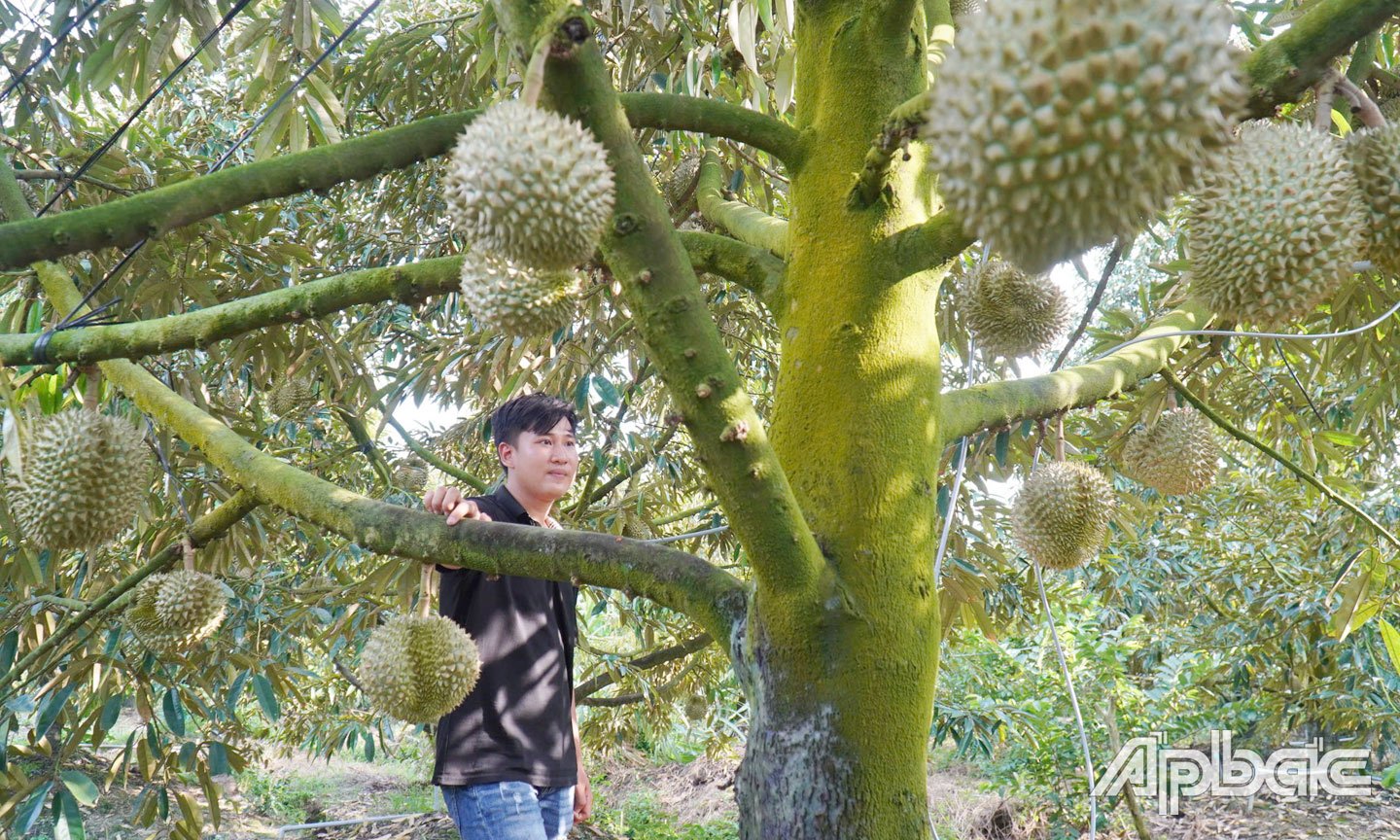
Specifically, the production organization has not fully met the requirements. The technical skills and knowledge of fruit tree growers are limited and uneven across regions. Seed management and seedling production are inadequate, leading to the widespread sale of poor-quality or disease-ridden seedlings without proper control.
Furthermore, farmers overuse fertilizers and pesticides during cultivation. On the other hand, the infrastructure in concentrated fruit-growing areas has not received sufficient investment and has not kept pace with the rapid development of production. Businesses lack their own raw material sources, and production linkages remain largely superficial.
According to Dr. Vo Huu Thoai, the current product distribution and consumption system is unprofessional, lacking the participation of large enterprises in production and export. Fruit consumption still involves many intermediaries, mainly traders.
According to Luu Van Phi, Director of the Department of Industry and Trade of Tien Giang province, the province has the largest area of fruit trees in the country, with many unique and national specialty fruits. Currently, the limitations in fruit production in the province lie in quality control. Our fresh fruit exports are mainly to the Chinese market. We are facing quality issues such as production processes and the presence of banned substances. This is an issue that government agencies, farmers, and businesses must consider in the long term, not just for short-term gains. |
One of the key factors is that there are very few businesses operating in the fruit sector, and they lack strong connections with the raw material sources; there are also no strong brands. Simultaneously, prices are unstable, and supply exceeds demand.
Post-harvest losses remain high; investment in post-harvest preservation and processing technologies is slow to improve. Processed products, primarily for export, lack diversity, especially in deeply processed products. Market information systems are limited and heavily reliant on the Chinese market (accounting for over 70% of export value).
Furthermore, the volatility and competition in the export market are increasing (high logistics, processing, and production costs). Competition among exporting countries is becoming increasingly fierce, negatively impacting fruit exports from the Mekong Delta.
Consumer demands and importing countries' regulations regarding quality, quarantine requirements, pesticide residues, heavy metals (cadmium, arsenic, etc.) are increasingly stringent. China, a key export market for Vietnamese fruit, is becoming even more demanding with its regulations and technical barriers.
Many demanding fruit importing markets around the world have erected non-tariff barriers and set stringent standards, making it difficult for a large quantity of fruit to meet requirements and negatively impacting export volume and value.
Given the current reality, achieving efficient and sustainable agricultural production remains a long-term endeavor requiring significant innovation in many areas. Of course, changing the mindset regarding agricultural production is essential.
A. THU - T. AN
(to be continued)
Source: https://baoapbac.vn/kinh-te/202504/huong-di-nao-cho-nganh-hang-ty-do-bai-3-nhieu-thach-thuc-lam-rui-ro-1038580/

![[Photo] Head of the Central Propaganda and Mass Mobilization Department visits and congratulates the Ministry of Health and the Military Traditional Medicine Institute.](https://vphoto.vietnam.vn/thumb/1200x675/vietnam/resource/IMAGE/2026/02/24/1771938483290_img-2682-3562-jpg.webp)
![[Photo] White pear blossoms bloom across the border of Pho Bang](https://vphoto.vietnam.vn/thumb/1200x675/vietnam/resource/IMAGE/2026/02/24/1771927665653_a8-8280-jpg.webp)
![[Image] A dreamy "livable city" under pink clouds](https://vphoto.vietnam.vn/thumb/1200x675/vietnam/resource/IMAGE/2026/02/24/1771930060937_tp4-jpg.webp)






























































Comment (0)