


According to some leaders of public administrative service centers in communes and wards, currently, some specialized fields are still hesitant to decentralize, and there is still a fear of risk, leading to a shallow and uneven scope of decentralization.
Furthermore, some specialized legal regulations overlap and lack uniformity, making it difficult to clearly define the boundaries of authority between different levels of government. In particular, in some localities, "paperwork brokers" still operate, causing inconvenience to citizens and affecting the image of a transparent and open public administration.
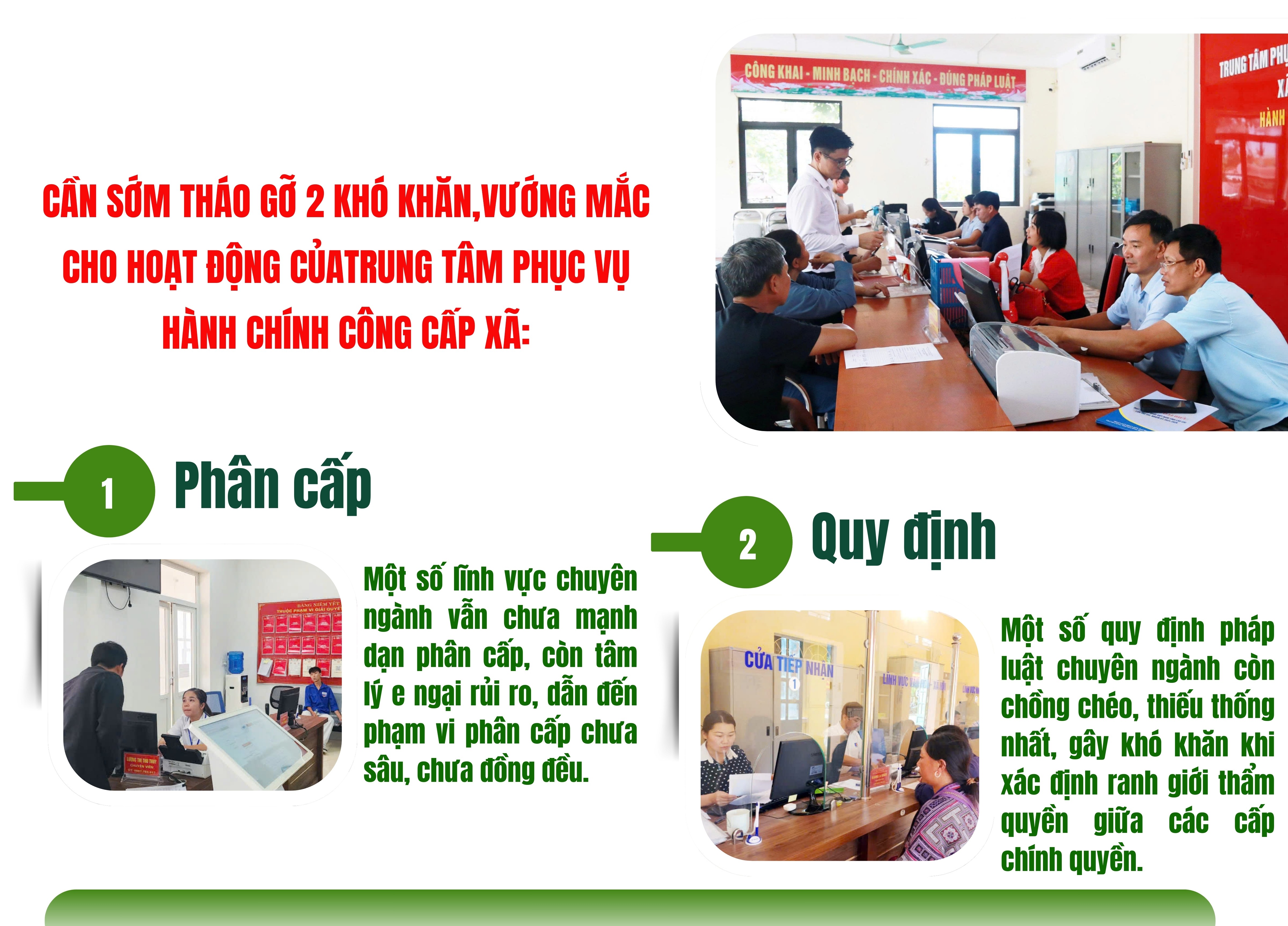
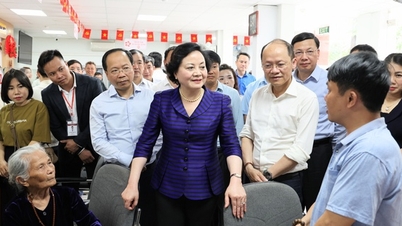
Gia Phu commune has a large population, resulting in a high volume of administrative procedures. After decentralization, the commune proactively reviewed the decentralized administrative procedures system, including those related to notarization, land, and civil registration.
In addition, it is necessary to promote the digitization of records and connect data with regional land registration offices and regional tax offices to facilitate the timely receipt and processing of administrative procedures.
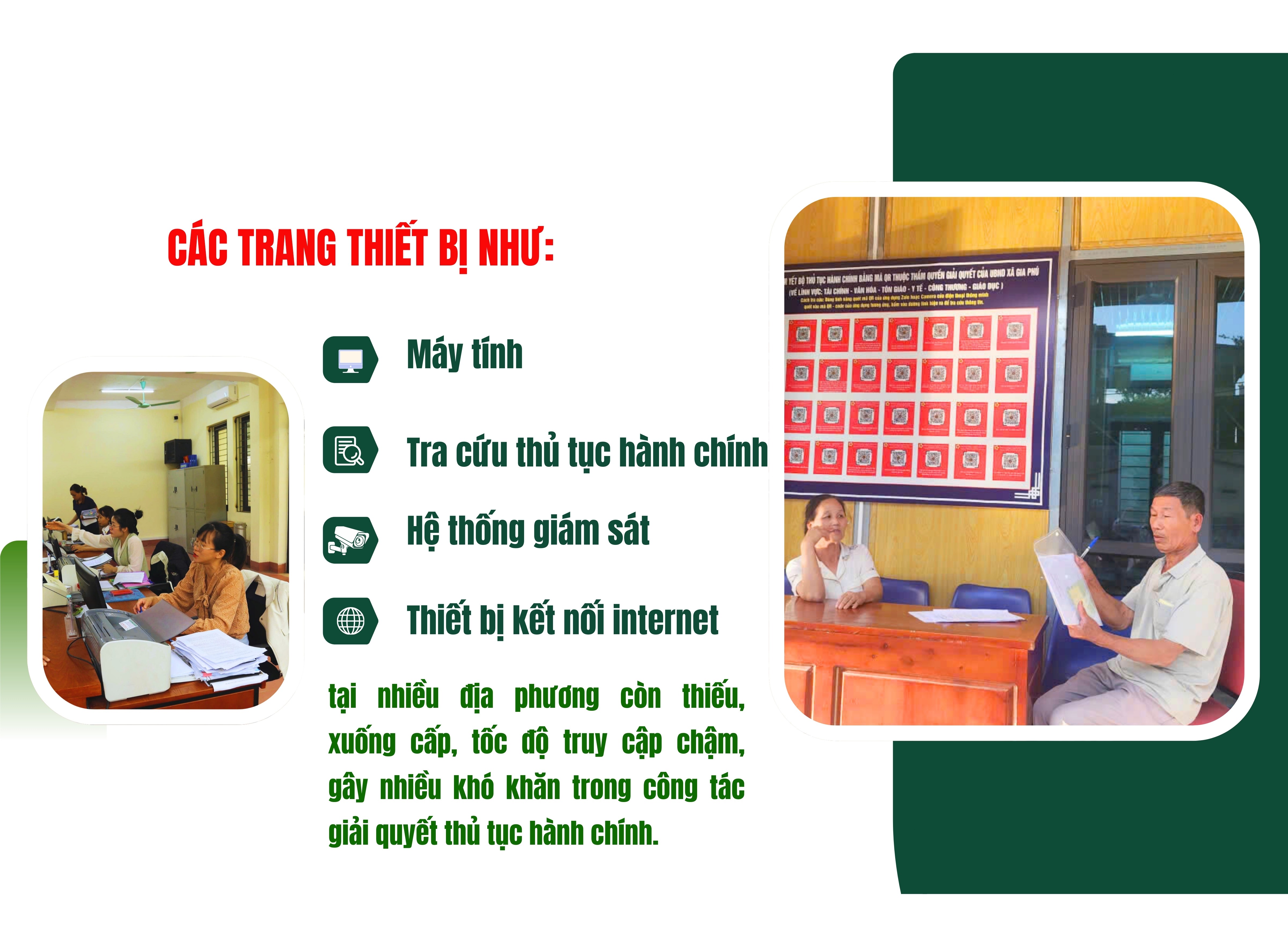
However, according to representatives from the Gia Phu Commune Public Administrative Service Center, the implementation of administrative procedures still faces many difficulties, such as inadequate technical infrastructure. Specifically, there is a lack of automatic queue number machines; the Center's 10 computers are outdated (equipped since 2019), resulting in inconsistent connectivity with specialized software and slow processing speeds…
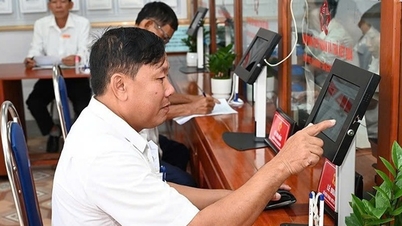
According to Mr. Tran Tri Dung, Deputy Director of the Provincial Public Administrative Service Center, the difficulties faced in Gia Phu commune are also common difficulties in many communes and wards throughout the province. The machinery and equipment at the commune-level public administrative service centers are basically reused from districts and communes before the merger, so they are outdated, degraded, and have slow access and processing speeds; some localities even lack important equipment such as A3 scanners, automatic queue number dispensers, and administrative procedure lookup machines…
Furthermore, the digitization of land, population, and planning databases is incomplete, while the software systems of the public administration service center and other sectors such as taxation, social insurance, and the police are not synchronized. This leads to difficulties in data exploitation and sharing, causing bottlenecks in the processing of interconnected administrative documents and procedures, and affecting the service provided to the people.
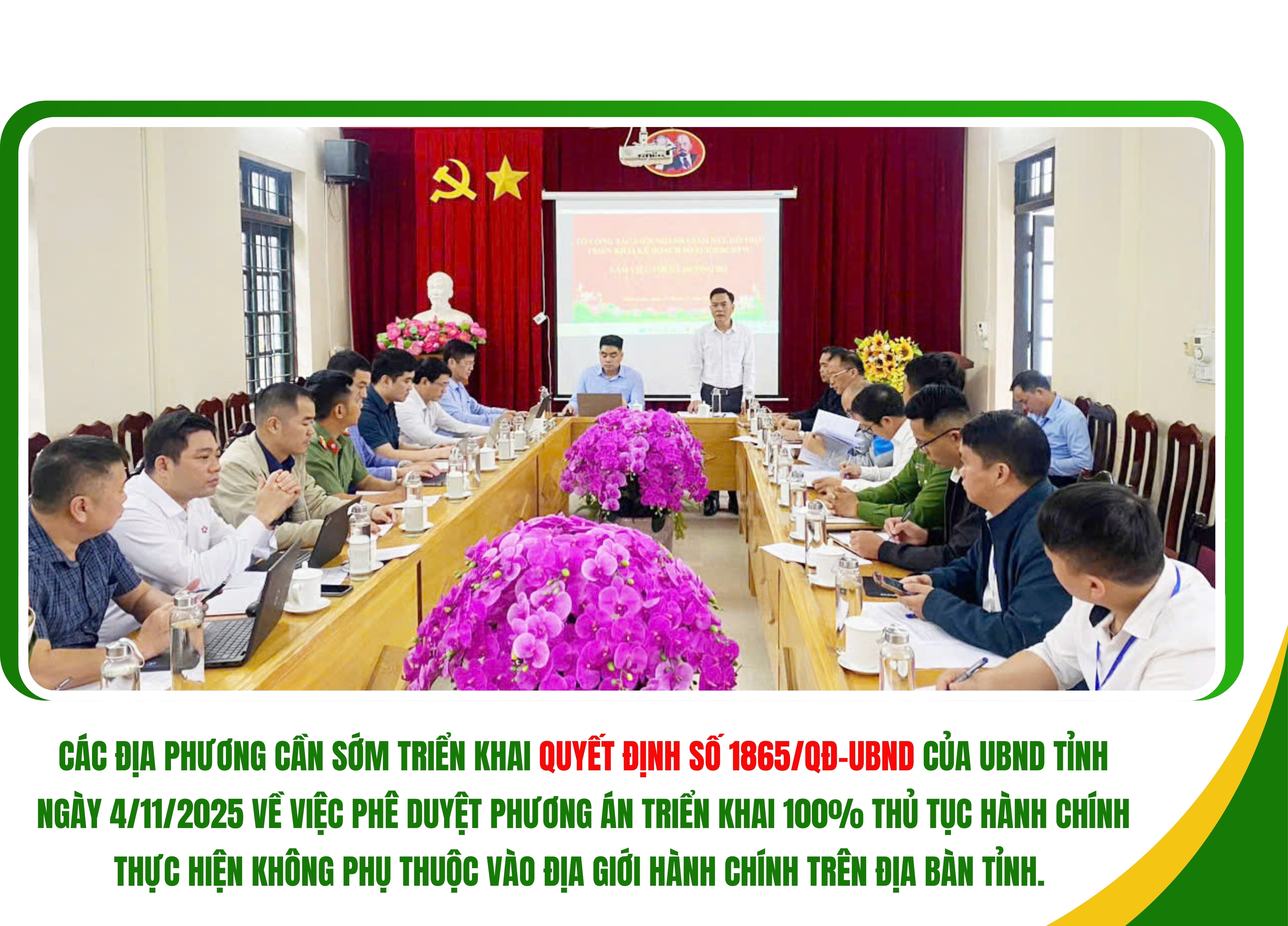
Specifically, on November 4th, the People's Committee of Lao Cai province issued Decision No. 1865/QD-UBND approving the plan to implement 100% of administrative procedures regardless of administrative boundaries within the province. According to this plan, all 2,199 administrative procedures under the jurisdiction of the provincial and commune levels will be implemented under a "non-geographical boundary" model, with 1,875 procedures at the provincial level and 324 procedures at the commune level.
Regarding the implementation timeline, Phase 1 (until November 30, 2025): Completing the technical infrastructure, upgrading the information system for handling administrative procedures, configuring electronic processes for all 2,199 procedures; strengthening communication and guidance for citizens and businesses. Phase 2 (from December 1, 2025): Officially implementing the acceptance, processing, and delivery of results for 100% of administrative procedures regardless of administrative boundaries throughout the province...
"With very heavy tasks and workload requiring the active involvement of all levels of government in handling difficulties and obstacles, it also requires high consensus from the people and businesses in the implementation process," Mr. Dung added.
Besides the plan to implement 100% of administrative procedures regardless of administrative boundaries within the province, the Provincial People's Committee aims to complete the process of providing 100% of administrative procedures online by the end of 2025. Achieving this goal requires concerted efforts from all levels and sectors to implement solutions to overcome difficulties and obstacles in administrative procedure reform, the organizational structure of public administrative service centers, and information technology infrastructure, while simultaneously promoting digital transformation.
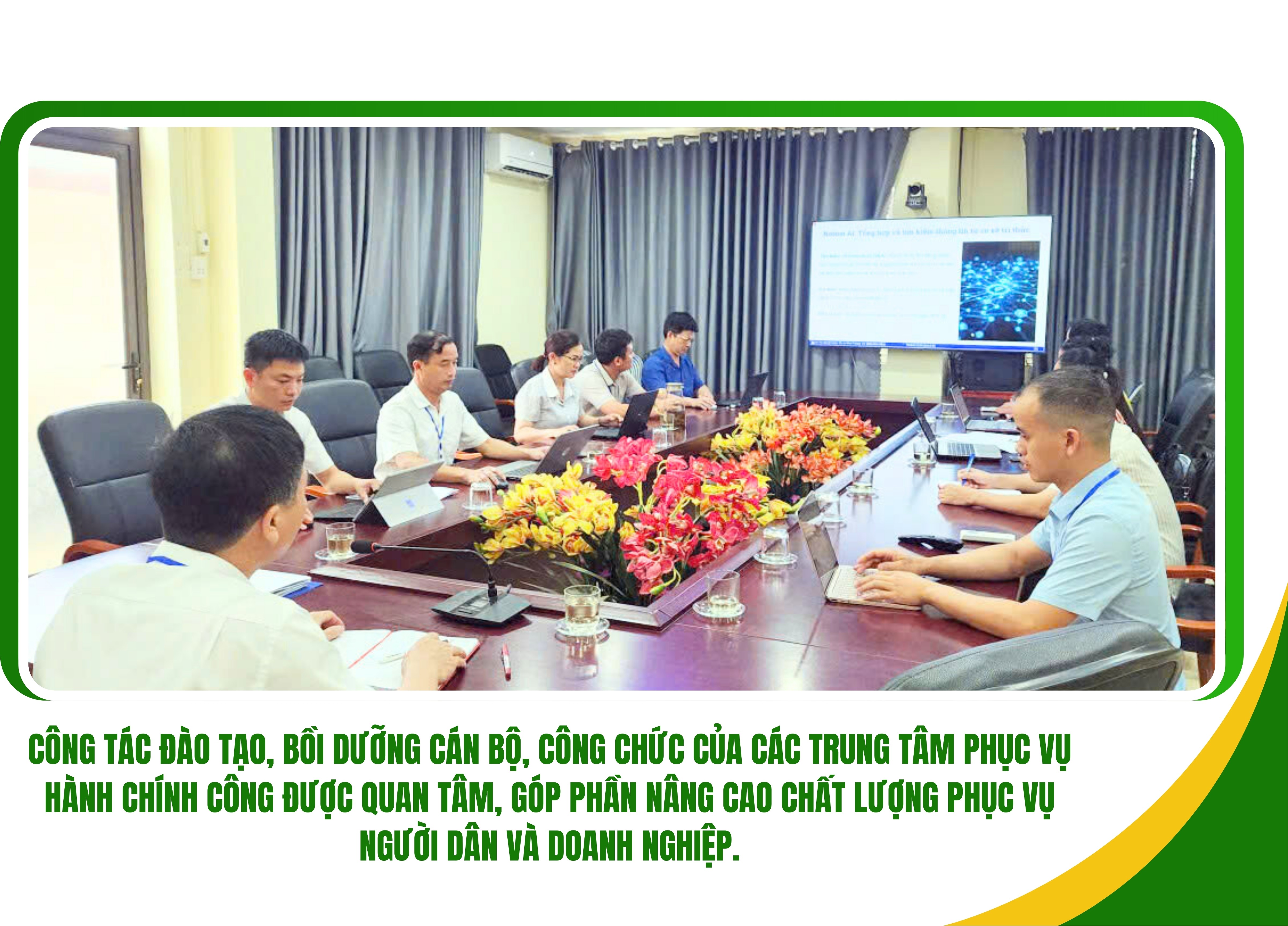
Reportedly, to address the shortcomings and bottlenecks, the Provincial People's Committee and the Department of Internal Affairs have deployed working groups to communes to survey, inspect, and assess the situation, thereby proposing solutions such as continuing to reorganize the staff of civil servants at public administrative service centers to ensure suitability, and strengthening the number of information technology civil servants in communes and wards.
In addition, the province will continue to promote the development of shared databases and improve the interconnectedness between agencies. In particular, the Provincial Public Administrative Service Center recently developed and submitted to the Provincial People's Committee a plan for leasing information technology services for public administrative service centers, including leasing machinery, equipment, and IT infrastructure to serve the reception and processing of administrative procedures for citizens and businesses at the Provincial Public Administrative Service Center and the public administrative service centers of communes and wards in the province, for the period 2026-2030. If implemented, this will be a strong impetus to help public administrative service centers overcome current difficulties.
Based on initial results, it can be affirmed that promoting the decentralization of administrative procedures after implementing a two-tiered local government system in Lao Cai is a correct and practical policy. Citizens and businesses are better served, procedures are streamlined, and time and costs are significantly reduced. Although there are still difficulties to overcome, with scientific and specific approaches and solutions, the service-oriented administration in Lao Cai will be clearly defined and bring long-term benefits to the province's socio -economic development.
Presented by: Huu Huynh
Source: https://baolaocai.vn/bai-cuoi-nhung-nut-that-can-thao-go-post888101.html





![[Image] Current situation of houses precariously balanced due to road leveling in Dong Nai.](https://vphoto.vietnam.vn/thumb/1200x675/vietnam/resource/IMAGE/2026/03/02/1772455749144_ndo_br_z7579763955585-6e80a60471e75768fa835d035eba45ea-6979-jpg.webp)






















































































Comment (0)