Long-term development strategy
Top universities in the US have long been destinations for global talent due to their liberal research environments and abundant resources. However, Washington's tightening security controls and lengthy visa processing times for foreign graduate students, especially in sensitive technology fields, are causing many scientists to consider seeking safer and more neutral work environments.
Meanwhile, Beijing (China) is implementing a repatriation and internationalization strategy. Leading universities in mainland China are being developed into independent research super-centers, possessing next-generation technological infrastructure. China is also implementing high-compensation programs to attract Chinese-born professors and scientists to return, while expanding regional cooperation scholarships to welcome students from developing economies , gradually building a new academic network separate from Western technological standards.
The tightening of US controls and competitive pressure from China are creating opportunities for neutral countries with open immigration policies and mindsets.
In Asia, Singapore has emerged as a top destination thanks to its balanced diplomatic strategy and strong talent ecosystem. According to global talent competition reports, Singapore consistently leads in the group of highly adaptable general skills. Its workforce is highly regarded for its digital competence, innovative thinking, and lifelong learning spirit.
Observers believe that, given its limited population and workforce, proactively adopting and mastering new technologies like AI offers Singapore more opportunities for growth than the risk of being replaced.

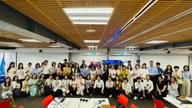

To accommodate the influx of talent, Singapore has implemented the Tech Pass visa, a privileged program specifically for top global technology experts and leaders. This policy allows international talent to establish businesses, sponsor personnel, and conduct research without being constrained by strict domestic regulations.
Competitive advantage
Besides representatives from Southeast Asia, countries from the Commonwealth and the Middle East, such as Australia and the United Arab Emirates (UAE), are also accelerating in the race to reshape the intellectual landscape.
Australia is anticipating a wave of top technology researchers leaving major centers in the US and China. Through its Global Talent program, Canberra is implementing a process that allows applicants to obtain permanent residency directly within weeks for PhDs and outstanding experts in future industries such as semiconductors, cryptography, and clean energy.
Clear immigration policies, a high-quality living environment, and a reputable university system help Australia attract and retain top talent, serving its goal of technological infrastructure self-reliance.
Meanwhile, in the Middle East, the UAE is fully leveraging its financial resources to restructure its economy, aiming to become a global hub for new technologies. The UAE established the Advanced Technology Research Council, invested heavily in research institutes in Abu Dhabi, and positioned itself as an open testing ground for major technology models.
At the heart of the UAE's talent attraction policy is the 10-year Golden Visa program, granted directly to outstanding science and technology talents, along with full ownership of the business without the need for a local partner.



In particular, the UAE possesses a unique competitive advantage based on its distinctive economic foundation: a policy of not levying personal income tax on employees, whether they are citizens or foreigners. Specifically, in 2024 and 2025, Dubai and Abu Dhabi are expected to see a migration of over 12,000 millionaires and thousands of AI engineers from Europe, India, and Silicon Valley.
In technology zones like One-North and Biopolis, Singapore creates academic green areas where scientists from around the world can collaborate and exchange knowledge. According to Singapore's Ministry of Manpower, by early 2026, Singapore will have approximately 1.52 million foreign workers, accounting for nearly 30% of its total population.
Source: https://www.sggp.org.vn/ban-do-moi-cua-dong-chay-chat-xam-post858532.html


![[Photo] General Secretary and President To Lam receives Palestinian Ambassador Saadi Salama](https://vphoto.vietnam.vn/thumb/1200x675/vietnam/resource/IMAGE/2026/06/25/1782365384740_a1-bnd-9423-8322-jpg.webp)

![[Image] Schools organize meetings and introduce teaching models to students admitted to grade 10.](https://vphoto.vietnam.vn/thumb/1200x675/vietnam/resource/IMAGE/2026/06/25/1782368077271_ndo_br_z7970052192242-1ec8daeb77a6eed1a4e9f58c564ddd3e-jpg.webp)
![[Image] Ho Chi Minh City: Ma Lang area, Chicken-Rice Market about to change its appearance](https://vphoto.vietnam.vn/thumb/1200x675/vietnam/resource/IMAGE/2026/06/25/1782377698627_ndo_br_m1-jpg.webp)