"The pearl on the banks of the Danube," "Little Paris of Central Europe"... these are the flattering terms tourists often hear or read before their journeys to Budapest - the capital of Hungary, a small country located in East-Central Europe.
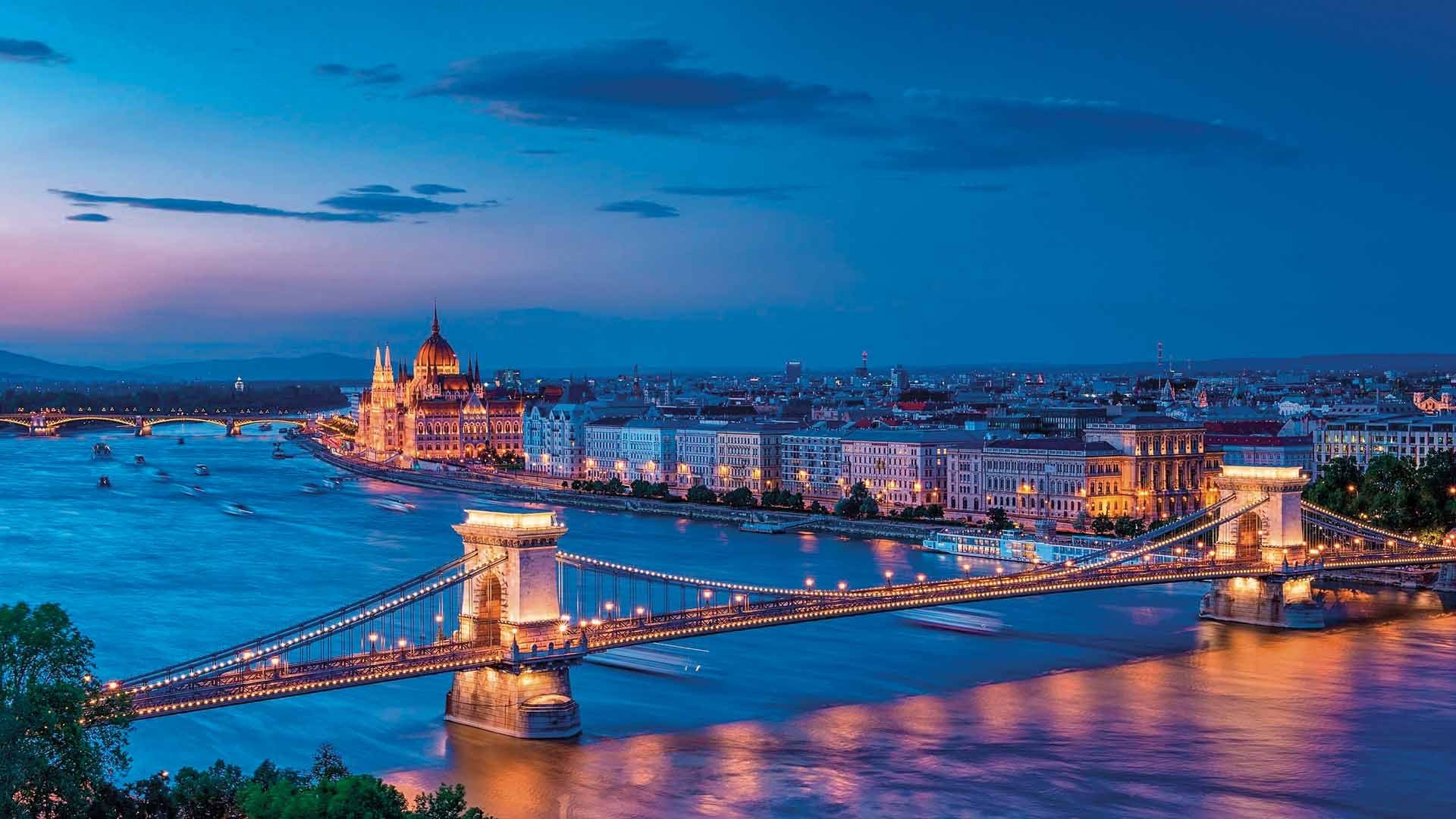 |
| The beauty of a riverside city. (Source: planetofhotels.com) |
In 2023 alone, this city, which just celebrated its 150th anniversary, consistently garnered prestigious accolades from renowned travel magazines worldwide . Budapest has become a highly regarded "sustainable" destination, appreciated by both tourists and experts. In March 2023, Time magazine included Budapest in its list of "World's Greatest Places 2023".
What makes Budapest so attractive to tourists, even though the city lacks skyscrapers and luxurious shopping malls? The answer lies in its rich history, culture, and art, reflected in its famous heritage sites, many of which are listed as World Heritage Sites by the United Nations Educational , Scientific and Cultural Organization (UNESCO).
"The river flows back, the river laughs with a clear, resounding sound..."
Few people visiting Central Europe have failed to hear the timeless Blue Danube by Johann Strauss Jr. – the model for the Viennese waltzes. It's always the penultimate piece (requested by audience applause) of the New Year's Concert in Vienna, which begins at 11:15 AM on January 1st each year and is considered the pinnacle of musical passion and fascination.
The Danube, Europe's mother river, with a total length of approximately 2,850 km, flows through 10 countries and 4 capitals in Central Europe. It has been the subject of countless works of art and culture and has shaped the appearance of many cities along its banks.
"The river flows, the river laughs with a resounding sound" is the image of the river known from the Vietnamese lyrics of "The Blue Danube," composed by musician Pham Duy, and the most beautiful section of the river is right in the capital city of Budapest.
It is no coincidence that in 1987, when UNESCO selected World Heritage sites, the architectural structures along both banks of the Danube River were among the first to catch the organization's attention.
Unlike the usual practice where only individual structures or complexes within a site are designated as World Heritage Sites, in the case of Budapest, an entire series of heritage sites along the riverbank received this honor.
Some notable landmarks include the Budapest University of Technology, the Gellért Baths, the Parliament Building, the Hungarian Academy of Sciences, Gresham Palace, and numerous other architectural structures along the Danube River, including famous historical bridges such as the Freedom Bridge, the Erzsébet Bridge, and the Chain Bridge – all highlights of Budapest. All are built along the river and can be spectacularly admired during a Danube cruise.
The Danube River wasn't inherently suitable for such construction for centuries. In other capitals with the Danube flowing through them, such as Vienna (Austria) and Bratislava (Slovakia), tourists don't get a glimpse of the city's appearance from a cruise. Budapest, however, achieved this because, in the early 19th century, Count Széchenyi István (1791-1860) proposed the idea of flood control, transforming the Danube into a tranquil river with convenient transportation and urban life.


The renowned philanthropist, considered the greatest Hungarian, did not hesitate to spend a significant portion of his fortune to transform Budapest into a regional capital at the time. Not only did he lay the groundwork for constructions along both banks of the Danube River, but he also spearheaded the construction of the first permanent bridge across the Danube, the majestic Chain Bridge bearing his name, completed in 1849.
The Kingdom of Hungary and its capital Budapest, formed by the merger of the independent administrative units of Buda, Pest, Óbuda, and Margit Island in 1873, experienced remarkable growth during the period 1867-1914 after centuries of continuous warfare, becoming one of the most dynamically developed countries in Europe, alongside Berlin in Germany, at the beginning of the 20th century.
Most of the riverside heritage sites were built during this period, when Hungary was in union with Austria within the framework of the Austro-Hungarian "dual monarchy". In particular, the Parliament building, considered one of the most beautiful in the world, was built over 20 years (1885-1904). Its overall grandeur and majesty, combined with the exquisite elegance of its details, have become the greatest symbol of the Hungarian nation and a highly sought-after tourist destination.
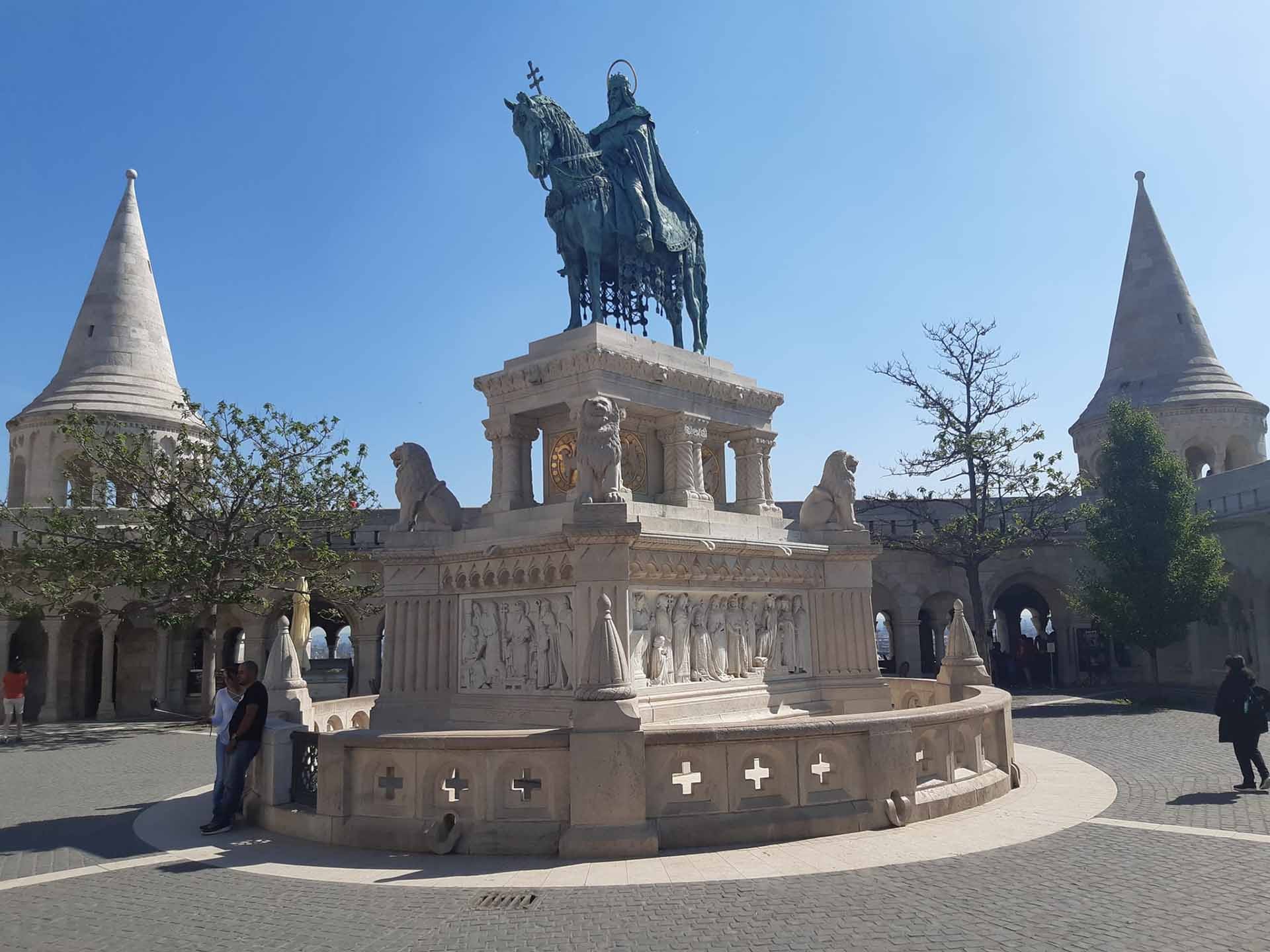 |
| Buda Old Town, the ancient part of Buda city, with the oldest section dating back to the mid-13th century. (Photo: Nguyen Hoang Linh) |
Urban charm
Hungary's 1987 World Heritage dossier included not only the structures along the riverbanks, but also the Buda Hill Castle Complex and other heritage sites, whose history dates back to around the 13th century.
A trip to Budapest wouldn't be complete without visiting the Royal Palace, Matyás Church, Fisherman's Fortress, the Liberty Monument, or the Citadella Fortress, all perched high above the city, creating a magnificent backdrop for the old part of the Hungarian capital.
This is a truly spectacular and harmonious blend of historical, cultural, and religious structures built throughout the history of the Kingdom of Hungary. All of it, once again, is reflected in the Danube River, from the mountaintop.
It should be added that the devastating wars in Hungarian history have repeatedly reduced these heritage sites to ashes. The restoration and reconstruction process, spanning over half a century, has not been without difficulties, at times appearing insurmountable, revolving around issues of funding and artistic vision.
However, fundamentally, the inner city of Budapest retains its classical urban planning style from the early 19th century. Tall buildings are not permitted in the center; only the Parliament building and the Budapest Cathedral, named after the founding king St. István, reach a height of 96 meters (commemorating the time when the Hungarian people first set foot in the Pannonian Basin around 895-896), while all other buildings must be shorter.
The capital's main thoroughfares, preserved for approximately 130-140 years, along with a tram system nascent in 1887, have ensured that the city remains fundamentally undisturbed. Visitors can still admire distinctive and typical architectural buildings from the Austro-Hungarian Empire era, particularly along the Grand Ring Road and Andrássy Avenue, named after the famous Prime Minister of Hungary in the latter half of the 19th century.



"The Champs-Élysées of Budapest" is the name given to Andrássy Avenue, approximately 2.3 km long, a UNESCO World Heritage site since 2002, along with Heroes' Square at its end, which honors the nation's founding heroes; and the subway line running beneath the avenue, built in 1896 to commemorate the 1,000th anniversary of the founding of Hungary, the first underground railway line in continental Europe.
The National Opera House, the Museum of Fine Arts, the Art Gallery... along with a series of artist-run cafes over 100 years old and other villas and palaces lining and around Andrássy Avenue, create the city's urban charm and serve as a link between the not-so-distant golden past of the Kingdom of Hungary and modern Hungary, which now retains only a third of its original land area after the wars.
What remains in the hearts of foreign visitors after visiting Budapest? What makes this capital city special compared to other equally famous cities in Central Europe, such as Vienna, Prague, Krakow... all of which have rivers flowing through them and castles, ancient royal fortifications on hillsides, and bustling waterways?
A Vietnamese journalist remarked that Budapest is most magnificent and majestic when viewed from the Royal Palace on Buda Hill towards the Parliament House.
Not everywhere are the creations of human hands and minds preserved, cherished, and valued through the vicissitudes of time. Budapest, as the capital of a country that is not wealthy in Europe, has achieved this. This is the true highlight of this city!
Source
![[Photo] National Assembly Chairman Tran Thanh Man attends the Conference to announce the Master Plan for Hanoi Capital City with a 100-year vision.](https://vphoto.vietnam.vn/thumb/1200x675/vietnam/resource/IMAGE/2026/06/29/1782709639728_ndo_br_1-jpg.webp)
![[Image] A look back at the capital's preparations for the century-long master plan.](https://vphoto.vietnam.vn/thumb/1200x675/vietnam/resource/IMAGE/2026/06/29/1782750453122_quy-hoach-100-nam-minh-duy-1-2118-jpg.webp)
![[Photo] General Secretary and President To Lam works with the Party Committee of the Government on the work of preventing and combating storms, floods, extreme natural disasters and climate change.](https://vphoto.vietnam.vn/thumb/1200x675/vietnam/resource/IMAGE/2026/06/29/1782729441945_a1-bnd-0385-9454-jpg.webp)




























































![[Image] Building an elevated road through the Ma Da forest.](https://vphoto.vietnam.vn/thumb/402x226/vietnam/resource/IMAGE/2026/06/29/1782724737750_anh-man-hinh-2026-06-29-luc-16-18-43.png)