

 |
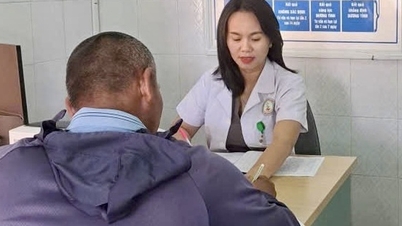
| Doctors face a lot of pressure in the age of open information. (Illustrative image: Internet) |
Is it easy or difficult to be a doctor these days?
Today, with social media and digital platforms becoming familiar communication spaces, the medical practice environment has also changed profoundly. While previously, conversations between doctors and patients mostly took place within the clinic, now a single treatment situation, a single statement during an explanation, or even a tense moment in the hospital hallway can be recorded and widely disseminated.
In this context, the question "Is practicing medicine difficult or easy now?" is not simply a comparison with the past. It is a self-reflection on one's own character: Are we strong enough to uphold professional principles amidst the new pressures of the era? Do we have enough patience to explain, enough empathy to listen, and enough fortitude to avoid being swept away by hasty judgments?
Someone said that each treatment prescription is not just a line of text on a medical record, but the result of careful consideration of benefits and risks, practical conditions and available resources, patient wishes and professional limitations. In many cases, there is no absolute perfect solution. The physician can only choose the most appropriate option at that particular time and under those specific circumstances.
However, as a doctor friend once shared with me, without that entire professional context, a careful decision can be perceived differently. A necessary prescription can be misunderstood. Discreet advice can be seen as irresponsible. Few see the pressure of professional responsibility behind each decision – where the doctor must ask themselves whether this is the best option for the patient.
The strength of character of those wearing white coats
The digital age has also brought many positive things. Today's patients are more knowledgeable, more proactive, and ask more questions during their treatment. They search for information before going to the hospital, compare methods, and even consult the experiences of the online community. This is a commendable step forward for a knowledge-based society.
But precisely because of this, physicians must prepare more thoroughly for each consultation. They must not only state "what to do," but also explain "why to do it." They must not only propose solutions, but also share the limitations of those solutions. Transparency in consultation, a respectful attitude, and the ability to listen become indispensable requirements.
Trust is therefore built day by day, through each dialogue, through each understanding glance. Sometimes, trust doesn't lie in perfect treatment results, but in feeling respected, having things clearly explained, and being supported.
Long shifts, split-second decisions, and ever-present occupational risks. In the age of open information, this pressure seems even more apparent, as every word and action can be judged and perceived from different perspectives.
There are times when doctors not only have to deal with complex medical conditions but also with the emotional turmoil that often ensues online. The harm doesn't just come from mistakes; sometimes it stems from misunderstandings. Maintaining composure in such situations is no easy feat.
But perhaps the most important thing a professional needs to maintain is composure. Composure to listen, to analyze, and to avoid reacting hastily to assessments that lack sufficient information. And above all, composure to continue doing what is right within one's capabilities.
 |
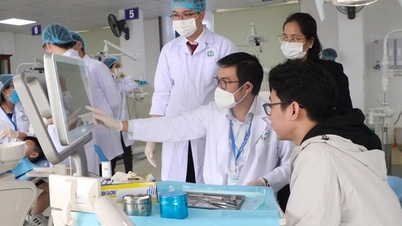
| Doctors must also proactively adapt, continuously update their knowledge, and hone their communication skills. (Source: VGP) |
Don't "shut yourself down" to change.
On the afternoon of February 24th, Prime Minister Pham Minh Chinh met with representatives of outstanding scientists in the field of healthcare and directors of central hospitals to commemorate the 71st anniversary of Vietnamese Doctors' Day on February 27th. His wish was: "Upholding medical ethics – Maintaining steadfast medical skills – Elevating medical theory – Overcoming adversity – All for the people," creating the best possible conditions and building a team of healthcare intellectuals of regional and international stature.
Recalling Hippocrates' words – "the father of medicine" – and President Ho Chi Minh 's teachings on the role of "a good doctor is like a loving mother," the Prime Minister emphasized that the medical profession is a noble profession, a symbol of sacrifice, compassion, intelligence, perseverance, and above all, faith in the noblest values of life – human health and happiness; it is one of the important pillars, bearing the heavy but extremely glorious responsibility of protecting and improving human health.
Doctors and medical staff are not only healers who cure diseases with medical theory and practice, but also "angels in white" who illuminate and spread hope and faith in life with medical ethics.
Reviewing the development and contributions of the health sector throughout the nation's history, especially during the recent Covid-19 pandemic, Prime Minister Pham Minh Chinh affirmed that the history of the health sector's development has always been closely linked to the pioneering role of the intellectual workforce in the health sector.
Experts, scientists, and healthcare administrators are a core force driving significant advancements in medicine, from prevention, diagnosis, and treatment to policy planning and healthcare management, contributing to improving the health, stature, longevity, and quality of life of the Vietnamese people.
Therefore, maintaining professional standards in the digital age does not mean shutting oneself off from change. On the contrary, it means proactively adapting, continuously updating knowledge, honing communication skills, and gaining a better understanding of patient psychology in the new context. Technology may change how we access information, but it cannot replace the foundation of the medical profession: responsibility, honesty, and compassion.
Because, after all, the medical profession is preserved not by loud praise, but by the quiet trust that patients bestow upon it every day. It's the handshake before surgery, the reassuring look in their eyes when they hear an explanation, the simple thank you from patients upon discharge. That trust is enduring enough to support the silent steps of those who practice this profession.
In the fast-paced world of open information, maintaining that belief means preserving one's integrity and a heart that always places the patient at the center. And perhaps, as long as that remains, the physician can continue on their chosen path, more slowly amidst the noise, but more steadfast in their responsibility and more dedicated to their mission.
Source: https://baoquocte.vn/ban-linh-thay-thuoc-trong-thoi-dai-so-363489.html






























































































Comment (0)