

 |
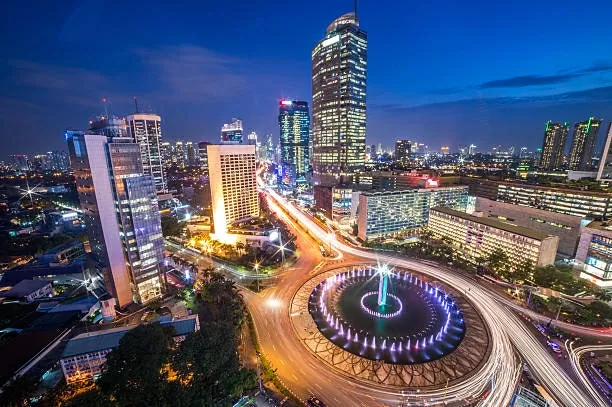
| In Vietnam, over 900 cities nationwide contribute approximately 70% of the gross domestic product (GDP). (Source: iStock) |
Planning in general, and urban planning in particular, serves as an action plan to achieve economic , social, and infrastructure goals. It translates national macro-visions into concrete, local actions, fostering economic growth, sustainable development, and competitiveness.
According to development economists, for developing countries, national master planning is one of the three important strategic tools of the 3Qs strategy (Planning, Governance, International Relations) to ensure policy consistency, help the economy transition to a higher income level, and achieve sustainable development. Planning acts as a long-term blueprint, guiding economic growth, infrastructure development, and resource allocation to improve productivity, promote industrialization, and especially create more jobs.
In Vietnam, over 900 urban areas nationwide contribute approximately 70% of the gross domestic product (GDP); they are a crucial source of physical infrastructure, providing the most fundamental foundation for national production and business activities.
Currently, major cities are being planned and upgraded to optimize their role as economic powerhouses, aiming for sustainable development. Some major cities have built GIS planning systems and planning information portals for citizens to access information, increasing transparency. In particular, Hanoi is developing a master plan for the capital city, outlining long-term development with a 100-year vision.
However, urban planning in our country still faces some shortcomings and challenges in the context of changes both domestically and internationally:
Firstly , the planning legal system remains fragmented, built on traditional linear "resource forecasting and allocation" and lacking real-world data, leading to stalled planning. Some localities still cling to short-term, parochial thinking, resulting in arbitrary adjustments to plans to attract projects serving short-term interests and group interests, causing negativity, waste, and widening the gap between rich and poor at the national level.
Secondly , Vietnam's rapid growth has revealed negative aspects such as regional disparities, urbanization putting pressure on technical, social, and environmental infrastructure in major cities as well as in agricultural, forestry, and marine ecological areas. In addition, severe impacts from climate change (such as drought and salinity intrusion in the Mekong Delta, rising sea levels), and international commitments to emission reduction and sustainable development also strongly influence planning efforts.
Thirdly , the major institutional reforms regarding the administrative apparatus, streamlining the local government from three levels to two and reorganizing administrative units, reducing the number of provinces and centrally-administered cities from 63 to 34, as well as the model of free economic zones in localities, require innovative planning.
Fourth , the "people-centered" policy requires Vietnam to make a breakthrough as a world pioneer in the use of planning technology for smart cities. This aims to maintain the relevance of planning processes by updating digital technology advances and artificial intelligence (AI) solutions, combining technological governance innovations and international relations strategies.
In today's rapidly changing and increasingly unpredictable world, planners will need to rely more heavily on data and new technologies in flexible, scenario-based planning rather than linear forecasting to quickly respond to changes and identify optimal land and infrastructure options. Such efforts require three digital and AI-powered solutions to enhance the quality of planning governance:
First, technology application: Promote the integration of technology into urban planning by applying computerization and geographic information systems (GIS) with available data for 3D simulation and vision analysis. Use AI to develop a database and modeling of planning information to not only assist planners in sifting through relevant information from large volumes of data, but also enable stakeholders in the industry to search for planning information more effectively.
Applying Robotic Process Automation (RPA) and Natural Language Processing (NLP) technologies to planning work has led to greater resource optimization. This has resulted in the automation of routine tasks, such as chatbots that can intelligently respond to public questions, and the classification and analysis of text from large datasets like planning decisions and public feedback data. In the long term, planners will use intelligent assistants to study various planning scenarios and trajectories, as well as evaluate planning options, freeing up more time for in-depth analysis and community engagement.
Next, the "Five Elements Force" model: A framework for purposeful impact management in planning needs to be applied, encompassing four core functions: planning, organizing, directing, and controlling. This process optimizes the use of five basic resource groups: natural capital, financial capital, human capital, social capital, and product capital. Vietnam currently has a comprehensive planning legal system at three levels: the Planning Law (general framework), the Urban and Rural Planning Law (spatial specialization), and the land, construction, and environmental laws, which have been amended accordingly…
Essentially, these social resource reforms aim towards integrated planning of resources – “Resources (land) – people – products (infrastructure)” – instead of the previous separation. When these resources are coordinated, they will create synergy and increase the feasibility of the planning scenario in generating more revenue streams by identifying the added value of planned land and making a strong contribution to the limited financial resources of the State in a developing country.
Therefore, in addition to regulating the increase in land value through the 2010 Law on Non-Agricultural Land Use Tax, personal income tax, etc., the State needs to study the application of a separate tax called "Land Value Tax" (LVT) for the increased value of land. AI solutions are also widely used in monitoring trends and detecting anomalies to identify patterns in large time-series data on land prices before and after planning.
These tools will assist urban planners in identifying and predicting changes in the speculative and profiteering behavior of individuals and businesses, thereby building fairer policies. This will help to limit vested interests and profiteering in urban development planning…
Using data analytics and identifying five AI-based resources provides deeper insights into planning models. This is particularly important in Vietnam, where land is scarce, the population is large, and data-driven planning is needed to rationally optimize limited resources. In the long term, this helps us plan more proactively and flexibly to meet ever-changing needs.
Finally , building a stronger planning community and innovation ecosystem: We need to cultivate a generation of pioneering planners and technology experts who will leverage AI to build an innovative and data-driven planning ecosystem.
Furthermore, it is necessary to promote a culture of AI innovation to encourage social forces to embrace change, explore new ideas, and participate in the application of AI in provinces and cities through the development of domestic AI companies and fostering partnerships with leading international technology companies.
Furthermore, investing in the awareness and understanding of the entire population regarding master planning will provide us with a solid foundation for building a country ready for a better future with smart, sustainable cities that reflect Vietnamese identity.
Source: https://baoquocte.vn/thoi-dai-ai-trong-quy-hoach-do-thi-377133.html

























































































Comment (0)