

 |
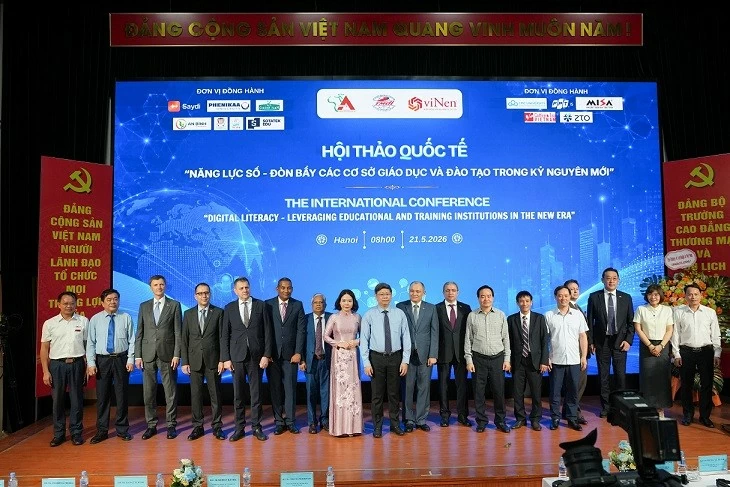
| The conference attracted considerable interest from both domestic and international delegates. (Source: Organizing Committee) |
The workshop, organized by Hanoi College of Commerce and Tourism (HCCT) in collaboration with the Institute for South Asia, West Asia and Africa Studies and the National Entrepreneurship Association, aimed to discuss solutions for developing digital capabilities, promoting digital transformation in education , and building an ecosystem for training high-quality human resources in the age of artificial intelligence (AI).
Promoting comprehensive digital transformation in education.
In his opening remarks at the workshop, Dr. Dinh Viet Hoa, President of the National Entrepreneurship Association, emphasized that in the context of the strong development of artificial intelligence, big data, and cloud computing, digital competence is no longer just about the skill of using technology but has become the "thinking operating system" of modern people.
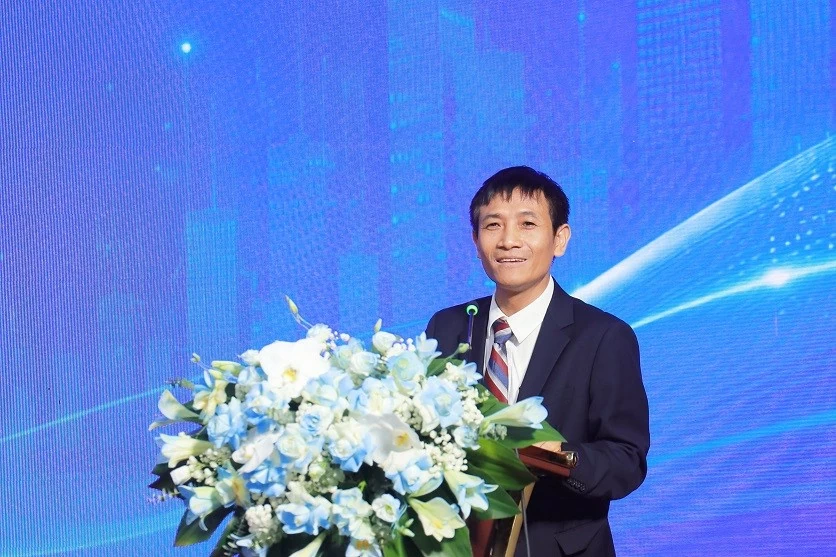 |
| Dr. Dinh Viet Hoa, President of the National Entrepreneurship Association, delivered a speech at the conference. |
According to Dr. Dinh Viet Hoa, for educational institutions, digital competence is the leverage to comprehensively restructure the training model, promote personalized education, and build an innovation ecosystem.
He asserted that every digital economic ecosystem or future technology business begins in today's classrooms.
In his congratulatory remarks at the workshop, Associate Professor Hoang Huu Hanh, Deputy Director of the National Digital Transformation Department, Ministry of Science and Technology, also stated that digital transformation in education is not simply about bringing technology into the classroom, but rather a comprehensive innovation process aimed at improving the quality of training, developing learners' competencies, and promoting lifelong learning.
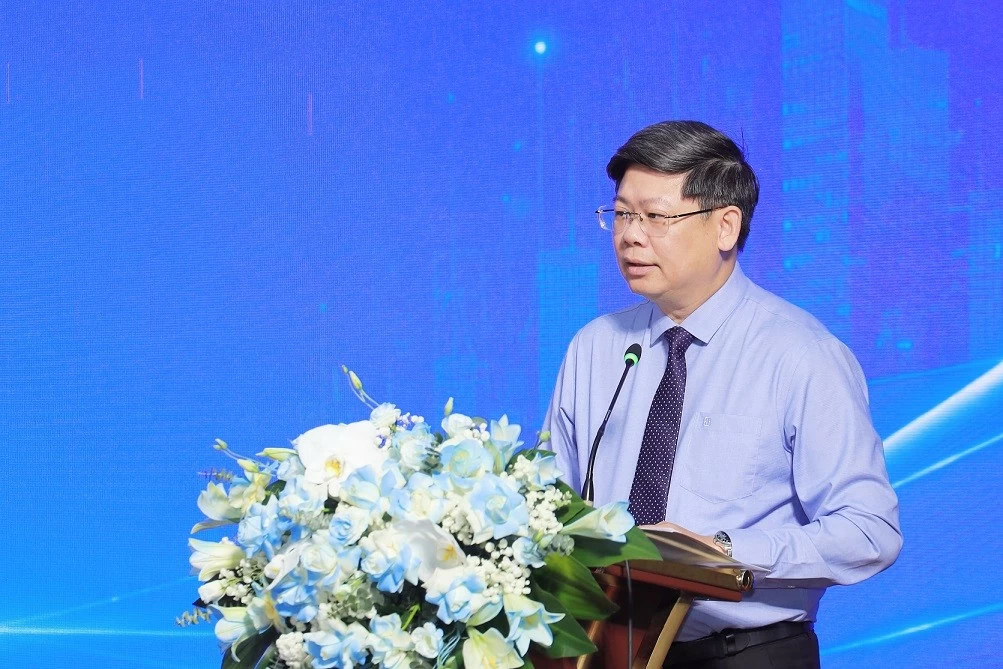 |
| Associate Professor Hoang Huu Hanh, Deputy Director of the National Digital Transformation Department, Ministry of Science and Technology, delivered a speech at the conference. |
He emphasized that building digital capacity for students and faculty should be considered a strategic task, linked to national development goals in the digital age.
In her introductory report at the workshop, Dr. Trinh Thi Thu Ha, Party Secretary and Rector of HCCT, stated that digital transformation, science and technology, and innovation have been identified by the Party and State as strategic breakthroughs to drive Vietnam's rapid and sustainable development in the new era.
Citing numerous resolutions, decisions, and major policies of the Central Government and Hanoi City related to digital transformation, Dr. Trinh Thi Thu Ha emphasized that although Vietnam is a bright spot in digital economic growth, the digital workforce remains a bottleneck that needs to be addressed.
According to figures presented at the conference, Vietnam's digital economy is estimated to reach approximately US$72.1 billion in 2025, accounting for about 14.02% of GDP. However, if education and training do not innovate to develop digital skills in learners, investments in infrastructure and technology will struggle to yield sustainable results.
 |
| Dr. Trinh Thi Thu Ha, Secretary of the Party Committee and Principal of HCCT, presented the introductory report for the workshop. |
Dr. Trinh Thi Thu Ha argues that digital competence should be understood as the ability to use digital technology to solve practical problems, support learning, teaching, and educational management. This is also an important foundation for building a digital society, digital economy, and digital citizens in the future.
The workshop identified several key areas of focus, including: developing a policy and governance framework for digital education; developing digital competencies for lecturers and students; applying AI in teaching and assessment; building digital schools; business-school collaboration; data security and digital ethics.
International Perspectives on Digital Education
The workshop was attended by numerous ambassadors, representatives of international organizations, and education experts from more than 14 countries and territories such as Azerbaijan, Kazakhstan, Türkiye, Pakistan, Sri Lanka, Thailand, Bulgaria, Malaysia, Bangladesh, etc., along with representatives of UNESCO in Vietnam.
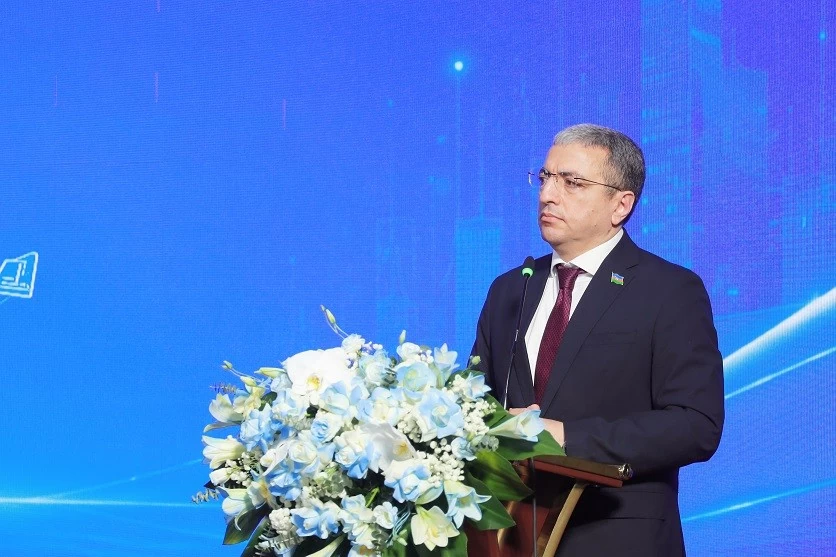 |
| Ambassador of Azerbaijan to Vietnam, Shovgi Mehdizade, speaks at the seminar. (Source: Organizing Committee) |
Speaking at the seminar, the Ambassador of Azerbaijan to Vietnam, Shovgi Mehdizade, said that education and innovation are becoming important areas of cooperation in Vietnam-Azerbaijan relations, especially after the two countries upgraded their relationship to a Strategic Partnership.
According to the Ambassador, strengthening international cooperation in digital education and developing high-tech human resources will create an important foundation for countries to adapt to the rapid changes of the digital age.
Speaking at the event, the Ambassador of Kazakhstan to Vietnam, Kanat Tumysh, highly appreciated Vietnam's achievements in digital transformation, especially in the fields of digital economy and digital education.
The ambassador assessed that Vietnam is emerging as a prime example in Southeast Asia with a digital economy growth rate exceeding 20% annually, and educational institutions playing a central role in training digital human resources.
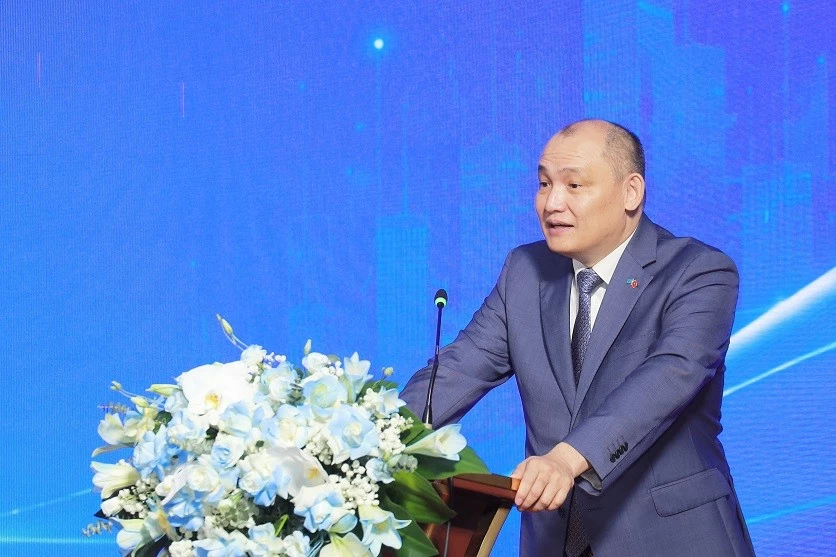 |
| Ambassador of Kazakhstan to Vietnam, Kanat Tumysh, speaks at the seminar. (Source: Organizing Committee) |
Ambassador Kanat Tumysh stated that Kazakhstan has placed digital transformation and artificial intelligence at the center of its national development strategy.
Starting this academic year, AI has become a compulsory subject at all 79 universities in Kazakhstan; more than 440,000 students have been awarded AI certificates through the national "AI-Sana" program.
Kazakhstan is also developing a thriving innovation ecosystem with the Astana Hub – a center supporting technology startups through preferential tax policies, visas, and IT training. Notably, the country will open its first specialized AI research university in 2026, aiming to become a regional AI training and research hub in Central Asia.
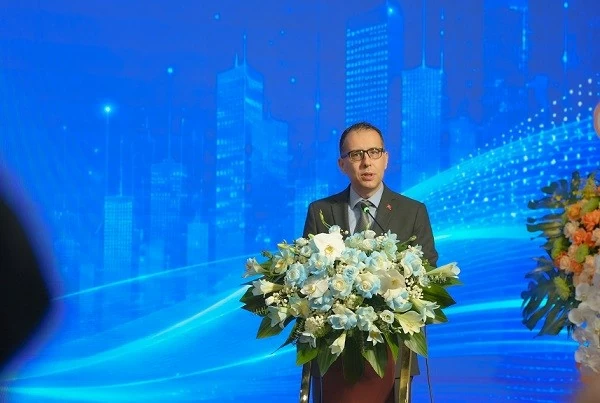 |
| Turkish Ambassador to Vietnam Korhan Kemik speaks at the seminar. (Source: Organizing Committee) |
Meanwhile, Turkish Ambassador to Vietnam Korhan Kemik stated that Türkiye is implementing a comprehensive digital capacity development strategy, with the State playing a central role in coordinating policies, institutional reforms, and investing in digital infrastructure.
Accordingly, the country is building a digital governance ecosystem with the participation of many ministries, agencies, and strategic organizations to ensure that digital policies are implemented uniformly on a national scale. One of the highlights is the citizen-centered e-government model.
Through the integrated public service portal, Turkish citizens can access thousands of online services, contributing to reduced bureaucracy, increased transparency, and strengthened social trust.
Ambassador Korhan Kemik also emphasized the crucial role of cybersecurity and the development of digital human resources. Türkiye prioritizes digital skills training, higher education reform, innovation promotion, the development of technology startups, and the building of a domestic software ecosystem to enhance national technological self-reliance.
He argued that educational institutions need to play a central role in training digital citizens, promoting research, entrepreneurship, and innovation, thereby laying the foundation for a sustainable and people-centered digital society.
Education must change in the face of the AI wave.
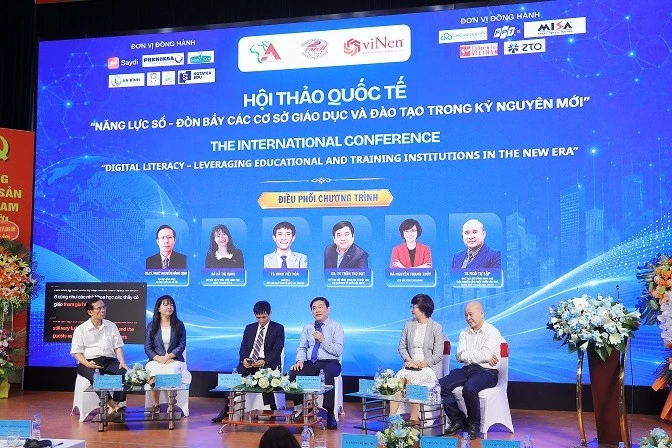 |
| Delegates participate in the open discussion session at the conference. (Source: Organizing Committee) |
One of the topics that attracted attention at the conference was the open discussion session on the theme "Digital Competence – Leveraging Educational and Training Institutions in the New Era," moderated by Prof. Dr. Tran Tho Dat, Chairman of the Science and Training Council, National Economics University.
Here, experts focused on discussing key topics such as the role of digital competence in education, the challenges and opportunities for educational institutions in the age of AI; sharing practical experiences from experts, scientists, and technology businesses; and proposing solutions to promote a sustainable, innovative, and internationally integrated digital education ecosystem.
On the sidelines of the conference, HCCT signed memoranda of cooperation with many businesses and technology companies such as CMC Corporation, MISA, Phenikaa University, Sotatek, and the ILACA Digital School ecosystem.
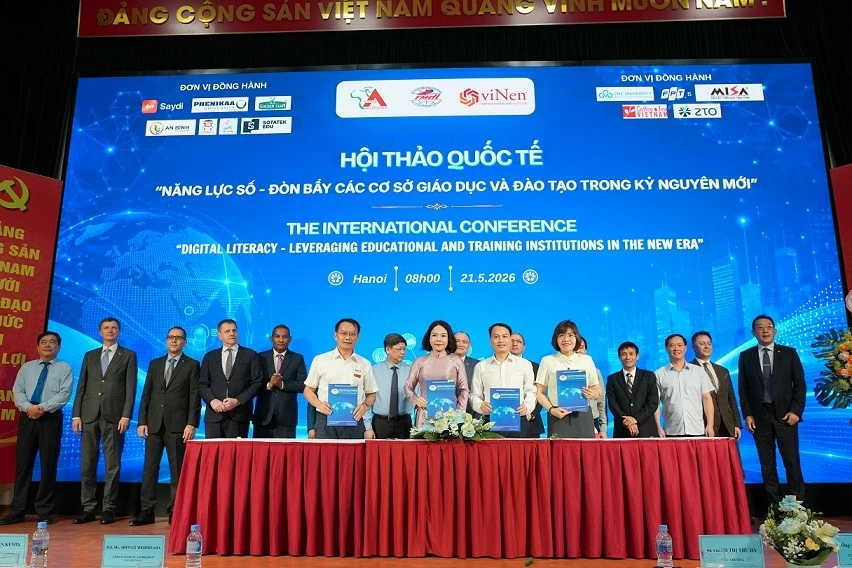 |
| HCCT has signed memoranda of cooperation with many businesses and technology companies such as CMC Corporation, MISA, Phenikaa University, Sotatek, and the ILACA Digital School ecosystem. (Source: Organizing Committee) |
The cooperation agreements aim to build a "digital school" model, develop digital learning materials, apply AI in training, enhance digital skills for students, and promote connections between schools and businesses.
Concluding the workshop, Dr. Trinh Thi Thu Ha, Principal of HCCT, affirmed that digital transformation in education is not just about applying technology to teaching, but a comprehensive process of innovation in management thinking, training models, and methods of human development.
According to Dr. Trinh Thi Thu Ha, the workshop recorded many valuable suggestions and practical experiences from experts, technology companies, and training institutions both domestically and internationally. This will be an important basis for promoting cooperation programs, research, and implementation of digital education models in the future.
She expressed confidence that, with the support of regulatory agencies, businesses, international organizations, and experts, Vietnam will gradually build a modern, integrated, and sustainable digital education ecosystem in the AI era.
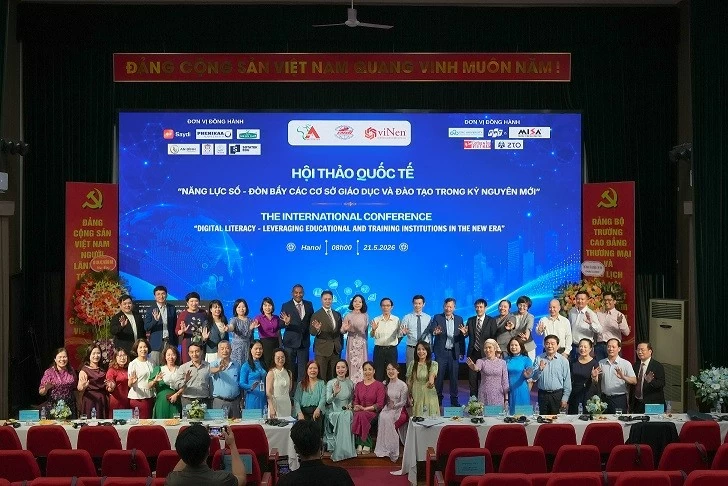 |
| Delegates attending the workshop pose for a commemorative photo. (Source: Organizing Committee) |
According to the organizers, the conference received nearly 200 papers from authors from 72 universities, 13 colleges, and 15 research institutes. The presentations focused on four main areas: the theoretical and practical basis of digital competence; international experiences in developing digital competence; the current state and prospects for developing digital competence in Vietnam; and solutions for developing digital competence for educational and training institutions in the new era. The overarching message emphasized at the conference was that "Developing digital capabilities is not only a requirement for digital transformation in education, but also a foundation for building creative, adaptable, and integrated individuals in the new era." |
Source: https://baoquocte.vn/nang-luc-so-tro-thanh-don-bay-trong-doi-moi-giao-duc-396641.html

![[Image] Nearly 125,000 Hanoi students completed the Literature exam for the 10th grade entrance exam.](https://vphoto.vietnam.vn/thumb/1200x675/vietnam/resource/IMAGE/2026/05/30/1780117233041_ndo_br_thiet-ke-chua-co-ten-2-png.webp)





















![[Video] Sunset at Lap An Lagoon – Where the sun sets over the fishing nets](https://vphoto.vietnam.vn/thumb/800x450/vietnam/resource/IMAGE/2026/05/31/1780187239592_2222.jpeg)















































































Comment (0)