

Market interest rates are trending downwards.
The State Bank of Vietnam (SBV) stated that the banking sector is currently facing numerous complex and intertwined difficulties and challenges. The global economy continues to experience unpredictable fluctuations, international interest rates remain high, and geopolitical risks are increasing, putting significant pressure on inflation control and monetary policy management.
In this context, the State Bank of Vietnam (SBV) remains committed to its dual objectives: controlling inflation, maintaining macroeconomic stability, supporting economic growth, while simultaneously ensuring the safety of the banking system. The SBV has managed monetary policy proactively and flexibly, closely monitoring domestic and international market developments. A comprehensive set of regulatory tools has been implemented to control inflation, stabilize the foreign exchange market, and ensure liquidity for the credit institution system.
 |
| Customers conducting transactions at Military Commercial Joint Stock Bank (MB). Photo: PHUONG THAO |
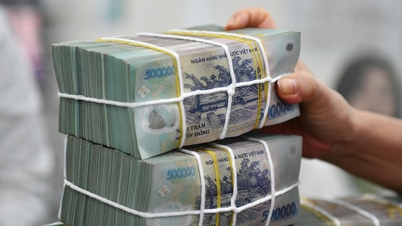
At the meeting of the State Bank of Vietnam and commercial banks on April 9, 2026, the State Bank of Vietnam requested commercial banks to reduce deposit interest rates for new transactions with maturities of 6 months or more; and to reduce listed deposit interest rates and lending interest rates to increase access to capital for businesses and individuals. Immediately after the meeting, many commercial banks actively participated, proactively implementing interest rate reductions, such as MB, Agribank , Vietcombank, VietinBank, BIDV, etc. Throughout April 2026, market interest rates continuously trended downwards, creating a positive signal for the business community and the public.
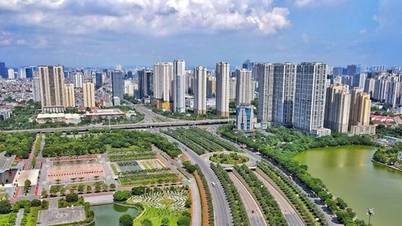
However, it is worth noting that the high credit growth rate in recent years is creating certain pressures on the banking system. Specifically, credit growth is significantly higher than the rate of capital mobilization by the banking system. This leads to increased pressure on liquidity and interest rates. Notably, Vietnam's credit-to-GDP ratio is currently high (as of March 2026, the credit-to-GDP ratio had exceeded 144%), indicating that the economy is overly dependent on bank credit. Continuing to rely too heavily on bank credit poses systemic risks and could have negative consequences for the economy because banks' funding sources are primarily short-term, while the economy's capital needs are medium- and long-term.
 |
| Customers conducting transactions at Military Commercial Joint Stock Bank (MB). Photo: PHUONG THAO |
Associate Professor Phung Thanh Quang, from the Institute of Banking and Finance, National Economics University, stated: “The goal of achieving double-digit economic growth requires a very large amount of capital for infrastructure investment; production and business; digital transformation; green transformation and energy. When high credit growth persists, the liquidity pressure and cost of capital for the banking system increase. Therefore, it is necessary to ensure sufficient capital – in the right place – at reasonable cost – and sustainably.”
Speaking with reporters, Dr. To Hoai Nam, Member of the National Council on Sustainable Development, Standing Vice President and General Secretary of the Vietnam Association of Small and Medium Enterprises, stated: “The reality shows that credit is increasing faster than capital mobilization. By the end of April 2026 alone, credit increased by 4.42% compared to the end of 2025, while capital mobilization increased slowly, creating a gap between credit and deposits. Balancing capital sources, payments, and interest rates within the banking system is a very significant challenge.”
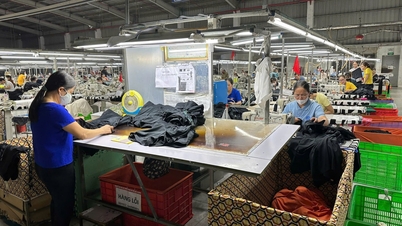
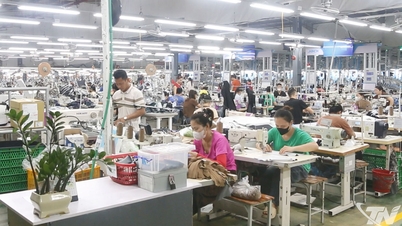
For small and medium-sized enterprises (SMEs), the issue is not just "whether or not they have capital," but whether that capital reaches the right production sector, at the right time, at the right cost, and within their capacity to absorb it. Statistics show that only about 20-25% of SMEs access bank loans; the reasons stem not only from the banks themselves but also from collateral requirements, financial transparency, business plans, and corporate governance capabilities.
Therefore, it is necessary to shift from a "credit injection" mindset to designing a multi-tiered capital ecosystem. Banks remain the primary channel for working capital, production, exports, and imports. However, medium- and long-term capital for infrastructure, technological innovation, digital transformation, logistics, energy, and industrial support must be shared by the stock market, corporate bonds, investment, credit guarantees, local development, FDI, and the provision of model financial supply chains. In particular, attracting FDI needs to be linked to genuine linkages with domestic businesses. FDI should not only be a channel for "bringing capital" but also for bringing technology, management expertise, markets, and orders so that Vietnamese small and medium-sized enterprises (SMEs) can participate in the value chain. Accordingly, the economy will have more capital accompanied by a commensurate rate of domestic growth, emphasized Dr. To Hoai Nam.
Unlocking capital in the corporate bond market.
Regarding solutions to ensure sufficient capital supply for growth targets, Associate Professor, Dr. Phung Thanh Quang suggested: “Firstly, it is necessary to diversify sources of capital supply, reduce dependence on monetary policy, and strengthen the role of fiscal policy in providing capital for growth.
Specifically, it is necessary to strongly develop the capital market, establish specific mechanisms to develop the Vietnam International Finance Corporation (VIFC), develop the stock market in a clear and transparent manner, and develop credit rating agencies to facilitate capital flow into the corporate bond market. Secondly, it is crucial to attract high-quality FDI, focusing on key sectors such as artificial intelligence (AI), semiconductors, green transformation, green finance, and logistics. To effectively implement the "building a nest to welcome eagles" strategy, it is necessary to maintain exchange rate and interest rate stability and sustain reforms towards transparency and simplification to reduce compliance costs and build strategic confidence for international investors.
 |
Military Commercial Joint Stock Bank (MB) supports business households in accessing loan packages with preferential and suitable interest rates. Photo: PHUONG THAO |
Third, it is necessary to direct capital flows towards production, business, infrastructure development, and innovation. Speculative capital flows into high-risk sectors not directly linked to production should be restricted. Fourth, to enhance the attraction of green capital, a unified set of green standards for Vietnam needs to be developed. Currently, international capital sources tend to be linked to environmental protection and sustainable development requirements.
Developing a national green standards framework, aligned with international practices, will contribute to attracting international capital into sectors such as green finance, green bonds, energy transition, and sustainable development. These green standards will not only attract high-quality international capital into Vietnam, linked to sustainable development, but also facilitate the export of Vietnamese goods to international markets, especially major markets like the EU and the US. This will, in turn, enhance the competitiveness and financial capacity of Vietnamese businesses in the long term.”
 |
| Customers conducting transactions at Military Commercial Joint Stock Bank (MB). Photo: PHUONG THAO |
Regarding policy recommendations for diversifying capital sources, Dr. To Hoai Nam proposed focusing on four key areas: maintaining macroeconomic stability and controlling inflation to prevent accelerated growth that could hinder recovery; developing a transparent, disciplined, yet open capital market; expanding credit availability and ensuring credit granting responsibility for small and medium-sized enterprises; and supporting businesses in standardizing accounting, cash flow, invoices, and data to meet loan eligibility requirements.
It can be affirmed that achieving double-digit growth requires a large influx of capital. However, for more sustainable growth, that capital must be diversified, long-term, transparent, and directed towards genuine production. This requires a harmonious combination of monetary and fiscal policies, effective capital control, and the joint efforts of banks, the stock market, and FDI flows.
Source: https://www.qdnd.vn/kinh-te/cac-van-de/bao-dam-dong-von-cho-tang-truong-1042190
![[Photo] General Secretary and President To Lam and the President of the Philippines hold talks.](https://vphoto.vietnam.vn/thumb/1200x675/vietnam/resource/IMAGE/2026/06/01/1780283481955_vna-potal-tong-bi-thu-chu-tich-nuoc-to-lam-va-tong-thong-philippines-hoi-dam-8797519-1429-jpg.webp)
































![[Photo] General Secretary and President To Lam and the President of the Philippines hold talks.](https://vphoto.vietnam.vn/thumb/1200x675/vietnam/resource/IMAGE/2026/06/01/1780286997787_anh-man-hinh-2026-06-01-luc-11-09-43.png)









































































Comment (0)