Causes stem from the use of electronic devices.
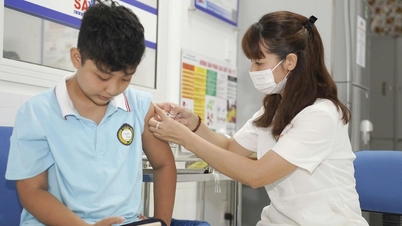
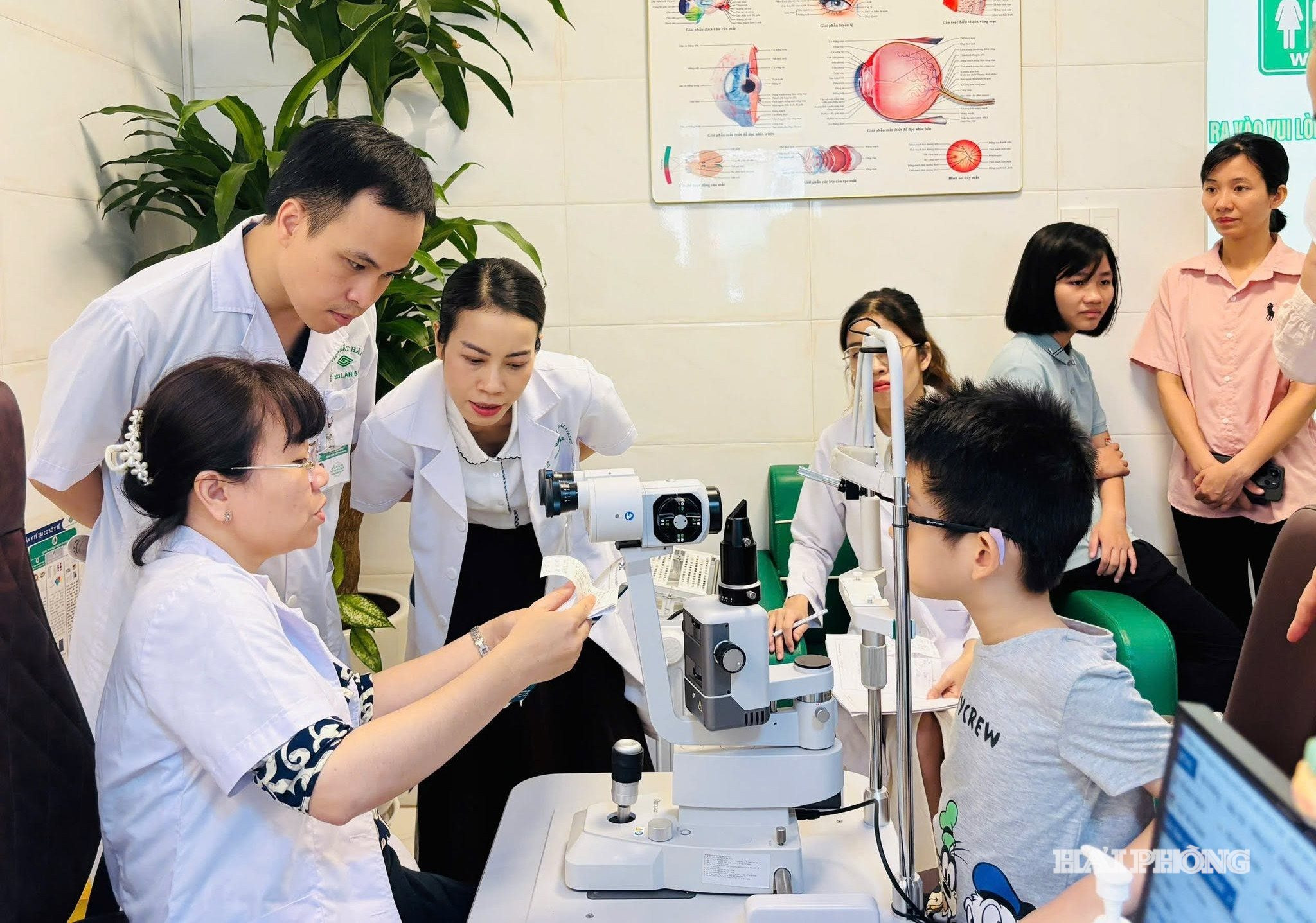
In class, 13-year-old Pham Ngoc D. (An Phong ward) often has to squint to see the words on the blackboard clearly. Even though she sits at the third desk from the back, she still has difficulty following the lecture and often has to borrow a classmate's notebook to copy notes. Initially, her family thought it was just eye strain from studying too much. However, when the blurred vision persisted, accompanied by eye pain and headaches, she was taken for an examination and diagnosed with 0.5 diopter myopia in both eyes, with astigmatism in one eye.
"At home, I watch a lot of TV and use my phone. I also often study in a rather dark room," D. shared.
The family of Mr. Pham Nhat V. (Tan Hung ward) is also worried because both of their children suffer from refractive errors. According to the family, the children's mother has a history of nearsightedness, so genetic factors increase the risk of developing the condition. However, doctors believe that the living environment and lifestyle habits are the main reasons why children's eyesight deteriorates more rapidly. Prolonged use of phones and television, lack of outdoor exercise, and uncontrolled screen time force the eyes to constantly adjust.
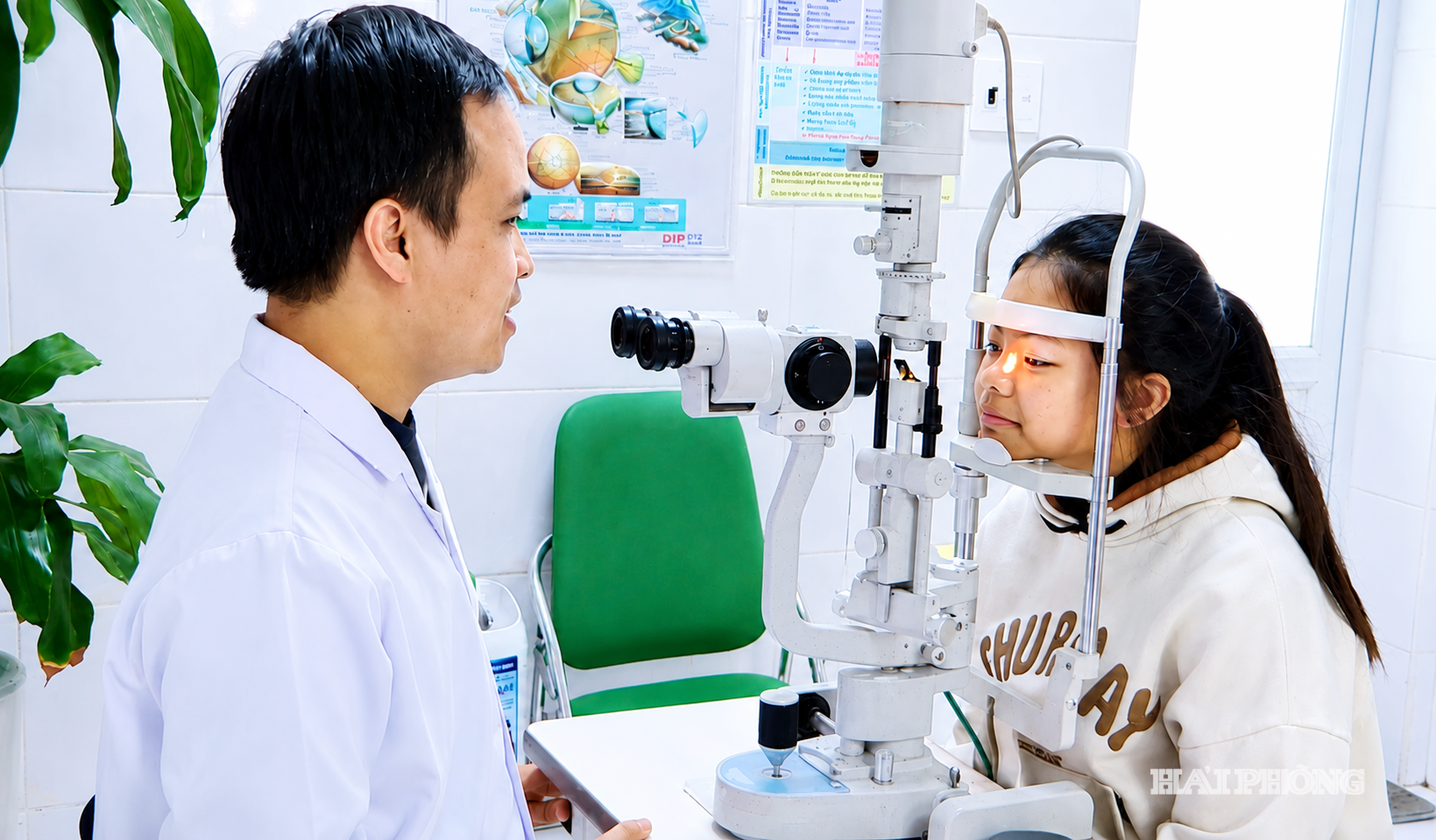
According to Dr. Le Van Cai, Head of the Ophthalmology Department at Hai Phong Eye Hospital, the development of digital technology brings many conveniences in learning and entertainment but also has a significant impact on children's visual health. Looking closely at computers, phones, or laptops for extended periods requires constant eye adjustment, increasing the risk of refractive errors, especially myopia. In addition, blue light from screens can cause dry eyes, eye strain, and accommodation disorders.
For children who are already nearsighted, prolonged use of electronic devices without proper breaks can accelerate the progression of their myopia. This is also why more and more students are having to wear glasses from elementary school, and even at preschool age.


Don't be complacent.
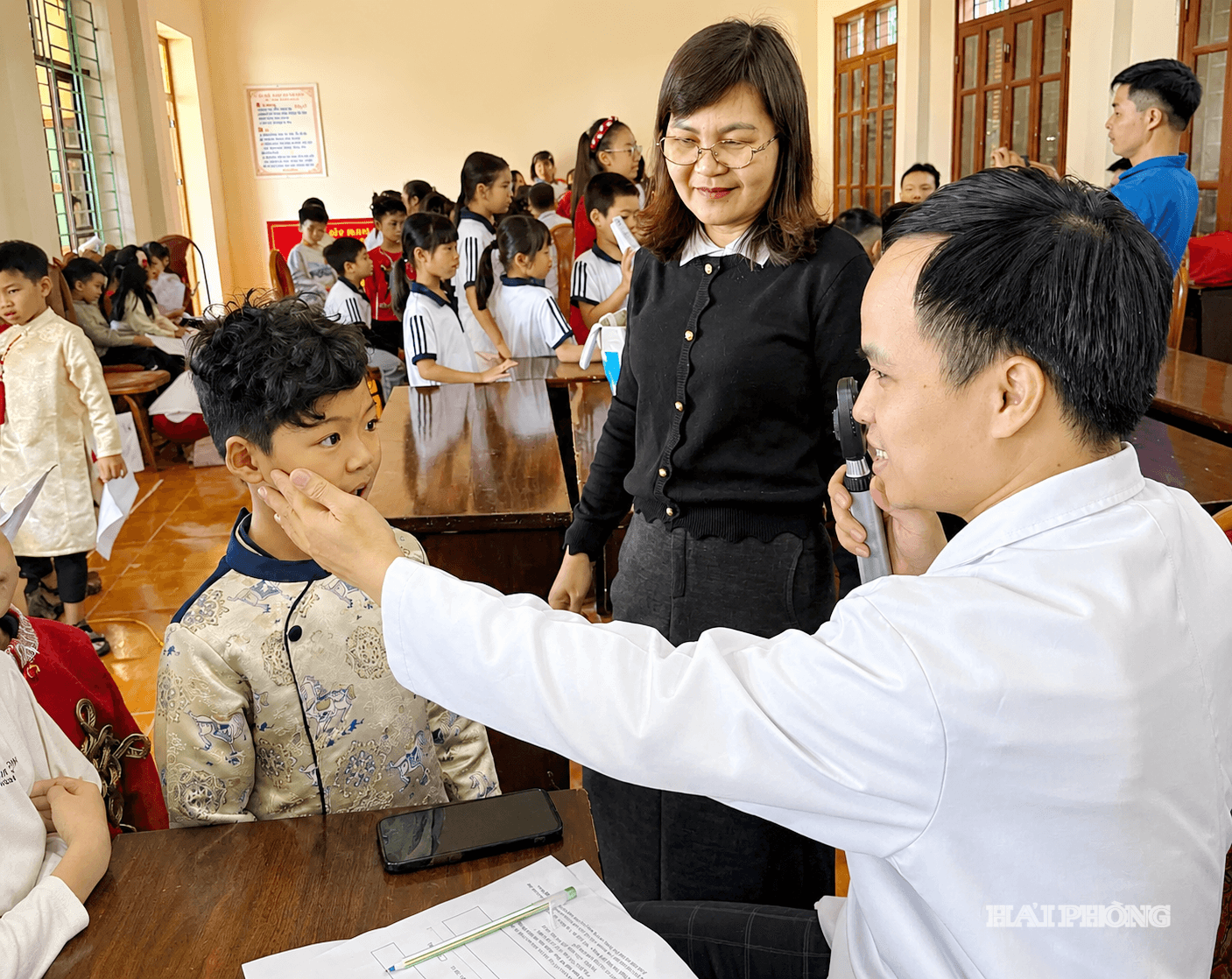
Based on his experience in examining and treating patients at Hai Phong Eye Hospital, Dr. Le Van Cai stated that the number of children with refractive errors is increasing significantly year by year. Since the Pediatric Ophthalmology Department was established and began specializing in treating children under 16, refractive errors have consistently accounted for a very high percentage of cases.
From 2024 to the present, the number of children examined for refractive errors accounts for approximately 70-80% of the total examinations at the Pediatric Ophthalmology Department. Of these, myopia accounts for 60-70%, while the remainder are hyperopia, astigmatism, or a combination of multiple refractive errors.
The situation in Hai Phong also reflects the general trend nationwide. According to statistics from the Vietnam Ophthalmological Society in 2024, Vietnam currently has approximately 5 million school-aged children with refractive errors, equivalent to 30-40% of the total child population. Academic pressure, reduced outdoor activity time, and increasing exposure to electronic screens are considered the main reasons for the rapid increase in the rate of myopia among schoolchildren.
Worryingly, many parents still overlook the early signs. Many children are only taken for examination when they experience blurred vision, squinting when looking at distant objects, frequent headaches, eye strain, or declining academic performance. At this point, refractive errors have often progressed, making them more difficult to manage.
According to Dr. Cai, to protect children's eyesight in the digital age, parents need to guide their children to sit in the correct posture while studying, maintain a distance of 30-35 cm between their eyes and books, and ensure sufficient lighting. When studying or using electronic devices, the rule is that after every 20 minutes of looking at close objects, children should look away at a distance of about 6 meters for 20 seconds to allow their eyes to relax.
In addition, children need to increase outdoor activities, participate in sports , limit phone use for purposes other than studying, and have regular eye checkups every 3-6 months or as directed by a doctor.



"Vision is an extremely valuable asset for every child. When any abnormal signs are detected in the eyes, parents should take their children for examination early for timely detection and intervention. Don't wait until the child's vision is blurry before seeking medical attention, because by then the refractive error may have progressed much faster," advised Dr. Le Van Cai.
Refractive errors in children are conditions where light entering the eye does not focus correctly on the retina, causing images to appear blurry, hazy, or distorted. The most common types include myopia, hyperopia, and astigmatism. If not detected and treated early, refractive errors can cause amblyopia (lazy eye) or permanently affect a child's vision.
Source: https://baohaiphong.vn/bao-dong-tat-khuc-xa-hoc-duong-545489.html



![[Image] National conference summarizing one year of operation of the overall organizational model of the political system, the three-tiered government model.](https://vphoto.vietnam.vn/thumb/1200x675/vietnam/resource/IMAGE/2026/07/01/1782882811691_ndo_br_1-jpg.webp)