Cyberbullying (also known as online bullying, internet violence, etc.) refers to acts that harm the honor, dignity, and reputation of individuals, carried out in the internet. It is a new, dangerous form of social violence that is more difficult to prevent and address than traditional forms of violence.
With the rapid development of information technology and the Internet, cyber violence is tending to spread increasingly in all countries, including Vietnam, causing serious harm to fundamental human rights, especially the right to inviolability of honor, dignity, and privacy, while also undermining positive cultural values and negatively impacting social order, security, and safety.
The World & Vietnam newspaper presents a series of three articles, offering a comprehensive overview of cyber violence and human rights, and proposing solutions to prevent and combat cyber violence, a newly emerging security issue today.
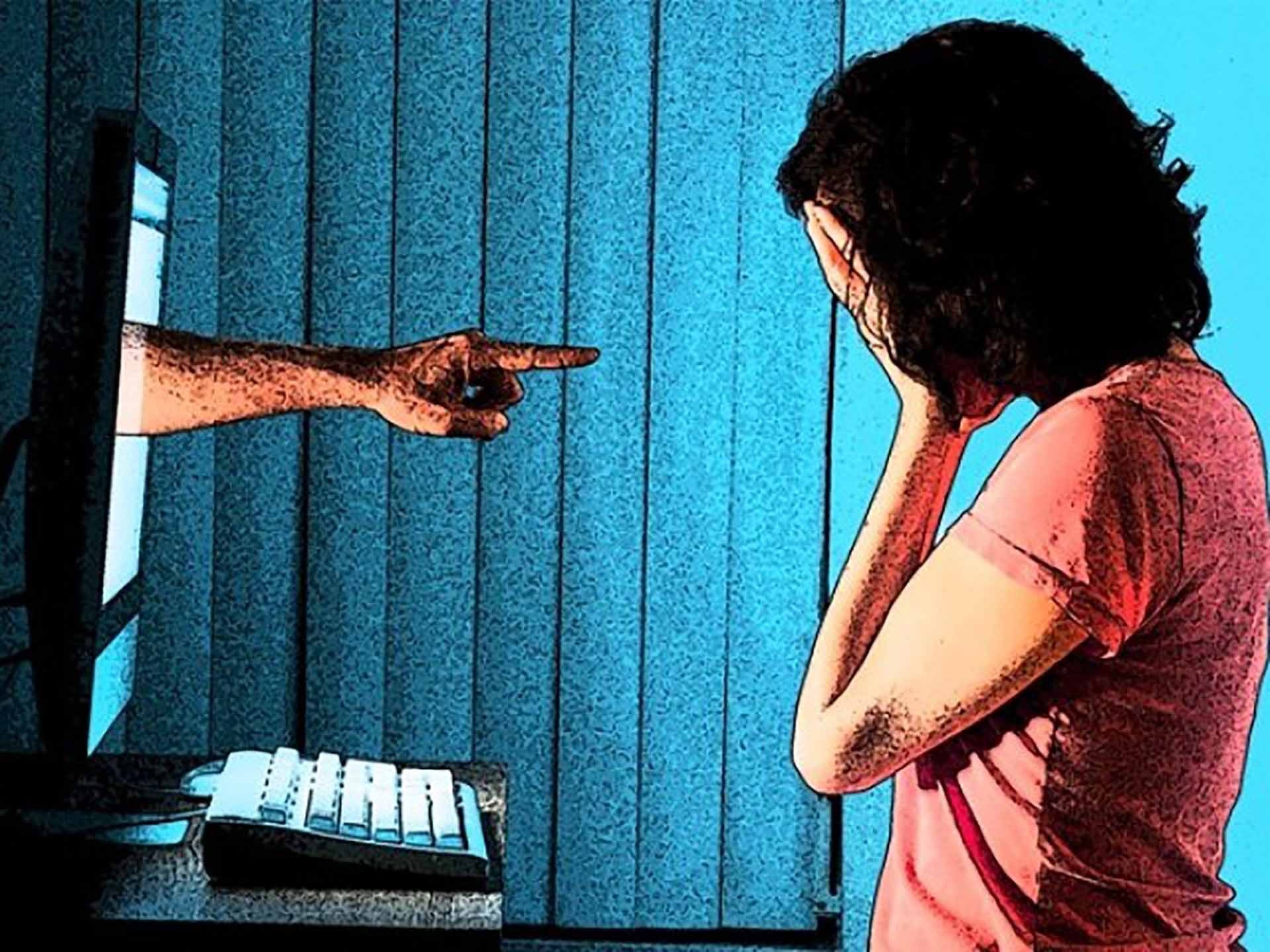 |
| Illustrative image. (Source: Shutterstock) |
Lesson 1: A serious form of human rights violation
Cyber violence is a major concern in today's era of booming information technology. Cyber violence refers to illegal and unethical acts committed in cyberspace that seriously violate many fundamental human rights, especially the inviolable right to privacy, honor, and dignity, which are recognized and protected by international law, the constitutions, and the laws of various countries.
While a form of social violence, cyber violence has unique characteristics that make it far more dangerous and difficult to prevent and address than conventional forms of social violence.
The negative impact of cyber violence on human rights.
In the U.S. Government 's Stopbullying page[1], "cyberbullying" is a term commonly used to describe acts that harm the honor and dignity of others, carried out through digital platforms, using digital devices such as mobile phones, computers and tablets and expressed through SMS messages, applications, social networks, forums and online gaming environments[2]... Typically, acts of cyberbullying are viewed and shared by the online community, leading to very widespread and serious negative impacts on the victims.
According to Baidu Baike , one of China's leading online encyclopedias, cyberbullying is essentially an extension of social violence on online platforms, completely disrupting basic moral principles in society, and therefore has the potential to cause terrible harm, inflicting very serious and long-lasting psychological trauma on victims, in some cases even leading to suicide.
Although an extension of social violence, cyber violence has distinct aspects compared to conventional violence, particularly its diversity and rapid, widespread impact.
In this respect, Article 1 of Law No. 71 of 2017 of the Parliament of the Republic of Italy defines cyber violence as including “any form of psychological pressure, aggression, harassment, extortion, injury, insult, defamation, slander, identity theft, alteration, illegal collection, manipulation, illegal processing of personal data or dissemination through electronic means, including the distribution of online content aimed at malicious attack or organized and widespread mockery”[3].
Cyber violence often has a faster and more widespread negative impact than conventional forms of violence in society because perpetrators often conceal their identities and carry out their actions through multiple online platforms and channels, thereby increasing the likelihood and frequency of violent acts. Furthermore, acts of cyber violence are often shared and disseminated by the online community, whether intentionally or unintentionally, exacerbating their negative impact.
As mentioned, cyber violence is first and foremost a form of human rights violation. Acts of cyber violence infringe upon many fundamental human rights protected by international and national law.
Firstly, cyberbullying violates privacy when an individual's information is disseminated online for malicious purposes without their consent. Information about personal life, especially sensitive information, that is leaked online can lead to the victim being ridiculed, slandered, or humiliated by the online community – often leaving deep and lasting psychological wounds for everyone involved.
Secondly , cyberbullying infringes upon a person's right to protection of their honor and reputation. Insulting, humiliating, defamatory, slanderous, or false information about an individual can cause serious damage to a victim's honor and reputation, especially when victims often have little or no means of responding. In most cases, victims not only suffer reputational damage but may also experience significant and long-lasting social and professional harm.
Thirdly , cyberbullying often involves unauthorized access to personal information: hacking into emails, phones, and online accounts, as well as using spyware to monitor victims' online activity. This behavior directly violates each individual's right to privacy.



Furthermore, from a broader perspective, cyberbullying also violates the inviolable right to life and health of individuals. Acts of cyberbullying often have a serious impact on the mental health of victims, causing them to experience crises, anxiety, pressure, and even depression. In extreme cases, it can lead to victims committing suicide.
The reality of human rights violations stemming from cyber violence.
With the development of information technology, cyberbullying is becoming increasingly complex globally. According to statistics from BroadbandSearch, 36.5% of people surveyed worldwide reported having experienced online bullying at some point in their lives, 60% of teenagers have experienced online bullying, and 87% of young people have witnessed online bullying.
 |
| Cyberbullying is a major concern in today's era of rapid technological advancements. (Source: UNICEF) |
According to a UNICEF survey conducted in April 2019, one-third of teenagers in 30 countries reported having been victims of cyberbullying, and one-fifth of them said they had dropped out of school because of cyberbullying.
In South Korea , according to statistics from the National Police Agency, the number of cyber violence incidents increased by 45% between 2017 and 2020. In 2017, the Korea Communications Commission and the National Information Society Agency (NIA) released the results of a Cyber Violence Survey conducted with 4,500 students, 380 teachers, 1,028 parents, and 1,500 adult men and women aged 20-50. The survey showed that the rate of abuse and harm from "online verbal violence" for both students and adults ranged from 14.6% to 15.3%; while the rate of being attacked and harmed by acts such as online defamation, dissemination of personal information, stalking, sexual violence, and cyberbullying ranged from 7.3% to 11.9%.
The situation of cyberbullying in South Korea is very serious, evidenced by the numerous suicides that have occurred due to victims being unable to withstand the pressure of online bullying. The victims are often celebrities – targets who are frequently scrutinized and harassed by the online community. Most famously, the suicides of K-pop stars Sulli and Goo Hara in 2019 were linked to malicious comments and ridicule online.
In the US , according to a 2023 statistic, 64% of young Americans aged 18-29 have experienced cyberbullying, 41% of American adults have experienced some form of online harassment, and the number of Americans who have faced physical and sexual harassment online has doubled since 2014. Victims of cyberbullying in high school are nearly twice as likely to commit suicide compared to non-victims.
In China , a 2022 study indicated that approximately 40% of Chinese internet users had been victims of cyberbullying[4]. Many suicides resulting from being victims of cyberbullying have also occurred in the country, notably in January 2023, when a student named Zheng Linghua committed suicide after months of being slandered on social media.
From the information above, it is clear that cyberbullying is increasing worldwide and is seriously affecting the honor, dignity, as well as the lives and health of victims – which are their fundamental human rights.
In Vietnam , according to a UNICEF survey conducted in April 2019, 21% of Vietnamese teenagers surveyed reported being victims of cyberbullying, and most (75%) were unaware of hotlines or services that could help them if they were bullied or subjected to cyber violence.
Another survey by the Vietnam Internet and Society Research Program (VPIS) showed that 78% of internet users in Vietnam confirmed they had been victims of or knew of instances of hate speech on social media; 61.7% had witnessed or become victims of defamation, slander, and reputational damage; and 46.6% had been falsely accused or had information fabricated about them.
According to this survey, victims are almost powerless to protect their honor and dignity, as the only way they can do so is to request the removal of defamatory information from social media, but this is often difficult and does not prevent the spread of such information.
The consequences for the victims are very serious. In 2016, a female student from Pham Ngu Lao Secondary School ( Khanh Hoa ) brought gasoline to set the school on fire due to threats and incitement through messages on social media. As a result, she suffered severe burns and profound psychological trauma.
In 2021, NT.N, a 13-year-old girl from Long An, due to school pressure and being ostracized and isolated by her friends on social media, became distraught and committed suicide by drinking pesticide… These are just two of many tragic incidents involving victims of cyberbullying in Vietnam.
The information above shows that the situation of cyber violence and its consequences for human rights in Vietnam is similar to that in many other countries around the world, including a growing trend with increasingly severe consequences.
In Vietnam, according to the law, acts of cyber violence infringe upon the right to protection of honor, dignity, life, and health of individuals, which is protected by the 2013 Constitution and many specialized laws.



However, due to the novelty and complexity of cyberspace, similar to many other countries, Vietnam currently lacks timely and effective measures to prevent and hold cybercriminals legally and morally accountable for their despicable and illegal actions.
Cyber violence is becoming increasingly serious, a global problem, including in Vietnam. Acts of cyber violence pose a significant threat to the human rights of billions of people worldwide and are a destructive force against fundamental cultural values in societies. This reality demands that nations work together to research and implement solutions to prevent and eliminate cyber violence in a timely, effective, and thorough manner.
Lesson 2. Directions and solutions for preventing and combating cyber violence and protecting human rights worldwide.
Lesson 3. Directions and solutions for preventing and combating cyber violence and protecting human rights in Vietnam.
[1] According to What Is Cyberbullying, https://www.stopbullying.gov/cyberbullying/what-is-it#:~:text=Cyberbullying%20is%20bullying%20that%20takes,participate%20in%2C%20or%20share%20content
[2] Therefore, cyber violence is sometimes also called “Internet violence” or “online violence”.
[3] According to https://www.coe.int/en/web/cyberviolence/italy
[4] According to https://thechinaproject.com/2023/03/29/cyberbullying-in-china-finds-victims-in-all-corners/
Source