

In this sense, Mr. Nguyen Cong Sanh's 2-hectare garden in Ham Tan commune, Lam Dong province (formerly Tan Xuan commune, Ham Tan district, Binh Thuan province) is essentially a forest museum.

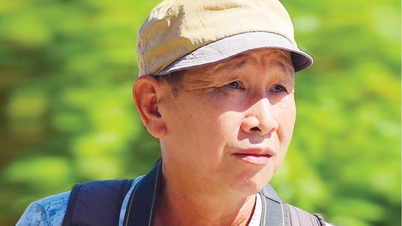
Mr. Nguyen Cong Sanh
Photo: Ha Thanh Tu
1. In 2002, while serving as the Party Secretary of Phu Quy Island District (now Phu Quy Special Economic Zone, Lam Dong Province) - an island 56 nautical miles from the mainland - Mr. Nguyen Cong Sanh had few opportunities to return home to the mainland because each trip was difficult. However, whenever he did return, even for just a few days, his neighbors would see him diligently planting and tending to his trees. He gradually cut down the coconut trees and other fruit trees that had long been a source of income for his family in his 2-hectare garden, replacing them with forest trees.
He recounted: "I was born in 1950 in An Tin commune, Hoai An district, Binh Dinh province (now Van Duc commune, Gia Lai province ) . My father went to the regrouping area, and my family fled to escape persecution by the Saigon government. The garden in Tan Xuan commune, next to the Dinh River, is where I grew up, met revolutionaries, and became a revolutionary. From this garden to the forest is only a few steps. But later, under many pressures, the forest gradually disappeared until there was no forest left around here. Since then, even a heavy rain would cause floods to come down the river in droves. The 1999 flood was a historic one: it destroyed 2,000 hectares of crops and 3,000 hectares of vegetables in Ham Tan district, 75 motorboats (in La Gi town, which was then part of the old Ham Tan district ) were sunk, more than 250 were severely damaged, 14 fishermen died with their boats, and 13 went missing… I have always loved forests, so this incident made me think even more about how to protect the country. " "To live in harmony with the will of Heaven, which we often call 'following the natural order'."
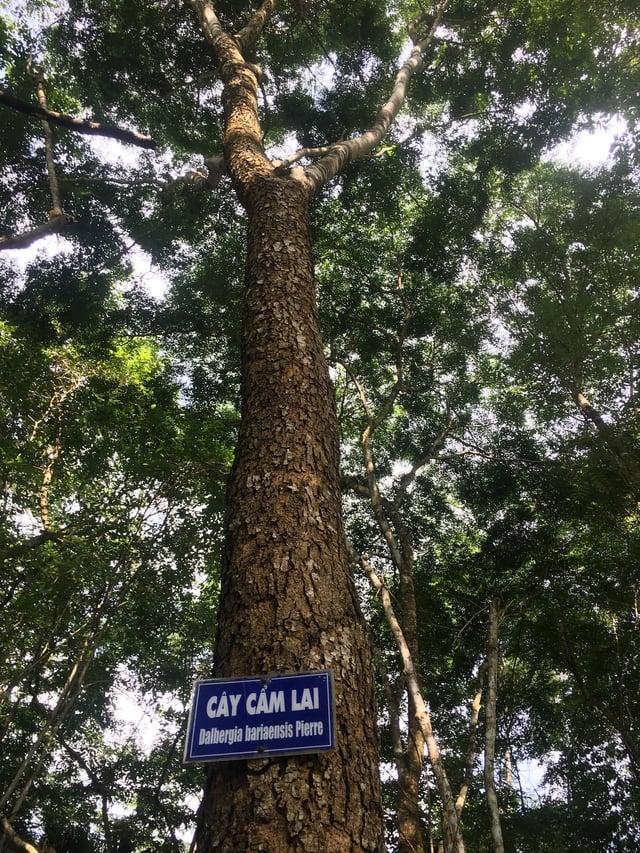
Rosewood tree
Photo: Ha Thanh Tu
So instead of focusing on planting fruit trees or valuable timber trees for economic purposes, Mr. Sanh thought about transforming his garden into a personal forest museum. His approach involved collecting valuable forest tree species, including endemic trees from the southeastern region of Vietnam, particularly the Ham Tan area, to create a forest space and habitat within his garden, entirely non-profit. One of his goals was to create a space for people and students to visit, explore, and learn about the forest trees that are disappearing; to educate his children, neighbors, and the wider community about the love of nature.
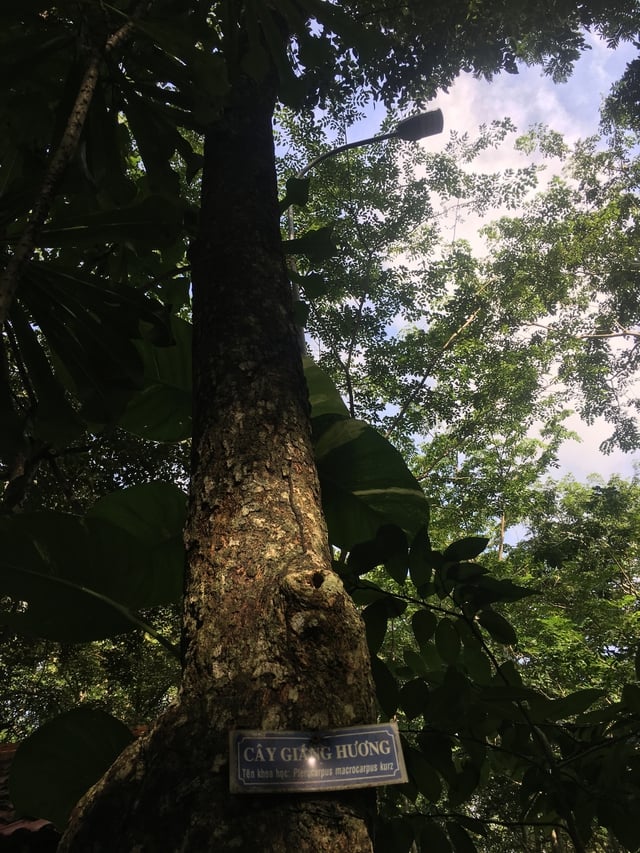
Sandalwood tree
Photo: Ha Thanh Tu
Mr. Sanh firmly believes: "I hope that many generations after me will understand that our homeland once had old-growth forests. The benefits of forests are immense. Without forests, if forests are lost, the land risks desertification and groundwater resources will decrease. As long as forests remain, preserving them will prevent floods."
As a respected local figure, Mr. Sanh suggested that his neighbors, when working on forestry or land reclamation projects, should bring back saplings of valuable timber or endemic species (such as the Bauhinia, Tram Bau, Sop, and Dipterocarpus), and he would partially compensate them for their efforts. He also purchased saplings from state-run forestry nurseries. In the early years, the forest museum was established in this way. From 2005 to 2010, Mr. Sanh moved from Phu Quy Island to the mainland to serve as the Party Secretary of Ham Tan District. After each workday, he dedicated two hours to the museum. From 2011 to 2020, he resigned from his position as District Party Secretary and became the CEO of a tourism company, while simultaneously enriching his forest museum.
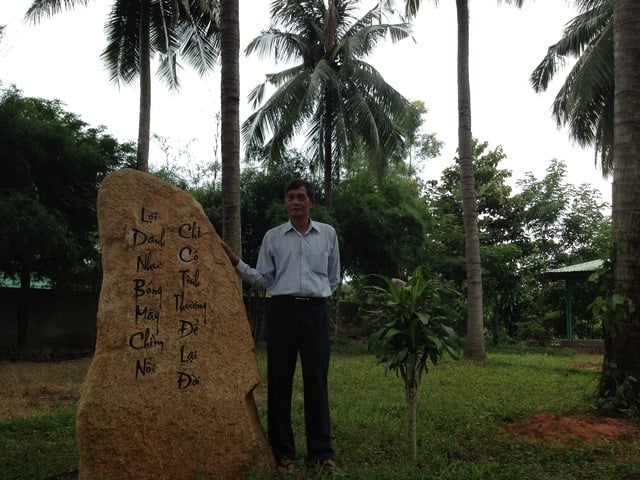
Mr. Sanh's garden before the forest museum was established.
Photo: Ha Thanh Tu
"Now that our children are grown and it's just my wife and I at home, I set aside a certain amount each month for family expenses, and the rest goes to the forest museum, about 150-200 million VND per year. This money is used to buy more young forest trees; hire people to care for them, build pathways; and create landscapes such as water features and hexagonal houses… so that visitors have a place to rest," Mr. Sanh shared.
By 2025, after 23 years of construction, the forest museum will have 80 species of forest trees, including endemic trees of the southeastern region of Vietnam and medicinal plants, wild bananas, wild guavas, etc. Among them are many valuable timber trees such as rosewood and red sandalwood, reaching trunk diameters of 30-50 cm and heights of 10-15 m. Each valuable tree has a nameplate attached to its base. The forest museum also represents various types of Vietnamese forests, such as evergreen forests including Dipterocarpus alatus, Dipterocarpus macrophyllus, Ba Ria rosewood, red sandalwood, and Pterocarpus indicus; semi-deciduous broadleaf forests such as Lagerstroemia indica and Eugenia caryophyllata; and wetland vegetation such as Barringtonia acutangula. "A good place attracts birds," and for more than 10 years, the forest museum has become a haven for birds and small animals.
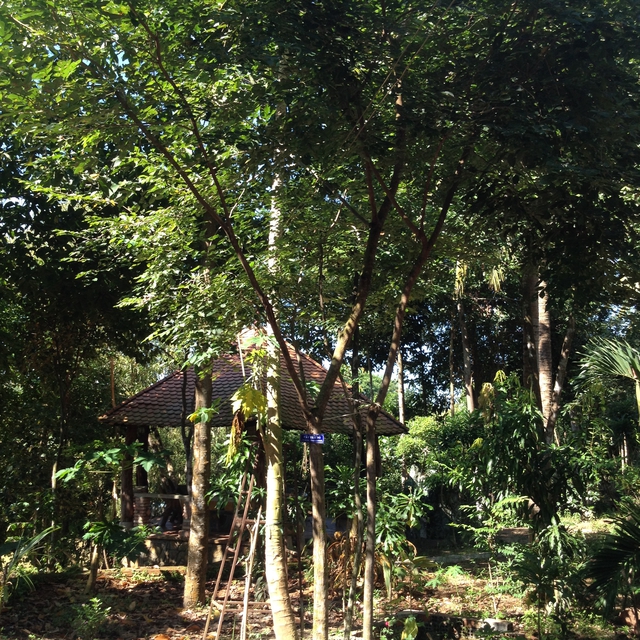
A corner of Mr. Sanh's forest museum.
Photo: Ha Thanh Tu
On summer mornings, after a morning rain, the clear sky emerges from behind the canopy of leaves, where flocks of starlings chatter excitedly in the high branches of the red sandalwood trees, sparrows chirp and flit from branch to branch in the wild guava trees, and when the sun rises, doves coo in the green star trees; then occasionally, a small "pop" sound echoes from the ground as wild guava or wild fig fruits are eaten by squirrels and fall to the ground; the buzzing of bees returning to their nests on the branches of the wild fig trees after collecting nectar from somewhere… All of this creates a soothing and slightly hazy symphony in the somewhat damp atmosphere due to the water vapor rising from the nearby river. As usual, the beehive is the focal point for visitors, and the museum owner constantly reminds everyone to be careful not to poke or damage it.
Mr. Sanh recounted: "There was a time when some people came up the river and shot birds and squirrels in the museum. I had to put up a sign reminding them right at the waterfront. Now everything is peaceful."
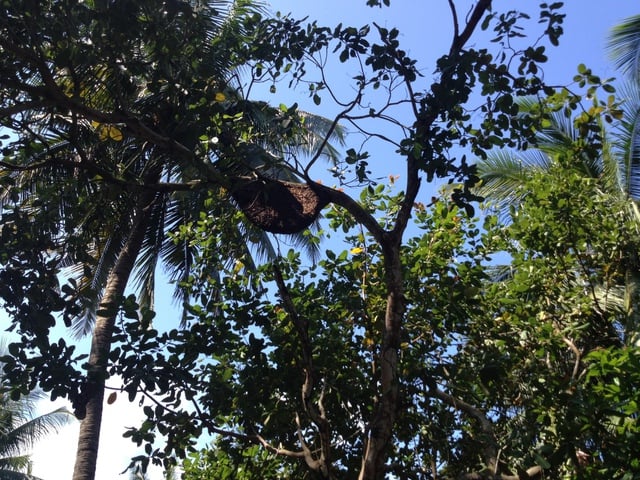
Beehives in Mr. Sanh's forest museum.
Photo: Ha Thanh Tu
2. This July, along with some of Mr. Sanh's friends, Mr. Ho Hoang Duan, former director of the medical center, and Dr. Do Van Anh, former director of Ham Tan Hospital (formerly), we visited the forest museum. The museum gate was wide open, and as always, no tickets were sold. A green space with many colorful leaves and types of trees appeared, like an exhibition space. Mr. Sanh said that a few days earlier, he had just welcomed many groups of visitors from far away. Visitors could stay for the day in the tiled-roof houses near the riverbank. We asked Mr. Sanh if he had to hire someone to collect the trash after each visit, and he shook his head. He said he didn't know whether it was because of their respect for him or their love for the green space, but visitors rarely littered. If there was trash, they put it in a plastic bag and carried it out of the museum.

The forest museum, a popular tourist attraction.
Photo: Ha Thanh Tu
"From the beginning of 2025 until now, about 700 visitors have come to the museum. Some officials from Binh Thuan province, before moving to Lam Dong to take up new positions, also stopped by, saying it was to leave a memento. For the past 10 years, on major holidays, the Senior Citizens' Association, the Veterans' Association, the Youth Union of Ham Tan District... have all borrowed the museum as a place for activities and awards ceremonies. Many primary and secondary schools in the area also bring students to visit and learn about forest trees as part of their extracurricular programs," Mr. Sanh added.

Source: https://thanhnien.vn/bao-tang-rung-ong-sanh-185250815182435369.htm














































































Comment (0)