

Patients are distributed across 30 districts, counties, and towns. Some districts and counties recorded a large number of cases, such as: Dan Phuong (46 cases); Thach That (29); Ha Dong (22); Cau Giay (20); Chuong My (17); Thanh Oai and Dong Da, 14 cases each; Thanh Xuan (13); Bac Tu Liem (11); Phuc Tho and Hoang Mai, 10 cases each.
From the beginning of 2024 to the present, the entire city has recorded 3,251 cases of dengue fever, a decrease of 74.5% compared to the same period in 2023.
This week, 23 dengue fever outbreaks were recorded in 19 districts, including Bac Tu Liem (3 outbreaks); Phuc Tho and Thanh Oai (2 outbreaks each); and Cau Giay, Chuong My, Dan Phuong, Dong Da, Hoai Duc, Hoan Kiem, Hoang Mai, Long Bien, Nam Tu Liem, Quoc Oai, Son Tay, Tay Ho, Thach That, Thanh Tri, Thanh Xuan, and Thuong Tin (1 outbreak each). The cumulative total for 2024 is 165 outbreaks, with 32 outbreaks still active.
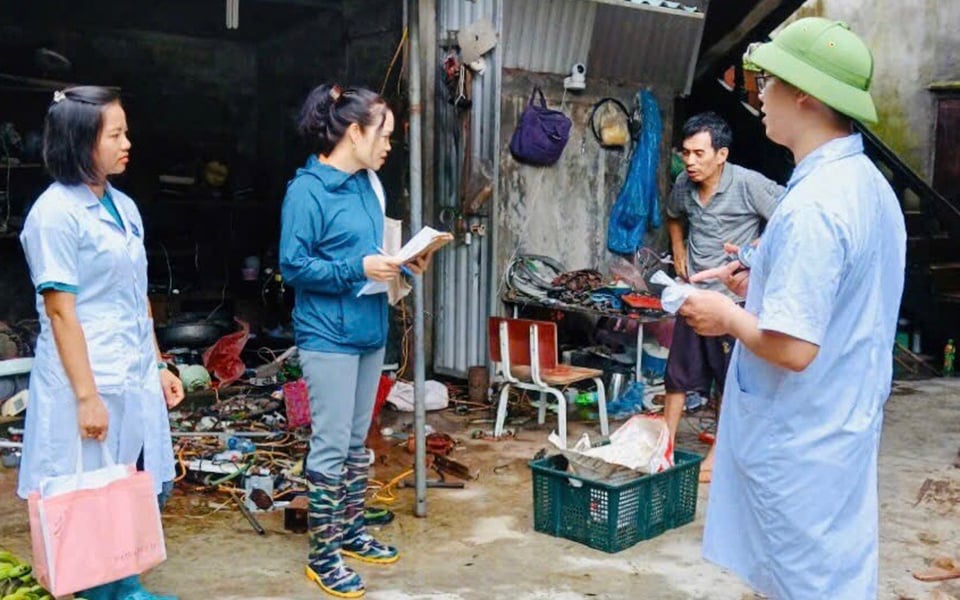
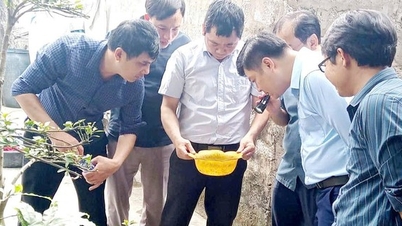
Over the past week, the Hanoi CDC has coordinated with relevant units to monitor, investigate, and handle outbreaks in areas with confirmed cases and clusters of infection. Simultaneously, units have ensured environmental sanitation and disease prevention in flood-affected areas in Nam Tu Liem, Soc Son, Ba Dinh, Dan Phuong, Thuong Tin, Me Linh, Tay Ho, Hoan Kiem, and Thanh Tri districts.
According to the Hanoi CDC, the peak season for dengue fever in Hanoi (September to November) has begun, with complex and unpredictable weather conditions, combined with heavy rainfall, creating favorable conditions for the breeding of mosquitoes that transmit dengue fever.
Monitoring results in some outbreak areas still show high insect indices exceeding risk thresholds, predicting that the number of cases will continue to increase in the coming period.
Next week, the Hanoi CDC will continue monitoring active dengue fever outbreaks in Quat Dong (Thuong Tin), Phung Xa (Thach That), Khuong Dinh (Thanh Xuan), Thuong Cat (Bac Tu Liem), Tan Hoi (Dan Phuong), Nhat Tan (Tay Ho), Hang Bot (Dong Da), My Hung (Thanh Oai), and Hop Dong (Chuong My).
District, county, and town health centers are organizing timely and effective handling of dengue fever cases and outbreaks, especially in areas with many patients; continuing to implement disease prevention and control measures, and ensuring environmental hygiene in high-risk areas and areas affected by flooding.
In addition, the Health Center, in coordination with relevant departments and organizations, will support and guide people in practicing personal hygiene and environmental and household hygiene immediately after the floodwaters recede (cleaning the environment as soon as the water recedes); and organize the spraying of chemicals to kill disease-carrying insects in high-risk areas after environmental sanitation has been carried out.
In addition, relevant units are closely monitoring and detecting early cases and outbreaks of infectious diseases occurring during and after floods in order to handle them promptly, such as dengue fever, diarrhea, conjunctivitis, influenza, cholera, typhoid fever, etc.
In addition, units are strengthening communication efforts, providing timely and comprehensive information on the disease situation and measures to prevent certain diseases such as dengue fever, whooping cough, measles, hand, foot and mouth disease, etc. For diseases with vaccines, people are advised to proactively get vaccinated fully and on schedule according to the guidelines of the health sector.
Source: https://kinhtedothi.vn/ha-noi-them-23-o-dich-sot-xuat-huyet-bat-dau-giai-doan-cao-diem.html
![[Photo] National Assembly Chairman Tran Thanh Man attends the opening session of IPU-152](https://vphoto.vietnam.vn/thumb/1200x675/vietnam/resource/IMAGE/2026/04/16/1776277863731_ctqh5-jpg.webp)
![[Photo] My Son at night: A thousand-year-old heritage site amidst the Milky Way](https://vphoto.vietnam.vn/thumb/1200x675/vietnam/resource/IMAGE/2026/04/15/1776261039184_ndo_br_chon6-jpg.webp)
![[Photo] The General Secretary, President and his wife meet with Vietnamese-Chinese friendship leaders.](https://vphoto.vietnam.vn/thumb/1200x675/vietnam/resource/IMAGE/2026/04/15/1776264829725_vna-potal-tong-bi-thu-chu-tich-nuoc-to-lam-gap-mat-nhan-sy-huu-nghi-viet-nam-trung-quoc-8703641-3130-jpg.webp)

![[Photo] Mrs. Ngo Phuong Ly meets and exchanges views with Mrs. Peng Li Yuan](https://vphoto.vietnam.vn/thumb/1200x675/vietnam/resource/IMAGE/2026/04/16/1776277858080_phu-nhan-1-jpg.webp)































































Comment (0)