

 |
| The Armenian elections on June 7th will decide the future of Prime Minister Nikol Pashinyan's government. (Source: dts-Agentur) |
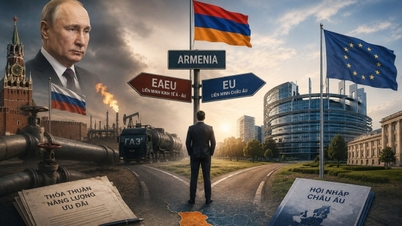
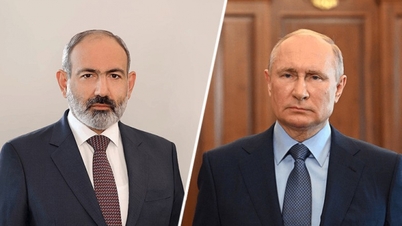
According to an article published in the German newspaper Deutsche Welle (DW) on June 3rd titled " Armenia Election Offers a Choice Between Russia and the EU ," this vote will not only decide the future of Prime Minister Nikol Pashinyan's government , but also reflect a larger choice: to continue moving closer to the European Union (EU) or to return to a trajectory closer to Russia.
According to a pre-election survey by the International Republican Institute (IRI), a Washington-based non-governmental organization, Pashinyan's ruling Civil Contract Party is leading with approximately 32% of voters stating they will vote in his favor.
Meanwhile, the pro-Russian opposition is lagging far behind. Specifically, the powerful Armenian coalition of billionaire Samvel Karapetyan only receives about 7% support. Karapetyan is currently under house arrest in Yerevan on charges of inciting a power grab after publicly supporting the Armenian Apostolic Church in its fierce confrontation with the government.
Former President Robert Kocharyan's Armenian Alliance, who has close ties to Russian President Vladimir Putin, is projected to win around 4% of the vote. Businessman Gagik Tsarukyan's Prosperous Armenia Party, which has official ties to Russia's ruling United Russia party, is expected to receive only about 2%.
However, experts note that these figures should be viewed with caution. The participation rate in the survey was only 16%, significantly lower than the 2021 snap election. Notably, nearly half of those surveyed declined to state their choice or said they had not yet decided who to vote for.
Nevertheless, other surveys also show that the ruling party still maintains a certain advantage, with approval ratings ranging from 26-34%.
EU or Russia?
According to the author , foreign policy is becoming a central theme of this year's election campaign. In recent years, Prime Minister Pashinyan's government has gradually strengthened relations with the EU, while distancing itself from Russia and the Collective Security Treaty Organization (CSTO), the military alliance led by Moscow.
In May 2025, the Armenian Parliament passed a law initiating the process of joining the EU. During his current election campaign, Pashinyan continues to pledge to bring Armenia to visa-free status with Europe within the next two years.
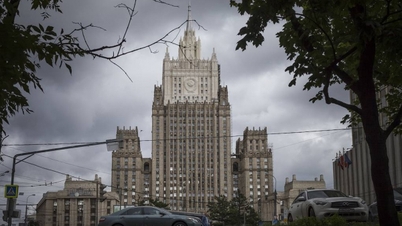
In early May of this year, Armenia also hosted the European Political Community Conference in Yerevan. Following the conference, Pashinyan declared that Armenia "is not an ally of Russia" in the conflict in Ukraine. This statement quickly drew a strong reaction from Moscow.

For Russia, the ruling Civil Contract Party now describes bilateral relations as being in a "transitional" phase, rather than maintaining the traditional alliance model. This shift began in 2022, when Armenia argued that the CSTO and Russia had failed to meet expectations in providing security support to Yerevan during border clashes with Azerbaijan.
Conversely, the opposition argues that Armenia cannot jeopardize its relationship with Russia, its most important security and economic partner, given the ongoing risks in the reconciliation process with Azerbaijan.
Russia sends a tough signal.
While Armenia is gradually drawing closer to the EU, Russia is also beginning to send tougher signals to remind Yerevan of the cost of a geopolitical pivot.
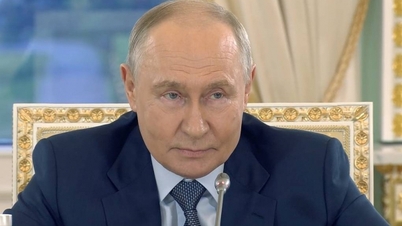
In late May, Russian President Vladimir Putin warned that he might impose additional tariffs on Armenian goods and tighten legal conditions for Armenian workers in Russia. Moscow also proposed that Yerevan hold a referendum to choose between remaining in the Eurasian Economic Union or pursuing integration with the EU.
These warnings are particularly noteworthy because Russia remains Armenia's largest export market for agricultural products and plays a crucial role in energy and employment for this Caucasus nation's economy.
Just before the elections, the Russian Federal Veterinary and Phytosanitary Service imposed further restrictions on imports from Armenia, including vegetables, fruits, wine, flowers, and fish, citing failure to meet hygiene standards.
Moscow has also signaled that it may reconsider preferential gas and fuel agreements for Yerevan.
Putin even compared the current situation in Armenia to that of Ukraine in 2014, warning that if Yerevan opted for European standards, economic cooperation between the two countries could be severely impacted.
A new direction with the US
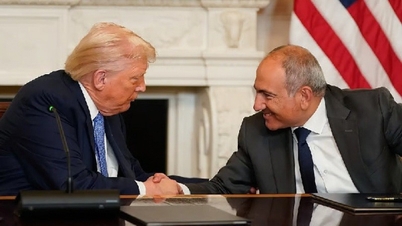
Alongside its rapprochement with the EU, the Armenian government is also expanding cooperation with the United States. The two countries recently signed a Charter for Comprehensive Strategic Partnership and a memorandum of understanding on cooperation in rare earth minerals.

In August 2025, Armenia and Azerbaijan also made progress on a logistics project brokered by US President Donald Trump, often unofficially referred to as the “Trump Route”.
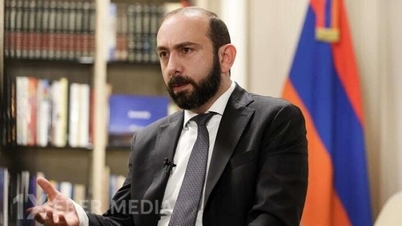
On June 4th, Armenian Foreign Minister Ararat Mirzoyan signed a framework agreement on strategic cooperation with the United States within the framework of this project, and the document now only needs to be ratified by both sides.
This project aims to connect Azerbaijan with the Nakhchivan region via southern Armenia, while also opening up prospects for expanding links with partners in the region and around the world.
Regardless of the election results, this vote is likely to mark a significant turning point in shaping Armenia's strategic identity – a country striving to balance its security legacy tied to Russia with its aspirations for deeper integration with Europe amidst the continuing volatility of the South Caucasus region.
Source: https://baoquocte.vn/bau-cu-armenia-su-lua-chon-giua-nga-va-eu-401853.html
































![[Video] Sunset at Lap An Lagoon – Where the sun sets over the fishing nets](https://vphoto.vietnam.vn/thumb/1200x675/vietnam/resource/IMAGE/2026/05/31/1780192137701_beach-landscape-sea-water-nature-grass-745871-pxhere-com.jpeg)






















Comment (0)