

 |
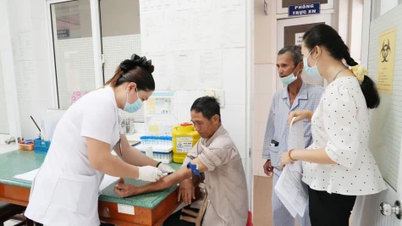
Children with hand, foot, and mouth disease need to be taken to a medical facility for timely treatment. Photo: Hoai Bao . |
Doctors at the Intensive Care and Toxicology Department of Nghe An Obstetrics and Pediatrics Hospital have successfully saved a 23-month-old child suffering from hand, foot, and mouth disease stage IV - the most severe stage of the disease with a very high risk of death.
Before being hospitalized, baby D.TBN developed blisters on the palms and soles of her feet and mouth ulcers. Her family monitored her at home, believing these were common symptoms of hand, foot, and mouth disease. However, shortly afterward, the child developed a persistent high fever, frequent seizures, fussiness, and lethargy, prompting her to be taken to a local medical facility.
Here, the child was diagnosed with hand, foot, and mouth disease grade IIb group 1 and received initial treatment. However, the disease progressed very rapidly. When seizures and respiratory failure occurred, the child received emergency care and was then transferred to Nghe An Obstetrics and Pediatrics Hospital.
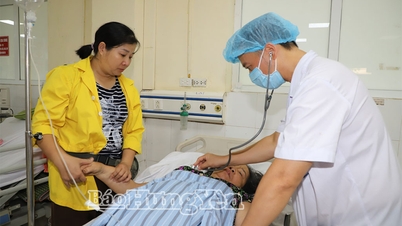
Upon admission to the Intensive Care and Toxicology Unit, the child was in critical condition with symptoms including lethargy, severe respiratory distress, rapid breathing, numerous moist rales in the lungs, abdominal distension, continuous jerking, cyanotic lips, rapid and weak pulse that was difficult to detect, and prolonged high fever. After an urgent consultation, the doctors determined that the child had hand, foot, and mouth disease stage IV with serious neurological and respiratory complications.

Immediately, the medical team implemented a series of intensive resuscitation measures such as endotracheal intubation and mechanical ventilation, establishment of a central venous catheter, invasive hemodynamic monitoring, administration of anti-edema medication, sedatives, intravenous immunoglobulin (IVIG) infusion, and continuous hemodialysis along with many other intensive resuscitation techniques.
After several days of treatment and close 24/7 monitoring, the child's condition gradually improved. The child regained consciousness, was successfully weaned off the ventilator, breathed well on their own, stopped having seizures, ate and drank normally, and, importantly, showed no neurological sequelae.
Dr. Nguyen Hung Manh, Head of the Intensive Care and Toxicology Department, said that hand, foot, and mouth disease is a common infectious disease in young children. Most cases are mild, but some cases, especially those caused by Enterovirus 71 (EV71), can become severe very quickly.
"When the disease progresses to stage III or IV, children may experience neurological complications, respiratory failure, circulatory failure, and a high risk of death. Therefore, signs such as high fever that is difficult to bring down, startled reactions, trembling hands and feet, prolonged crying, lethargy, or rapid breathing should be considered dangerous warning signs," Dr. Manh emphasized.
Experts advise parents not to be complacent when children contract hand, foot, and mouth disease. As soon as any unusual symptoms appear, children should be taken to a specialized medical facility for examination and timely treatment.

Source: https://znews.vn/be-gai-nguy-kich-vi-can-benh-quen-thuoc-post1656575.html
















































![[Video] Sunset at Lap An Lagoon – Where the sun sets over the fishing nets](https://vphoto.vietnam.vn/thumb/1200x675/vietnam/resource/IMAGE/2026/05/31/1780192137701_beach-landscape-sea-water-nature-grass-745871-pxhere-com.jpeg)



































Comment (0)