


Attending the closing session were Comrade Tran Luu Quang, Member of the Central Committee of the Party, Deputy Prime Minister; Comrade Le Quoc Minh, Member of the Central Committee of the Party, Editor-in-Chief of Nhan Dan Newspaper, Deputy Head of the Central Propaganda Department, President of the Vietnam Journalists Association ; representatives of leaders from press management agencies, ministries, departments, businesses, and central and local news agencies and press organizations.

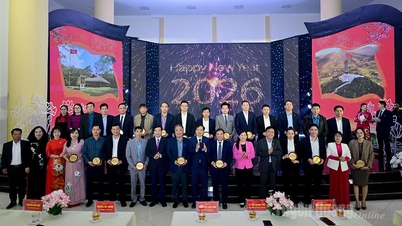
Delegates attending the closing session.
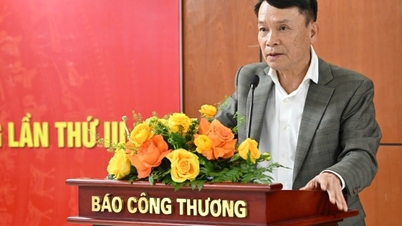
In his closing remarks at the Forum, Comrade Le Quoc Minh affirmed: After 10 in-depth discussion sessions, the 2024 National Press Forum has been a great success. The Forum received many insightful presentations, assessments, and discussions from journalists, managers, and researchers.
Summarizing the key points and specific conclusions of each discussion session, the comrade stated that in the first session, "Enhancing Party spirit and orientation in journalistic activities," there was high consensus on fundamental issues: the important role of revolutionary journalism in disseminating the Party's guidelines and policies, and the State's laws and regulations; a bridge connecting closely with the people; a pioneering force in protecting the Party's ideological foundation and the regime, protecting national and ethnic interests, and safeguarding national unity; contributing to combating evil and negativity, and protecting and honoring beauty and human values.
All opinions affirmed that Party spirit and orientation are the guiding principles running throughout revolutionary journalism, while frankly pointing out the enormous challenges, such as information competition in the digital age, where public psychology, tastes, and media are changing; and the limitations, weaknesses, and areas for innovation inherent in the operational mechanisms of the Party's press agencies.
In addition, there is stagnation and rigidity among a segment of journalists; slow innovation in newsroom management, information direction, investment in staff and journalistic infrastructure; and a mismatch between expectations regarding the responsibility of leading information dissemination and a mechanism that has revealed shortcomings, inadequate investment, and a workforce that has not kept pace in terms of both competence, skills, and integrity.
In the second session , "Building a Cultural Environment for Journalism," speakers emphasized that a cultural environment for journalism serves as a foundation for the proper and professional development of Vietnamese journalism. Therefore, it is necessary to prioritize cultural elements in professional activities and journalistic works; to uphold humanistic values, solidarity, mutual support, and strive towards the values of "truth, goodness, and beauty," spreading positive values, combating and refuting false and negative viewpoints, and fostering a positive spiritual foundation for society.
At the same time, a cultural core must be built, starting with the strict implementation of the six criteria for building a culturally-oriented press agency and the six criteria for culturally-oriented journalists. Press agencies must effectively fulfill the role and mission of revolutionary journalism in preserving, building, and developing an advanced Vietnamese culture rich in national identity.
Regarding the question of whether economic factors are "diluting" the cultural element in journalism, speakers argued that media management agencies must be creative and proactive in finding secure funding sources so that journalists can make a living from their profession. Journalists must seek out the true and inherent values of journalism: humanity, honesty, and fighting for justice.
In the third session, "Data Journalism and Superior Content Strategy," the discussion results showed that media organizations with effective superior content strategies must develop data journalism. Open data sources, linked data, and the media organizations' own data, especially data for analyzing journalistic trends, will form the basis for filtering and enriching data, analyzing and evaluating data, and visualizing data. These are fundamental operations for applying data journalism in multimedia storytelling, creating distinctive and superior journalistic content.
To develop data-driven journalism, it is necessary to understand its nature, role, and implementation conditions, and to have a comprehensive solution based on theory and practice, capabilities, resources, global trends, and the specific audience of each media organization. Superior content can only be achieved when media organizations innovate in all four areas: product and service strategy, operational activities, audience/customer relations, and media economics.
Opinions also affirm that data journalism is an inseparable direction from the flow of Vietnamese journalism. For sustainable development, in addition to media organizations proactively researching and finding their own data journalism models and superior content strategies, it is necessary to build a professional, modern media ecosystem oriented towards digital journalism. Through this ecosystem, media organizations will be able to readily share and connect data.
To achieve this, the role of guiding, managing, and leading agencies such as the Central Propaganda Department; the Ministry of Information and Communications; and the Vietnam Journalists Association is crucial. Accordingly, the Central Propaganda Department and the Ministry of Information and Communications need to advise on and refine the Party's guidelines and policies, and the State's policies; the Vietnam Journalists Association plays a leading and advisory role in building management and operational models for media agencies in developing this ecosystem.
In the fourth session , "Investing in and Applying Technology Effectively in Newsrooms," speakers noted that journalism in the digital age cannot be separated from technology; in fact, technology is driving journalism, and most large newsrooms will develop into technology-media corporations. However, to realize this ambition, newsrooms need to diversify their revenue streams and develop digital business models. Therefore, investing in technology is also about creating new revenue streams, replacing traditional ones.

Journalist Thi Uyên (Nhan Dan Newspaper) presented a paper during the discussion session on effective investment and application of technology in newsrooms.
Experts also believe that Artificial Intelligence (AI) is becoming a game-changer, not only for journalism but on a broader scale. However, Vietnamese media outlets are facing numerous challenges, from a lack of legal framework to the core technologies needed to enter this arena.
Based on the above issues, experts have offered suitable solutions so that small and medium-sized newsrooms can also choose and find the right direction for themselves, in order to keep up with the trends of world journalism.
In the fifth session , "Diversifying Revenue Sources for Media Organizations," participants shared the common view that media revenue poses numerous challenges for media organizations today. If they rely solely on advertising, media organizations will constantly face the risk of declining revenue, especially as many other methods of attracting customers no longer involve media outlets. Businesses are increasingly seeking other effective ways to promote their products and sell their goods. Furthermore, the deliberate and selective use of content from media organizations by news websites and social media platforms also attracts advertising revenue, further shrinking the economic pie for media organizations.
News organizations are striving to diversify their reach to readers by engaging more with social media platforms. This diversification of channels is crucial because revenue is essential for attracting readers. According to the speakers, news organizations have made significant strides, with a large portion of their revenue now shifting to digital platforms. This transformation stems from substantial investment in technology and changes in the mindset and journalistic habits of reporters and editors.
In the sixth session , "Reportage, Investigative Reporting, and the Journey of Doing Something Useful," the speakers presented four solutions and recommendations for developing investigative journalism.
Firstly, we need to continue having programs, curricula, and personnel to train investigative journalists starting from when they are still in university.
Secondly, at media organizations, especially large ones, depending on the conditions, they should restore the group/team/department specializing in investigative journalism. On the issues, interfaces, and programs of media organizations, they should maintain sections and programs with names associated with the genre to "keep the flame alive" for the genre and retain readers who enjoy it, while also attracting and developing new reader groups.
Thirdly, appropriate policies and mechanisms regarding working conditions and income are needed to encourage writers in this field to work with peace of mind, earn a decent income, and have security in case of risks or incidents. A "Risk Prevention Fund" could be established if necessary. Media organizations should prioritize investment in technology and media to support journalistic works that are not only high-quality but also visually appealing and reach readers as quickly as possible.
Fourth, the Vietnam Journalists Association and the Ministry of Information and Communications need to study mechanisms and policies, and make recommendations to consider investigative journalists as public officials.
Session 7, "The Competitiveness of Television in the Age of AI," with 4 presentations, discussion sessions, and video slideshows, concluded that: Artificial intelligence technology is revolutionary in creating vivid images and content. At the same time, it is also a tool for understanding and serving the public in the best possible way.
Artificial intelligence will create a liberation of labor and dramatically increase labor productivity in television production. This will help the television industry leverage its strengths.
Furthermore, the risks that artificial intelligence generates also pose significant challenges in television program production. Artificial intelligence can create content that is similar to copyrighted content, leading to intellectual property infringement.
When initial information is inaccurate or misleading, or the data is incomplete, erroneous, or even false, innovative AI models struggle to transparently verify objective facts.
Inequality, bias, and the presentation of inhumane information are also potential risks that artificial intelligence could bring to television if we become too dependent on this technology.
Undeniably, artificial intelligence is creating and will continue to create positive effects in television program production. However, the role of human intelligence in the products created by artificial intelligence needs to be further enhanced and given greater focus.
Simultaneously, to enhance the competitiveness of television in the AI era, we need to continue creating and sharing authentic and humanistic information. This data contributes to Vietnam's large data repository. From there, artificial intelligence in Vietnam will have a great opportunity to develop, and the competitiveness of television will increase. Artificial intelligence will empower creativity for those working in television.
In the 8th session, "Dynamic Broadcasting in the Digital Environment," both participants and the audience unanimously agreed that digital transformation is an inevitable and irresistible trend for all media organizations. Broadcasting stations need to clearly understand the difficulties, challenges, and opportunities for development in the digital age in order to develop appropriate investment and development strategies.
Furthermore, to adapt to the digital environment, changing the mindset of reporters, editors, and especially broadcasting management staff is the most important factor. In addition, the human element is central to the development of digital content, from reporters and editors to listeners.
Furthermore, it is necessary to invest resources, including human, material, and financial resources, to develop radio broadcasting and ensure healthy competition with other forms of journalism in the digital environment.
Opinions suggest that, in order for radio and television stations, and the channels of the Voice of Vietnam, to survive and develop, it is essential to build a strategy for developing radio content on digital platforms. This strategy requires specific solutions, as well as proposals and recommendations to the competent authorities, so that Vietnamese radio can develop and compete fairly with other forms of media on digital platforms.
In the 9th session, "Effective Collaboration Models Between the Press, Businesses, and Advertising Agencies," speakers unanimously agreed that, not limited to advertising and brand communication collaborations, the press and businesses can fully cooperate in public education, promotion, and shaping consumer trends aligned with a green, responsible, environmentally friendly, and sustainable lifestyle. This directly benefits businesses developing according to ESG models – environmental, social, and sustainable governance.
Collaborative efforts to build a transparent and objective image for businesses on reputable and trustworthy media platforms are the foundation for building trust in the company. Content marketing is a logical and effective approach, paving the way for a collaborative solution called branded content – journalistic content that communicates the brand in various forms, both in and outside of print, suitable for the multi-platform model of modern journalism.
According to the speakers, businesses must recognize that their individual interests are part of the overall interests of the industry, the region, the nation, and the entire socio-economic system. Participating with the press in media projects and programs, contributing to solving social, environmental, and cultural issues, is a form of deep and sustainable cooperation. On the part of the press, it is also necessary to focus on developing programs that are tailored to each business, truly relevant to social life, and capable of supporting the promotion of the business's image in a positive and effective way.

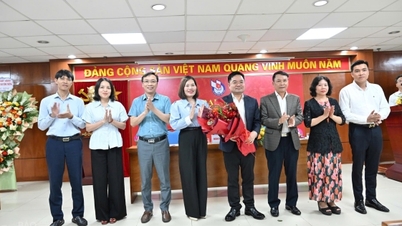
Comrade Le Quoc Minh, Member of the Central Committee of the Party, Editor-in-Chief of Nhan Dan Newspaper, Deputy Head of the Central Propaganda Department, and President of the Vietnam Journalists Association, presented flowers to the speakers participating in the discussion sessions within the framework of the 2024 National Press Forum.
In the 10th session, "Protecting Journalistic Copyright in the Digital Age," the discussion raised several issues: the legal framework concerning authorship, intellectual property rights, and related rights serves as a basis for warning, preventing, detecting, and punishing violations. However, shortcomings and fragmentation remain. Furthermore, from the perspective of content creators and stakeholders, journalists and media organizations are still hesitant and not truly proactive in protecting their rights.
The speakers discussed effective solutions for protecting journalistic copyright in the digital environment; enhancing the capacity to protect and exploit the copyright of journalistic works; and contributing experiences in handling and protecting journalistic copyright. They also contributed to the process of amending the Press Law to improve the legal framework for journalistic copyright and promote the development of the journalistic economy.
Highly appreciating the quality of all 10 working sessions, Comrade Le Quoc Minh expressed his hope that the discussion results of this year's National Press Forum would be realized and bring about positive changes in Vietnam's revolutionary press.
Source


















































































Comment (0)