 |
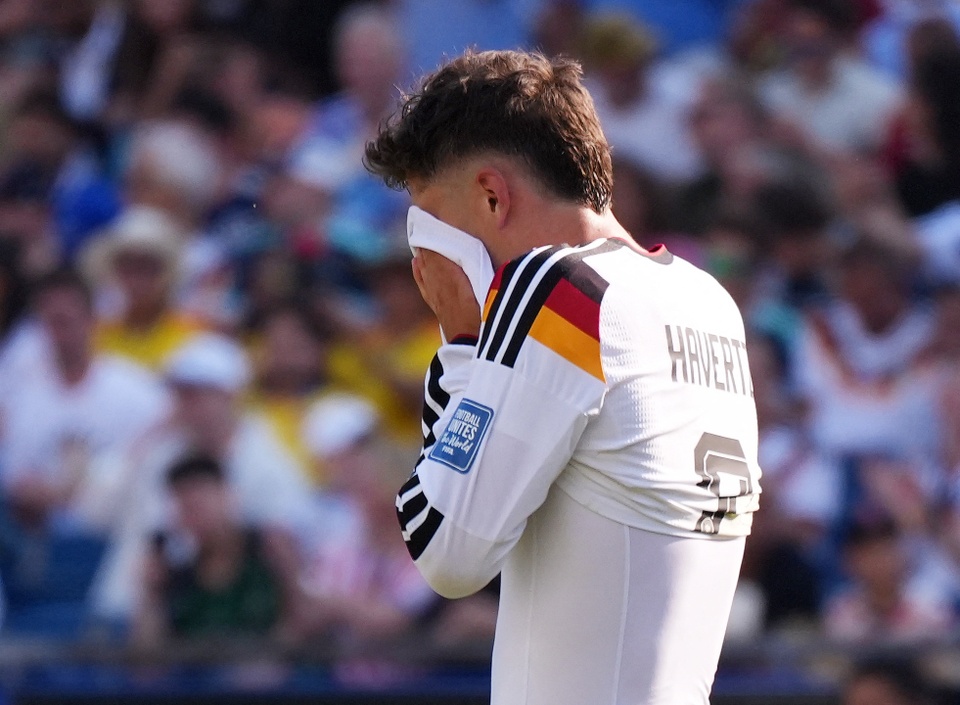
Germany exited the World Cup in disappointment for the third consecutive time. |
"The Tank"—the nickname given to the German national team by the international media—reflected the traditional qualities of German football: physical strength, tactical discipline, efficiency, and an iron will. But now, all of that is just a memory.
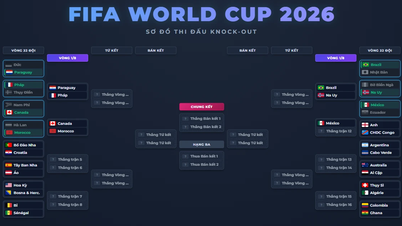
For the first time in their World Cup history, Germany succumbed on penalties. For the third consecutive time since 2018, "Die Mannschaft" bowed out of the world's biggest football tournament in humiliation. But the loss to Paraguay wasn't just a temporary shock; it marked the darkest chapter in a decade-long decline, since their victory in Brazil in 2014.
In July 2014, German football returned to its peak in Rio de Janeiro, Brazil, when Mario Götze unleashed a stunning volley against Argentina. Joachim Löw's team at that time was a perfect unit: steely resolve, sharp tactical thinking, and outstanding individual technical skills. But from that moment of glory, the seeds of collapse began to sprout.
Captain Philipp Lahm decided to retire from the national team. Other key players like Bastian Schweinsteiger, Mats Hummels, Jerome Boateng, Sami Khedira… began to enter a period of decline. The decline was subtle but noticeable. Coach Löw did not aggressively implement a generational transition plan, and he brought too many aging stars to the 2018 World Cup – players who had achieved glory but lacked ambition.
A facade concealing a deadlock.
On Russian soil, the once sharp German team became monotonous and lackluster. They held possession and constantly passed the ball back and forth, but their attacking tempo was too slow. They completely lacked the ability to penetrate defenses and create clear scoring opportunities.
A high ball possession rate of 60-70% was merely a facade to conceal the deadlock. From being the "bogeyman," Germany became easy prey for lower-ranked teams. Opponents only needed to defend in bunkers and launch quick counter-attacks from German turnovers. The defending champions were eliminated in the group stage after humiliating defeats against Mexico and South Korea.
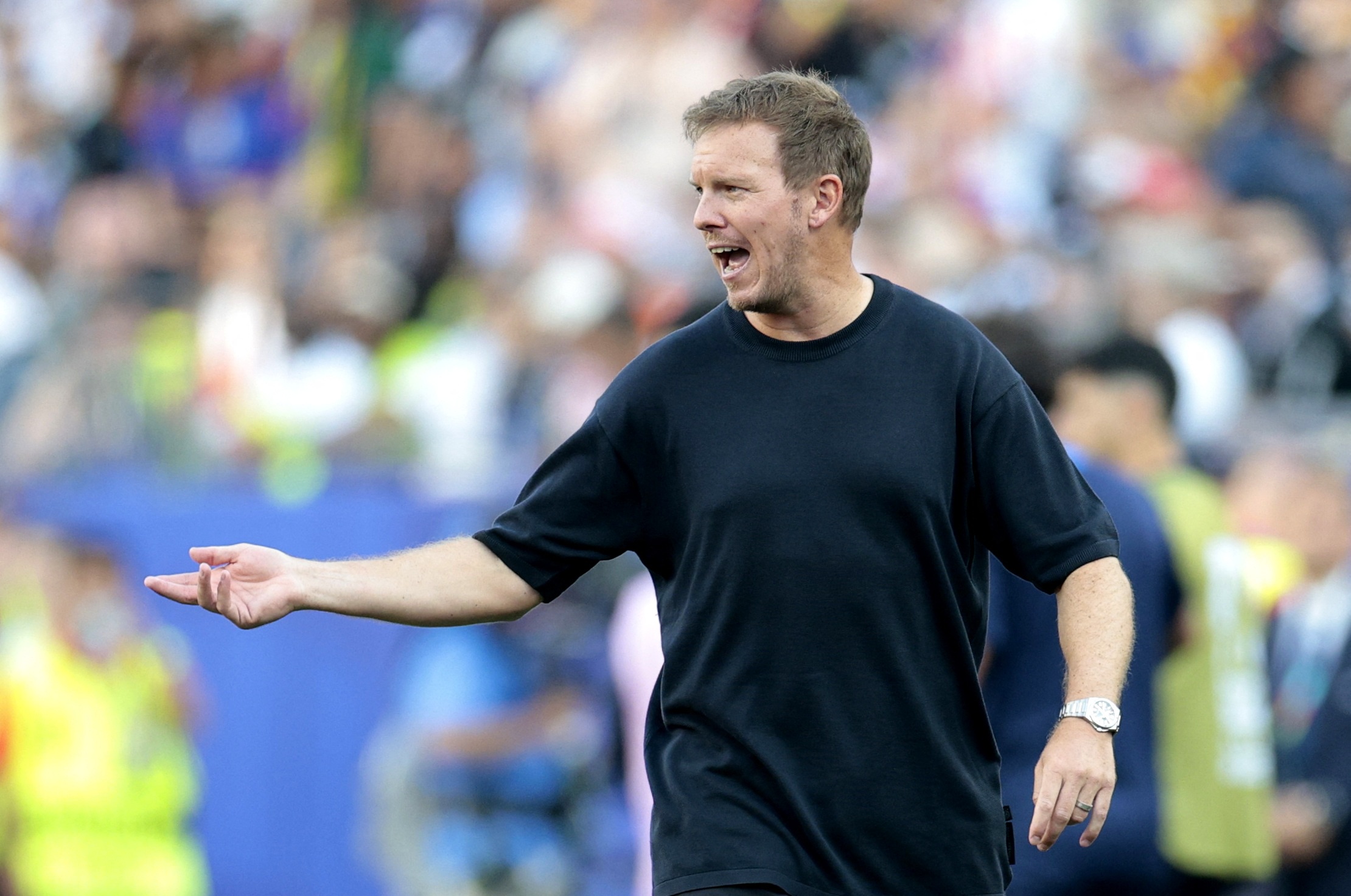 |
Nagelsmann has yet to pull Germany out of the vicious cycle of possession-based play lacking attacking threat. |
The German Football Association (DFB) reacted slowly and weakly, and coach Löw remained in charge. But the magic was over. He struggled with half-hearted reforms, and Germany disappointed at Euro 2020.


Hansi Flick was expected to play the role of "savior" after Bayern Munich's legendary treble, but the 2022 World Cup campaign was a shock. For the second consecutive time, Germany were eliminated in the group stage. The common thread in these failures was their "confused ball control" style of play.
In 2023, Schweinsteiger caused a stir when he asserted that German football was killing itself by blindly applying Pep Guardiola's tiki-taka philosophy to the national team. By focusing too much on ball control, Bundesliga clubs and Germany were gradually losing their physical strength, tight tactics, lightning-fast counter-attacks, and effective aerial ability.
This rigid, standardized approach also affects the entire training process of German football. Academies continuously produce technically gifted "number 10s," but German football is severely lacking in powerful and sharp strikers. They also lack physically strong defensive midfielders or tireless attacking and defending full-backs. This prioritization of "technical skill" is gradually killing off the hallmarks of German football.
The German players held possession and made many passes, but ultimately they fell into a trap: their ball control lacked purpose, they were unable to penetrate defenses, and they were powerless against well-organized backlines.
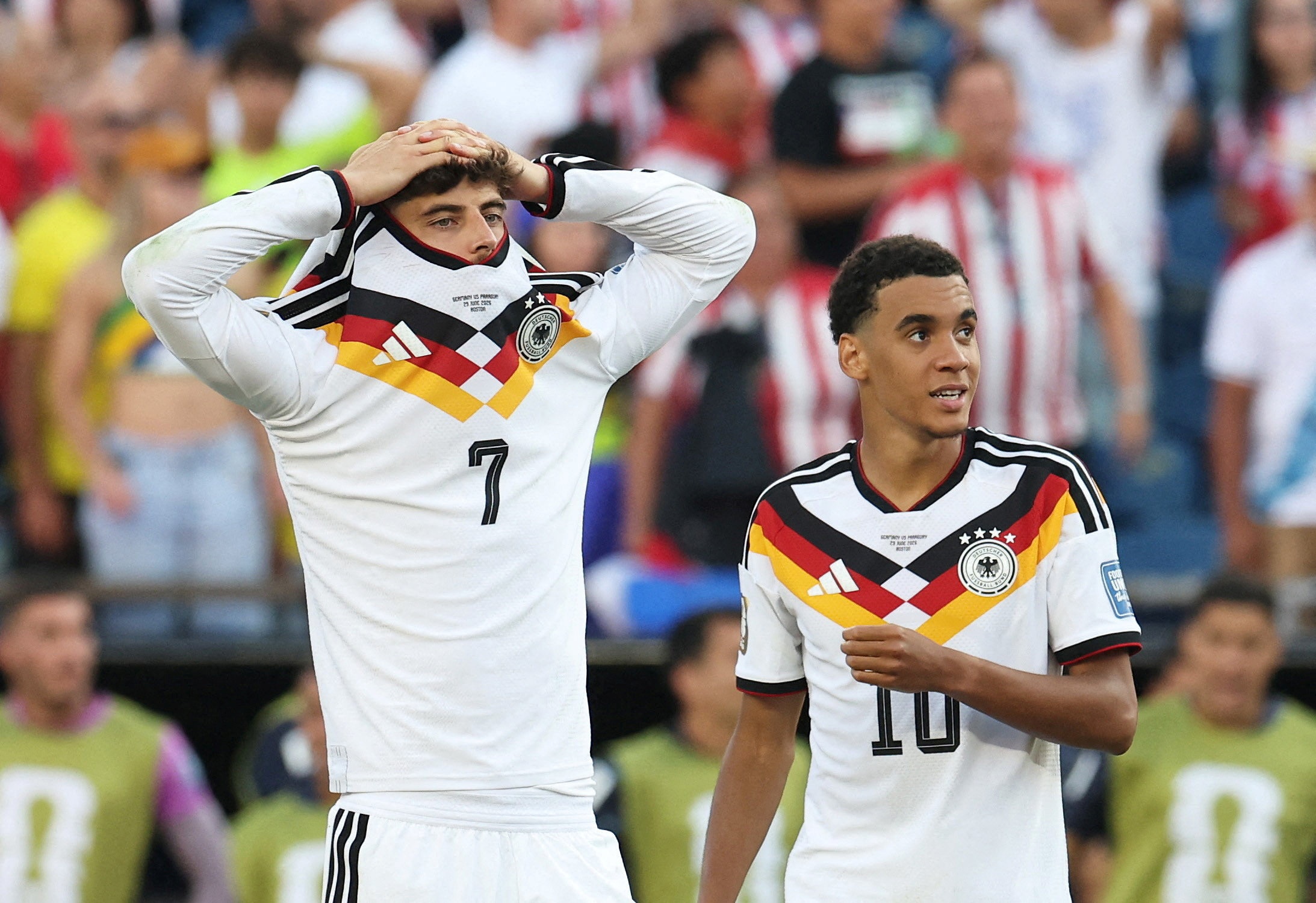 |
The defeat against Paraguay has put German football in need of fundamental reform. |
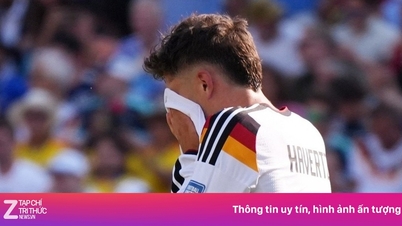
At the 2022 World Cup, Hansi Flick was obsessed with deploying Kai Havertz as a "false nine" to improve ball retention and passing, to the point of neglecting a true striker like Niclas Füllkrug even when Germany needed to score. The consequence was that all expectations were dashed.
It no longer makes anyone afraid.
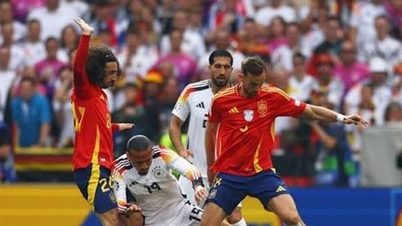
At Euro 2024, it seemed as though German football had rediscovered its winning ways, playing quite well thanks to the return of Toni Kroos and the high form of two young stars, Jamal Musiala and Florian Wirtz. They only lost due to bad luck to Spain.
But then coach Julian Nagelsmann fell into the trap of a "half-hearted" tiki-taka: trusting Havertz in the role of a "false nine," eliminating powerful and fast wing attackers, and applying a tactic of concentrating a large number of players in the central area.
It's no surprise that Germany at the 2026 World Cup will have very high possession rates but create only a handful of clear-cut scoring opportunities. Facing any team that plays tight defense and possesses strong physical fitness, Germany will struggle and easily concede goals from quick counter-attacks.
Following the defeat against Paraguay, Nagelsmann admitted: "Germany is no longer among the top teams in the world." Captain Joshua Kimmich also reached a similar conclusion.



Finally, German football representatives have officially acknowledged the harsh reality. To put it more accurately, "Die Mannschaft" is now only considered a "second-tier" team in Europe, no longer inspiring fear or caution in any opponent.
History has shown the Germans rise again after the dark period of 1998-2004. Perhaps the failure at the 2026 World Cup is a necessary wake-up call for the entire German football system, prompting drastic reforms to rediscover its former strength, speed, and steely resolve.
The question is how the DFB will act. Perhaps the first and most necessary step is to sack Nagelsmann and appoint an "anti-Guardiola" coach like Jurgen Klopp to take over.
From the shock of being eliminated in the quarter-finals of the 1998 World Cup, it took them 16 years to return to glory. Now, how much time does German football need to escape this dark tunnel? At this point, perhaps even the wisest minds in German football would struggle to give an answer.
Source: https://znews.vn/bi-kich-cua-co-xe-tang-duc-post1664927.html

![[Image] National conference summarizing one year of operation of the overall organizational model of the political system, the three-tiered government model.](https://vphoto.vietnam.vn/thumb/1200x675/vietnam/resource/IMAGE/2026/07/01/1782882811691_ndo_br_1-jpg.webp)