


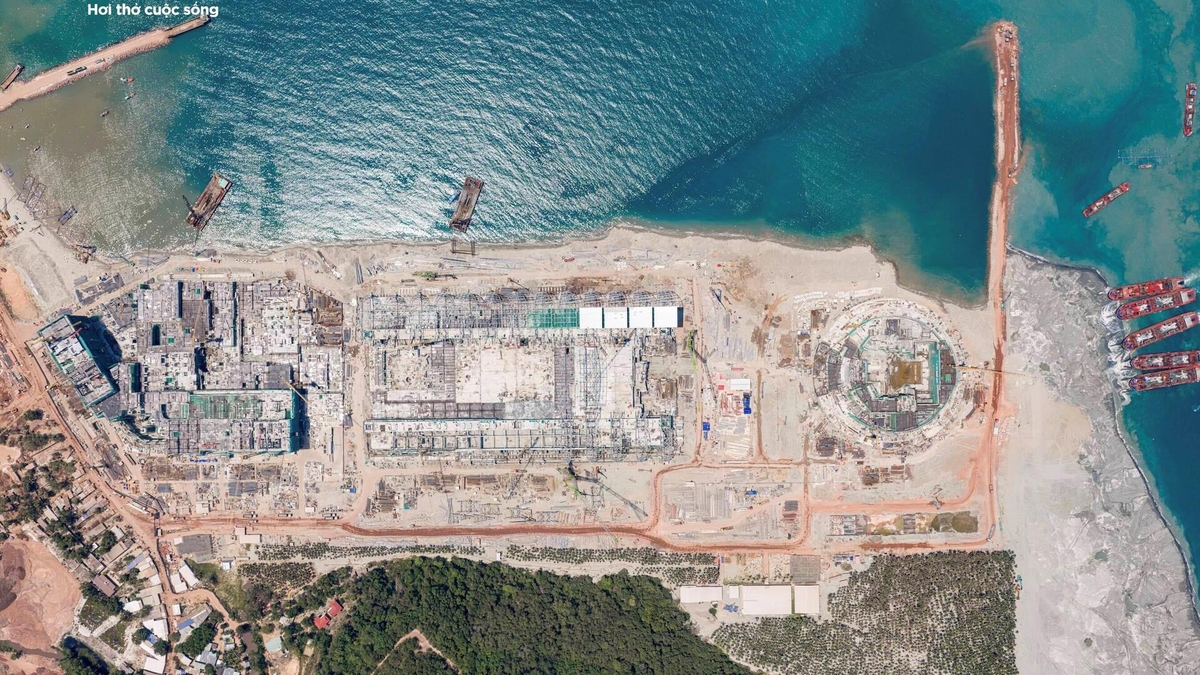
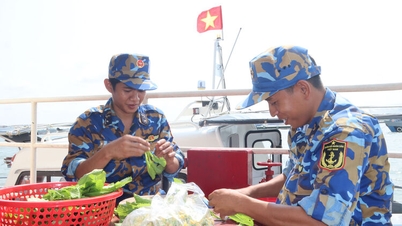
An Giang aims to become a strong maritime economic center of the nation. Photo: NGO CHUAN
Transforming the development mindset
After 40 years of reform, our country has achieved tremendous, historically significant accomplishments. From a centrally planned, underdeveloped economy, Vietnam has risen to become a middle-income country, with an economy among the largest in the region, the people's living standards have continuously improved, and its international standing and prestige have been increasingly affirmed. The 14th National Congress inherits these achievements while setting forth the goal of faster and more sustainable national development, proactively integrating deeply into the international community, building a socialist rule of law state, and developing a knowledge-based economy, digital economy, and green economy.
The 14th National Congress clearly established the requirement for a strong shift from a term-based mindset to a long-term strategic mindset, from management to development-creating, from mere growth to comprehensive, sustainable development with people at its center. This is an important ideological basis for refuting false and distorted views that Vietnam is "slow to innovate" or "lacks development momentum," while affirming the absolute, direct, and comprehensive leadership role of the Party in the revolutionary cause.
Immediately after the 14th National Congress, General Secretary To Lam, on behalf of the Politburo, signed Directive No. 01-CT/TW, dated January 23, 2026, on studying, understanding, disseminating, and implementing the Resolution of the 14th National Congress of the Party. The Directive demonstrates a very high level of political determination in transforming the resolution into concrete and effective actions, avoiding the situation where "the resolution is correct but slow to be put into practice." The Politburo requires that the organization of studying, understanding, disseminating, and implementing the resolution be carried out immediately, synchronously, regularly, richly, and vividly, harmoniously combining traditional methods with the effective application of science, technology, and digital transformation; combining self-study with listening to presentations, and strongly changing the mindset from "studying and understanding" to "deeply understanding - acting correctly - doing it to the end" in each step of implementation.
The spirit of "six clear points" is being promoted when the Politburo assigns Party committees, Party organizations, and their leaders to directly lead, guide, preside over, and take full responsibility for the quality of research, study, understanding, and dissemination of the Resolution of the 14th Party Congress; to develop action programs and specific plans with a focus on key areas, and to implement them regularly and continuously throughout the term. Besides requiring the completion of the action program in the first quarter of 2026, the Politburo also requires that the results of the action program be considered an important basis for reviewing and evaluating Party committees, governments, agencies, units, and their leaders annually and throughout the term.
Throughout the spirit of the "6 clear points"
Following the successful organization of the First Provincial Party Congress for the 2025-2030 term, the Provincial Party Committee issued an Action Program to implement the resolution, specifying key targets, priority tasks, breakthroughs, and requiring that the content of each task ensure "six clear points" (clear task; clear leading agency/unit, coordinating agency; clear measures and resources for implementation; clear timeframe; clear authority and responsibility; clear expected outcomes). During implementation, the Provincial Party Committee, together with Party committees, governments, the Fatherland Front, and political and social organizations at all levels, will plan to inspect and monitor the implementation; conduct periodic reviews and summaries; and regularly urge and inspect, especially regarding the responsibility of the heads of agencies and units. Simultaneously, timely encouragement and rewards will be given, along with corrective actions and accountability measures for collectives and individuals in the performance of assigned tasks.
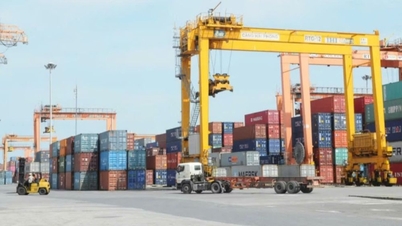
In its action plan, the Provincial Party Committee clearly assigned responsibilities for implementing 36 key targets for the 2025-2030 term, along with 3 breakthroughs and 3 main tasks: Focusing on developing the province's marine economy to become a national marine economic center; completing and upgrading infrastructure (completing the expressway connecting the region, ports, and airports in Phu Quoc and Rach Gia; researching the construction of an airport in the Tho Chau special economic zone; developing multi-functional seaports and river ports to serve logistics, import, export, and tourism); breakthroughs in the application of science, technology, innovation, and digital transformation in important sectors and fields of the economy, comprehensively transforming the governance model, and focusing on building a digital government.
The effective implementation of the action program to carry out the resolutions of the Provincial Party Congress, in conjunction with the resolutions of the 14th National Party Congress, is a crucial condition and driving force for realizing the goal of making An Giang a relatively developed province in the country and a strong maritime economic center of the nation, in line with the motto "One An Giang - One Vision - One Will - One Belief in Victory".
| In the action plan to implement the resolution of the Provincial Party Congress for the 2025-2030 term, the Provincial Party Committee assigned 7 main tasks regarding Party building and the political system; 12 main tasks regarding economic development, science, technology, and environmental protection; 4 main tasks regarding cultural, social, and human development; and 4 main tasks regarding national defense, security, and foreign affairs. |
NGO CHUAN
Source: https://baoangiang.com.vn/bien-nghi-quyet-thanh-hanh-dong-a475964.html
































































Comment (0)