Behind the message of organizational reform lies a deeper demand: building a modern, honest, and responsible governance culture, with citizens and businesses as the ultimate measure of reform effectiveness.

Reforming the administrative apparatus first and foremost means reforming the management culture.
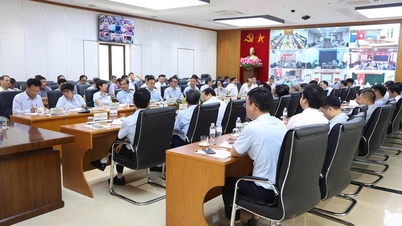
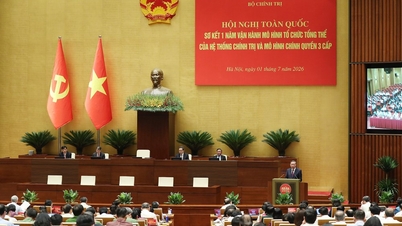
Every major national reform, when viewed in depth, is not merely a change in organizational structure, model, or name. It is also a change in mindset, operational methods, and the culture of exercising public power. Therefore, the national conference summarizing one year of operation of the overall model of the political system and the three-tiered government model is not only an opportunity to review a year of restructuring the apparatus, but also a crucial moment to determine new requirements for national governance in the new development phase.
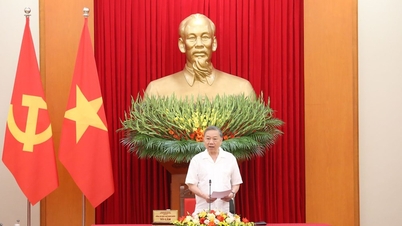
The key message in General Secretary and President To Lam 's speech was that, after a year, we have passed the initial organizational restructuring phase; the next task is to shift the focus to improving the operational quality, service capacity, and development-creating capacity of the new apparatus. This is a very important guideline. Because streamlining the apparatus, if it only stops at reducing the number of departments, reducing the number of levels, and reorganizing agencies and units, is only the beginning. The greater goal of reform is to make that apparatus serve the people better, handle work more efficiently, and create stronger development.
From a cultural perspective, this represents a shift from a "management culture" to a "service culture." For a long time, many places have been accustomed to administrative operations heavily reliant on procedures, hierarchical structures, requests for approval, and waiting for instructions and directives. The new model demands a fundamental change in these habits. Officials must not only follow procedures correctly but also fulfill their responsibilities. Public agencies must not only complete their assigned tasks but also facilitate convenience for citizens and businesses. A modern government should not only measure itself by the number of documents issued but also by the level of public satisfaction.
It is noteworthy that the speech did not shy away from difficulties and limitations. Institutional structures are sometimes inconsistent; decentralization and delegation of power have not always kept pace with available resources; implementation capacity at the grassroots level has not kept up with new requirements; digital infrastructure, data, and software are still fragmented; public assets after restructuring are still being processed slowly; and the methods of leadership, inspection, and supervision between the provincial and grassroots levels still present many new challenges. Looking directly at these limitations does not diminish the significance of reform, but rather demonstrates a serious, open-minded, and substantive spirit in the reform process. A figure in the speech is particularly thought-provoking: According to assessments, only 53% of provincial-level officials and 30% of commune-level officials meet the job requirements. This figure reminds us that reforming the administrative apparatus cannot simply be about reorganizing, but must be closely linked to building a strong team of officials. The new apparatus can only function effectively when it has new people with improved capabilities, methods, responsibility, and a spirit of service.
In the new model, the commune level holds a particularly important position. With the elimination of the district level, the commune is not only the administrative level closest to the people, but also the frontline of public administration. It is where the needs of citizens and businesses are received, processed, and responded to promptly; where issues related to social welfare, order, land, construction, environment, public services, and emerging risks are detected early.
Therefore, when the implementation capacity of the commune level is considered a measure of the success of the new model, it represents a significant shift in governance thinking. The success of reforms cannot be judged solely by aggregated reports at the higher levels. Success must be seen in very specific actions at the grassroots level: Are citizens' procedures processed faster? Are vulnerable groups receiving more timely support? Do businesses have to travel and wait less? Do commune and ward officials have sufficient capacity, tools, and data to handle their work? Are newly arising issues detected and addressed promptly?
Here, service culture is no longer just a general slogan. Service culture must be demonstrated through the time taken to process applications, the attitude of officials, the accountability of public authorities, and the ability to respond to the legitimate needs of citizens. When a citizen visits a one-stop service center, they are not only interacting with a specific official, but are experiencing the quality of the entire administrative system. When a business encounters procedural obstacles, they are not only evaluating a process, but also assessing the local development environment.



Therefore, this organizational reform of the government apparatus has significance that goes beyond administrative techniques. It touches upon a very fundamental issue: What is the purpose of reorganizing public power? The answer must be, to better serve the people, to develop the country faster and more sustainably, to unlock social resources, and to strengthen the people's trust in the Party, the State, and the political system.
The new organization must create new capabilities and a new quality of service.
In his concluding remarks, General Secretary and President To Lam emphasized a highly generalized message: "The new organization must create new capabilities, the new decentralization and delegation mechanism must go hand in hand with new responsibilities, new data must create new governance methods, and the new apparatus must bring new quality of service to the people and businesses." This can be said to be the core spirit of the next phase.
"The new organization must create new capabilities" primarily means that the new system cannot operate with old ways of thinking. If the organization has changed but the methods remain old, data is still scattered, responsibilities are still unclear, subordinates still have to seek too much advice, and citizens still have to repeatedly declare information that the State already has, then the reform has not been completed. The new system must create the capacity for faster processing, better coordination, more practical decision-making, and clearer accountability. One of the very important points is that decentralization and delegation of power must be substantive. The speech clearly stated that the situation of delegating tasks to subordinates without providing the necessary conditions must be overcome; decentralization is not about shifting the burden to lower levels, but about transferring authority, resources, data, implementation tools, and responsibility in a clear, transparent, and controlled manner. This is a very correct and accurate requirement.
In reality, if communes are given more tasks but lack specialized personnel, funding, data, software, guidance, and mechanisms to protect those who dare to take action, decentralization can easily become a burden. Conversely, if communes are given the right authority, have sufficient resources, shared data, and clear mechanisms for inspection and supervision, they will truly become the new core of local governance.
Another key point was data. The speech emphasized the need to view data as an asset, a resource, and the foundation of modern governance. This is a crucial mindset in the context of national digital transformation. Digital transformation within the state apparatus cannot be simply understood as moving procedures online or using additional software. Digital transformation must involve redesigning operating methods, from original data and work files to interconnected processes, real-time dashboards, and accountability monitoring mechanisms.
If land data is not standardized, population data is not effectively utilized, specialized data is not interconnected, and local officials have to work with multiple different software programs, then digital transformation will not help reduce workload but may even create more pressure. Conversely, when data is "accurate, complete, clean, and active," when systems are interconnected, and when information is already available in government agencies without requiring citizens to re-declare it, then digital transformation truly becomes a tool to serve the people. Data is also an expression of a culture of transparency. A data-driven governance system will limit subjectivity, arbitrariness, and ambiguity in implementation. When the progress of work is monitored by data, when the rate of timely processing of documents, the level of citizen satisfaction, and the rate of work at the commune level requiring approval from higher levels are quantified, then reform is no longer a general perception but becomes a verifiable result.
This also requires a very clear culture of accountability. The speech outlined the principle: Each task must have a lead agency, a single point of contact with primary responsibility; a shared data source; and an interconnected coordination process. This principle, seemingly simple, is significant in resolving many bottlenecks. Because in implementation, the difficulty often lies not in a lack of direction, but in the fact that the task is shared but responsibility is unclear; there are many agencies but the point of contact is not clearly defined; the process is lengthy, but the person ultimately responsible is difficult to identify.
A culture of responsibility must also be considered in relation to a culture of innovation. Officials who dare to think, dare to act, and dare to take responsibility for the common good need to be protected when acting within their authority, following proper procedures, openly and transparently, based on professional expertise, and without self-interest. At the same time, serious action must be taken against those who exploit innovation to violate the law, profit illegally, or evade responsibility. This is the necessary balance between encouraging creativity and controlling power, between opening the way for new ideas and maintaining strict discipline in public service.
One topic closely related to the cultural field is the handling of public assets, offices, and records after reorganization. The speech emphasized that usable assets should be utilized effectively; assets that are no longer suitable should be repurposed, transferred, or disposed of transparently and in accordance with regulations; and priority should be given to serving education, healthcare, culture, sports, social welfare, and the practical needs of the community. This is a very noteworthy suggestion.



After reorganization, many old offices, properties, and institutions, if properly managed, could be transformed into community cultural spaces, libraries, community centers, sports facilities, citizen support centers, educational institutions, and healthcare facilities. From a development perspective, surplus public assets are not merely "leftovers" after reorganization, but can become new resources to improve the quality of life for citizens. Conversely, if left abandoned, deteriorated, or handled slowly or without transparency, it will be a waste not only of material resources but also of social trust.
After a year of operating the new model, the most important thing is to avoid complacency and self-satisfaction, but also to remain steadfast in the face of difficulties. Reforming the administrative apparatus is a huge and difficult task, involving people, institutions, authority, resources, habits, interests, and responsibilities. We cannot rush, but we certainly cannot hesitate. Every shortcoming pointed out by practice should be seen as a signal for continued improvement. Looking from a cultural perspective, this reform demands the building of an administration with higher public service ethics, clearer accountability, better service capacity, and a stronger spirit of innovation. The new apparatus must create new trust. This trust does not come from promises, but from the daily experiences of the people; not from slogans, but from concrete results; not from impressive reports, but from real changes in the quality of service.
That is also the most profound meaning of the message at this conference: Reforming the organizational structure is not only to make the political system more streamlined, but to make the country stronger; not only to make management easier, but to better serve the people; not only to change the model, but to form a new, modern, honest, constructive, and people-oriented governance culture.
Source: https://baovanhoa.vn/chinh-polit/bo-may-moi-va-van-hoa-phuc-vu-nhan-dan-242630.html


















![[Video] Weather forecast for tonight and tomorrow, July 4, 2026: The remnants of Typhoon No. 1 will cause widespread and prolonged heavy rain in Northern Vietnam.](https://vphoto.vietnam.vn/thumb/402x226/vietnam/resource/IMAGE/2026/07/03/1783083905760_thum-dem-png.webp)