

Coffee has transformed the lives of the villagers of Pham O.
These days, the people of Pham O village (Bo Ngoong commune) are busy tending to their coffee plants after harvest; at the same time, they are milling, drying, and sorting the coffee beans for sale on the market.
According to local residents, coffee production has significantly improved the lives of villagers over the years. In particular, over the past two years, coffee prices on the market have risen sharply and remained stable at 90-120 million VND per ton of beans, helping many ethnic minority households earn hundreds of millions to billions of VND annually.
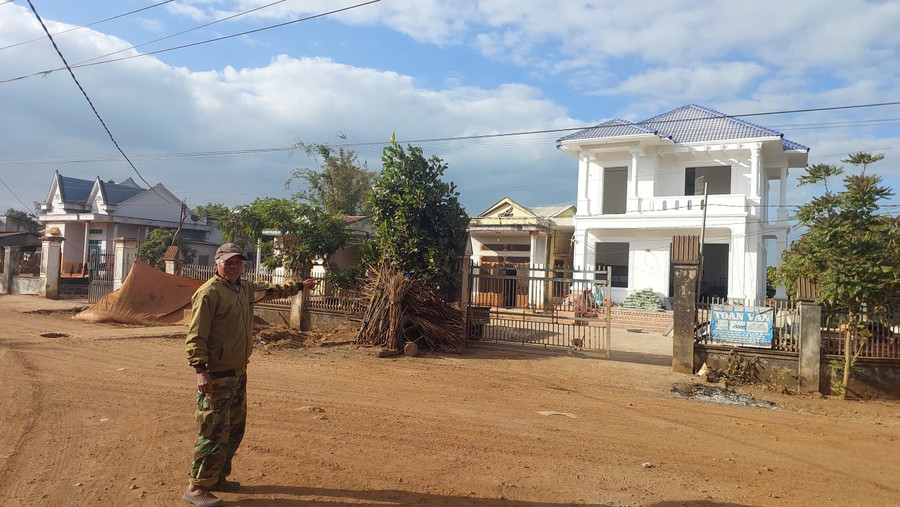
The Vong family (Pham O village) proactively applied scientific and technological advancements to coffee production, thereby increasing productivity and efficiency.
Mr. Vong excitedly shared: “With 3 hectares of coffee just harvested, the estimated yield is about 10 tons of coffee beans, and my family has preliminarily achieved a profit of approximately 1 billion VND. Besides the coffee plantation, I also intercropped 120 Thai durian trees, which are in their third year of care. If the durian trees grow well and prices remain stable, they will continue to bring significant income to my family in the next few years.”
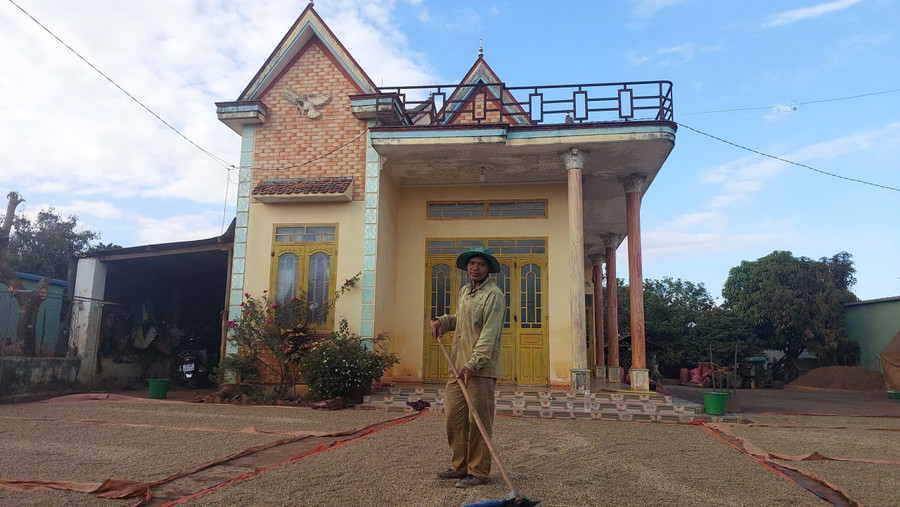
Not only Vong's family, but many households in Pham O village also have a stable income from coffee cultivation. Although they rarely share their income, the reality is that currently, the village has at least 9-10 households earning billions of dong each year; while incomes of a few hundred million dong are quite common.
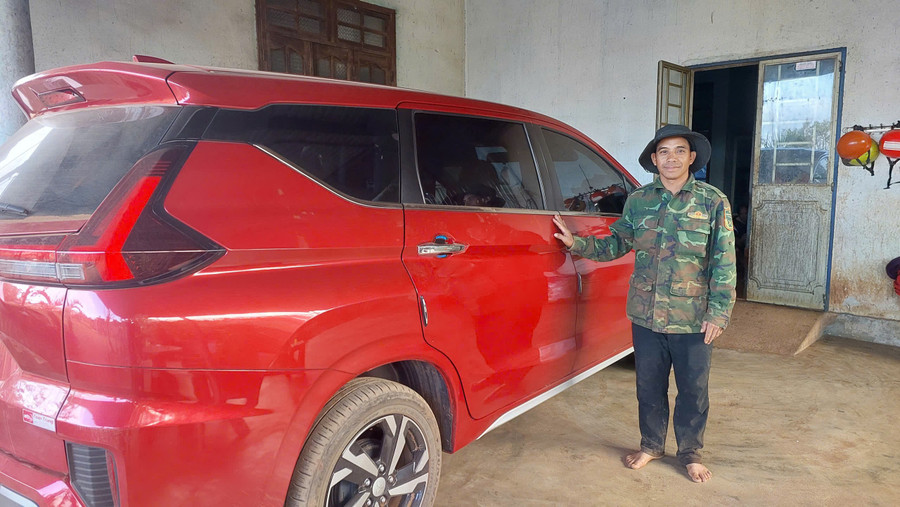
Many households, like those of Mr. Khok, Nheng, and Hlim, earn an average income of 500-600 million VND per year from their coffee plantations. This is the result of increasingly systematic investment in production, along with the attention and support of the State, local authorities, and the spirit of sharing and mutual assistance within the village community.
According to Elder Siu Sum, Deputy Secretary of the Party Branch and Head of the Village Front Committee of Pham O village, the village currently has about 280 households, mainly ethnic minorities, whose lives are closely tied to agricultural production such as coffee, rice, and short-term crops.
In recent years, farmers have become increasingly proactive in organizing coffee production, focusing on investing in care, applying appropriate techniques to improve productivity, and gradually improving their income and stabilizing their lives in the long term.
Linking production to increase the value of coffee.
Following the merger of the communes of Bờ Ngoong, Bar Măih, Ia Tiêm, and Chư Pơng, the current Bờ Ngoong commune has an ethnic minority population of approximately 66.9%. The people's lives mainly depend on agricultural production, with coffee being one of the main crops that brings high economic efficiency.
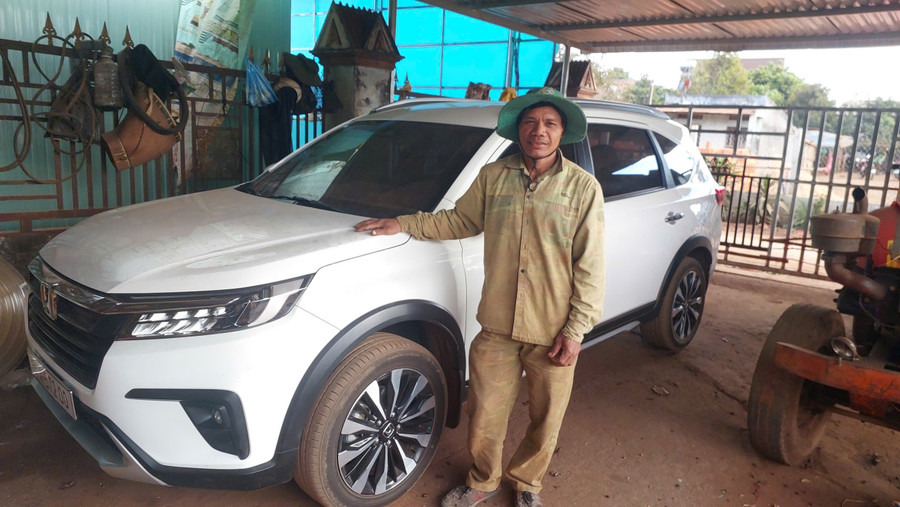
According to preliminary statistics from the People's Committee of Bo Ngoong commune, the entire commune currently has more than 3,586 hectares of coffee, of which 3,319 hectares are in production, 131 hectares are under basic construction, and 135 hectares are newly planted. The estimated coffee production in 2025 is approximately 11,125 tons.
In particular, in recent years, many farmers and cooperatives have proactively linked with businesses to produce clean coffee according to VietGAP, 4C, UTZ, RA, GlobalGAP, and Organic standards, covering an area of over 1,376 hectares.
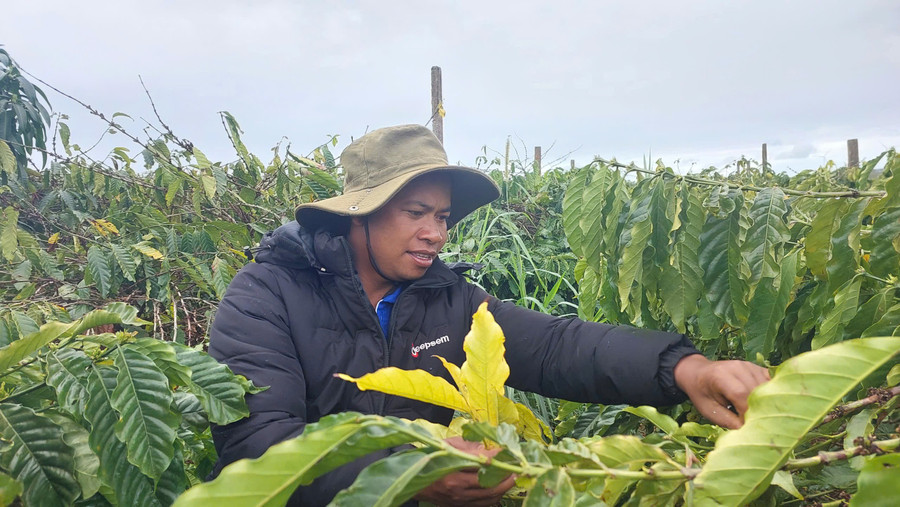
The Ia Ring Agricultural Production, Business and Service Cooperative (Ia Ring village) is one of the pioneering units in linking the production of high-quality coffee for export. From an initial 40 members with an area of about 100 hectares, the cooperative has now attracted nearly 500 members, with a total area of about 600 hectares of coffee. Many members earn billions of VND each year.
Mr. Tran Van Vinh (An Loc village) - a member of the cooperative, said: In 2006, he moved his family from Dak Lak province to Gia Lai to cultivate 7 hectares of coffee, intercropping with 1,000 pepper plants, macadamia trees, and 400 durian trees. The entire coffee plantation of his family is cultivated according to RA standards, strictly adhering to good agricultural practices.
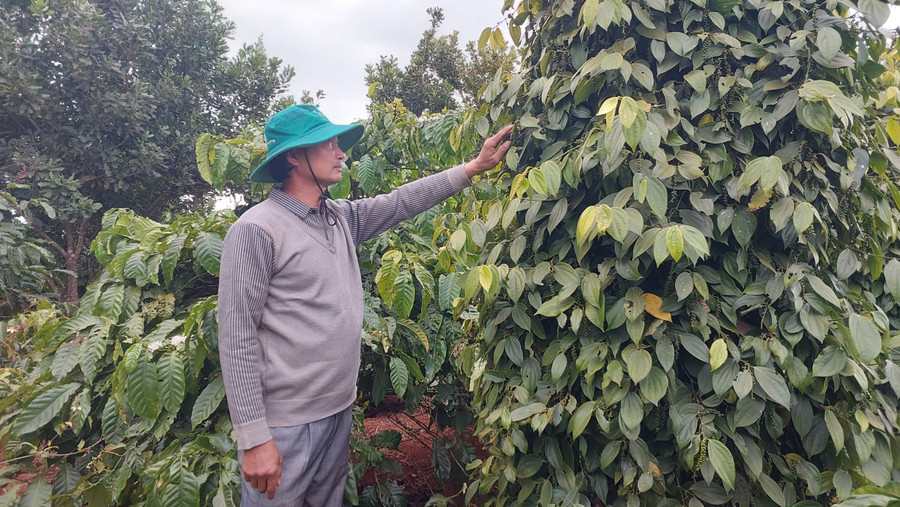
“With this area, my family harvests nearly 30 tons of green coffee beans on average each year. At current export market prices, after deducting investment costs, the profit reaches about 2.5 billion VND. Last year alone, I also received a bonus of over 75 million VND from the partner company,” Mr. Vinh shared.
Similarly, Mr. Rlan Van, Party Secretary and Village Head of Khoi Zet village, said that since joining the cooperative, his family's more than 2 hectares of coffee have been guided to produce according to sustainable processes. In the last harvest, his family harvested about 40 tons of fresh coffee cherries, processed nearly 13 tons of coffee beans, and earned an estimated profit of about 1 billion VND after deducting expenses.
Mr. Nguyen Huu Ty, Chairman of the People's Committee of Bo Ngoong Commune, said: "In the period 2026-2030, the locality has identified coffee as a crop that continues to bring high economic value. The commune will focus on directing specialized agencies and cooperatives to strengthen links with businesses that purchase and process coffee for export; at the same time, it will promote training, transfer of advanced techniques, and guide farmers to produce coffee according to high-quality standards, aiming to build the Bo Ngoong coffee brand in the coming years."
Source: https://baogialai.com.vn/bo-ngoong-doi-thay-tu-cay-ca-phe-post578523.html






















































































Comment (0)