

The Ministry of Health has just issued a Circular detailing some provisions of the Law on Pharmaceuticals and Decree No. 163/2025/ND-CP on drugs and drug raw materials that require special control.
Circular No. 18/2026/TT-BYT not only updates and standardizes the lists of specially controlled drugs but also standardizes the entire management process from production, storage, transportation, dispensing to record keeping, aiming to enhance control, traceability, and promote digital transformation in the pharmaceutical sector.
The circular was issued to concretize the provisions of the amended Law on Pharmaceuticals of 2024 and Decree No. 163/2025/ND-CP, and to create a unified legal basis for managing high-risk drugs and drug raw materials such as narcotics, psychotropic drugs, drug precursors, radioactive drugs, and drugs under special control.
Accordingly, the Circular promulgates the following lists: a list of narcotic substances; a list of psychotropic substances; a list of precursors used in pharmaceuticals; a table of concentration and content limits for narcotic substances, psychotropic substances, and precursors used in pharmaceuticals in combination drugs; and also stipulates the list of drugs and pharmaceutical substances belonging to the list of substances prohibited for use in certain industries and fields as announced by the Ministry of Health .
The circular also specifies the activities related to the storage, production, compounding, dispensing, use, disposal, delivery, transportation, reporting, and record-keeping of drugs and drug raw materials subject to special control at non-commercial pharmaceutical establishments.
Notably, for the first time, many management processes have been standardized to align with the new regulations of the amended Pharmaceutical Law and modern management systems, creating a foundation for enhanced monitoring, traceability, and prevention of drug loss.
One of the key aspects of the Circular is the clear definition of responsibilities at each stage in the process of managing specially controlled drugs.
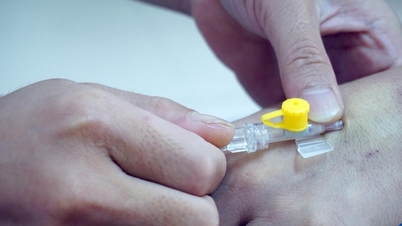
Notably, for medical facilities, narcotic drugs, psychotropic drugs, precursor drugs, and drug raw materials that are narcotic substances, psychotropic substances, or precursors used in the manufacture of drugs must be stored in a separate, securely locked warehouse or cabinet, and kept separate from other drugs. If a separate warehouse or cabinet is not available, a separate area with clear signage must be designated to avoid confusion.
The dispensing and use of narcotic drugs, psychotropic drugs, and precursor drugs must be carried out according to strict procedures; treatment departments and clinics must create drug requisition forms, track inventory, and return unused drugs in accordance with regulations.

A notable new feature of the Circular is that it allows establishments to use electronic records and documents instead of paper records when meeting requirements for security, data integrity, and storage capacity.
Accordingly, electronic data must ensure that it contains complete information according to the prescribed format, is encrypted, protected during transmission, reception, and storage; and also ensures accuracy, security, and accessibility when needed.
In addition, pharmaceutical businesses and establishments with non-commercial pharmaceutical activities are permitted to store records and documents in paper or electronic form, but must ensure the ability to manage, retrieve, and recover data throughout the storage period as prescribed.
This regulation aligns with the healthcare sector's digital transformation policy, contributing to reduced administrative procedures and paper-based paperwork, while simultaneously improving the effectiveness of monitoring for high-risk drug groups.
This is also one of the contents included in the national breakthrough strategy for the development of science, technology, innovation, and digital transformation applied in the health sector. Resolution No. 57-NQ/TW dated December 22, 2024, of the Politburo on "Breakthrough in the development of science, technology, innovation, and national digital transformation" plays a crucial role in all fields, including the health sector.
The circular also clearly stipulates the retention period for records and documents related to specially controlled drugs; after the retention period expires, the facility must establish a committee to carry out the destruction of the records in accordance with regulations.
Another noteworthy aspect of the Circular is the specific regulation regarding the supply of radioactive drugs.
Accordingly, medical facilities authorized to produce and prepare radioactive drugs may supply the drugs they produce and prepare to other medical facilities when the quantity produced exceeds actual needs.
Facilities that supply and receive radiopharmaceuticals are responsible for the quality, safety, and efficacy of the drugs. Annually, these facilities must submit reports as required by regulations.

The circular also specifies in detail the system of records and documents for manufacturing, import/export, wholesale, retail, storage, testing, and clinical trial drug facilities, as well as facilities engaged in non-commercial pharmaceutical activities.
Facilities must establish and maintain complete records of inventory movements (inflow, outflow, and stock levels); warehouse release slips; purchase and sales documents; and related records for each group of drugs requiring special control.
This Circular takes effect from July 16, 2026./.
Source: https://www.vietnamplus.vn/bo-y-te-siet-chat-quan-ly-thuoc-kiem-soat-dac-biet-thuc-day-so-hoa-post1114516.vnp




















































![[Video] Sunset at Lap An Lagoon – Where the sun sets over the fishing nets](https://vphoto.vietnam.vn/thumb/1200x675/vietnam/resource/IMAGE/2026/05/31/1780192137701_beach-landscape-sea-water-nature-grass-745871-pxhere-com.jpeg)









































Comment (0)