The Ministry of Health has just issued new directives on strengthening the management, operation, and stabilization of prices for medicines, medical equipment, and medical examination and treatment services, in order to implement Prime Minister's Directive No. 28/CĐ-TTg on strengthening price management and operation.
 |
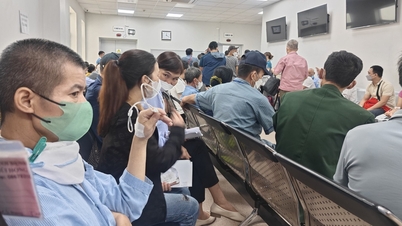
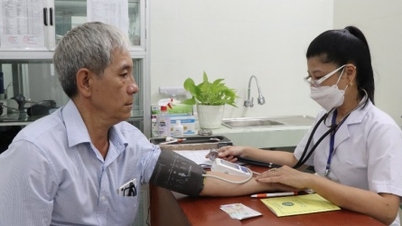
| Illustrative image. |
According to the Ministry of Health , in recent times, the management of drug prices, medical equipment prices, and prices of medical examination and treatment services has been implemented in accordance with the law, contributing to ensuring the rights of the people and controlling medical costs.
However, in the context of the continuing complex developments in the global and domestic economies ; the upward trend in raw material prices and input costs; and the risk of disruptions to the global supply chain, ensuring the supply and stabilizing prices of essential goods, including medicines and medical equipment, is posing many urgent requirements.
In this context, the Ministry of Health requests that medical examination and treatment facilities under the Ministry and other Ministries and sectors publicly and clearly display the prices of medical examination and treatment services, medicines, and medical equipment in accordance with regulations; and ensure timely updates when changes occur.
Procurement of medicines and medical equipment must comply with the legal regulations on bidding, ensuring the principles of competition, openness, transparency, efficiency, and cost-effectiveness.
During the contractor selection process, it is necessary to fully evaluate factors such as quality, price, origin, and suitability to professional requirements.
In addition, review and assess the usage, inventory, and supply capacity; proactively coordinate with contractors to ensure supply in case of disruptions due to objective reasons.
Retail pharmacies within the unit's premises must strictly adhere to regulations regarding retail markups and retail drug prices. Departments of Health are required to implement measures to stabilize drug prices in their respective areas; strengthen monitoring and supervision of drug price trends and supply; and proactively develop plans for procurement, stockpiling, and regulation to avoid localized drug shortages.
Inspection, examination, and supervision of compliance with legal regulations on pharmaceuticals and drug prices also need to be strengthened; serious action should be taken against violations such as failure to display prices, selling at prices different from those listed, and trading in drugs of unknown origin.
In addition, promoting the application of information technology in managing and connecting drug supply facilities is also emphasized, in order to control the origin, source, and price fluctuations.
In addition, strengthen monitoring of declared prices of medical equipment in the area; in case of detecting unusual fluctuations, compile and report to the Ministry of Finance and the Ministry of Health for timely handling according to regulations.



For establishments manufacturing, exporting, importing, and trading in medicines, pharmaceutical raw materials, and medical equipment, the Ministry of Health requires strict adherence to State regulations on price management; price listing and selling at no higher than the listed price; and compliance with regulations on price publication and re-publication on the Ministry of Health's electronic portal.
The Ministry of Health strictly prohibits acts of speculation and hoarding that destabilize the market. At the same time, businesses need to proactively reduce production and business costs. In cases where input costs increase, they should review and optimize costs to maintain stable selling prices, contributing to market stability.
Furthermore, timely information must be provided to healthcare facilities regarding the supply situation, especially in cases of disruption due to force majeure events.
In addition, facilities also need to develop inventory plans, diversify sources of raw materials and finished drugs, and ensure continuous supply, especially for essential and emergency medicines.
Faced with fluctuations in global supply chains and concerns that rising fuel prices could lead to escalating operating and transportation costs, some businesses have proactively implemented solutions to stabilize the market.
Accordingly, Long Chau Pharmacy System is a pioneer in committing to not increasing drug prices, while ensuring supply across all 2,500 stores nationwide. In addition, Long Chau continues to maintain its policy of free home delivery for customers ordering through the app.
Specifically, Long Chau affirms its policy of not increasing drug prices at all pharmacies in its system, aiming to protect consumer rights amidst a volatile market. Simultaneously, the policy of providing free home delivery of medicines through the Long Chau app remains in place, contributing to improved access to healthcare services for the public.
Representatives of the system stated that medicines and vaccines are items directly affected by fluctuations in fuel prices within the global supply chain. Currently, imported medicines account for approximately 60-70% of the market, while vaccines are almost entirely dependent on imports, accounting for 80-90% of the supply.
In addition, some domestically produced products that use imported raw materials are also affected, although the impact may be slower compared to products that are entirely imported.
By identifying market risks early on, Long Chau proactively developed a plan to stockpile medicines and medical supplies, ensuring sufficient quantities to stabilize the market in unpredictable scenarios.
The system is simultaneously strengthening close coordination with reputable domestic and international manufacturers and distribution partners to maintain a stable supply of essential medicines and healthcare products, minimizing the risk of disruption. In addition, various measures are being implemented to control speculation and hoarding aimed at driving up prices and disrupting the market.
With a focus on supporting the people in healthcare and acting as an "extended arm" of the Ministry of Health, Long Chau affirms its commitment to not increasing drug prices and continues to offer free home delivery for customers who order through the application.


These are solutions that businesses proactively implement in a timely manner in response to market fluctuations, contributing to ensuring the rights and health of the people.
These policies not only help alleviate the financial burden but also provide greater peace of mind for the people on their journey "towards a healthier Vietnam," while contributing to the spirit of Resolution 72-NQ/TW of the Politburo and Resolution 282/NQ-CP of the Government.
Beyond maintaining stable prices, Long Châu also prioritizes transparency regarding product origin. The company commits to 100% genuine products, allowing customers to easily verify origin information through its pharmacy network, QR codes on invoices, and on the Long Châu website and app.
Regarding the pharmaceutical market in Vietnam, according to Mr. Vu Tuan Cuong, Director of the Drug Administration Department (Ministry of Health), the pharmaceutical market will continue to remain stable in 2025.
The average consumer price index (CPI) in the first 11 months of the year increased by 3.29%, with the group of medicines and medical services increasing by 13.33%. Notably, the price of generic drugs in Vietnam is currently about 1.5-2 times lower than in many markets in the region, indicating that room for price stability remains.
Source: https://baodautu.vn/bo-y-te-yeu-cau-binh-on-gia-thuoc-d569632.html