


The song of waiting for the sun
My village was so remote and poor that there were no loudspeakers blaring from utility poles before dawn. Instead, Mr. Bon's coffee shop near my house would play bolero music at 3 AM. He would sing along to some singer's lyrics while boiling water to make green tea. My father would also wake up, as was his habit in his old age. He and his friend would go to the small shop, sit cross-legged, listen to the music, and chat about everything under the sun.
Once, I went to a cafe with my father. Strangely, the adults didn't say a word to each other. I guessed that the silence and the darkness were meant to absorb the slow, sad, and profound music, deeper than any story could tell, letting each note seep into the heart.
Mr. Bon neither greeted nor asked any questions, nor did he say a word to anyone at the start of the day. He brought coffee to each person, placed a cup of green tea in front of them, and then mumbled along to a song on his old music player.
My father's group of friends would listen to music before sunrise, then they would go home for meals and head to the fields at dawn. They listened to that music all year round. Even on drizzly, windy mornings, despite my mother's disapproving glances, my father still had to go.
That roadside stall was more than just a meeting place; I later came to think of it as a true "haven" for my father and his friends of that generation. It was a place where they used music to reflect on their lives, to hear about the ups and downs of this land. Only music, especially bolero, could soothe the poor people of my hometown.
My father said, "Sometimes you might listen to music just for a single line, but you have to listen to the whole song."
Because bolero is a story told through music. There are joyful stories, tragic stories, stories of happiness and sadness, stories of homeland and human fate – it's all there. It's easy to remember and resonates with listeners smoothly. It also lingers through generations.
I listened to music with my father, and that's how bolero entered my soul.
The Song in the Ancient Forest
I know hundreds of songs by my father and his generation from my childhood. The slow, melancholic music, with its 4/4 rhythm and easy-to-remember tempo, somehow seeped into me. But to truly appreciate and experience this music, I believe, one must listen to it deep in the forest. On nights under the dim, high moonlight, amidst the desolate, cold wilderness, the lyrics seem clearer, greener, and soar high, captivating the soul.
During the summer of my 11th grade year, I went with some uncles from the neighborhood to search for agarwood in the Ba Khe forest. The hardships of agarwood search are countless. What remains with me to this day are the bouts of jungle malaria and the quinine injections in my buttocks that caused muscle atrophy. And the only thing that comforted me then was music, specifically bolero. If it weren't for my uncles and cousins singing those songs to me in those lonely nights, I probably wouldn't have survived until now.
By the fire, warming us after the biting cold jungle rain, my uncle, tending the pot of herbal water with its rich medicinal aroma, sang as he kindled the fire. “Mother knows that now, as I sit in this small hole, the wind and rain make promises, and when I return to my maternal grandparents’ village, Mother will send her regards…”
Bolero has thousands of songs, each telling a story, but strangely, I find myself "connected" to every single one, which makes me feel conflicted. It's as if the composer wrote each song specifically for me, for my own story, and that's how I started practicing singing them.
Bolero… a bridge of mutual understanding
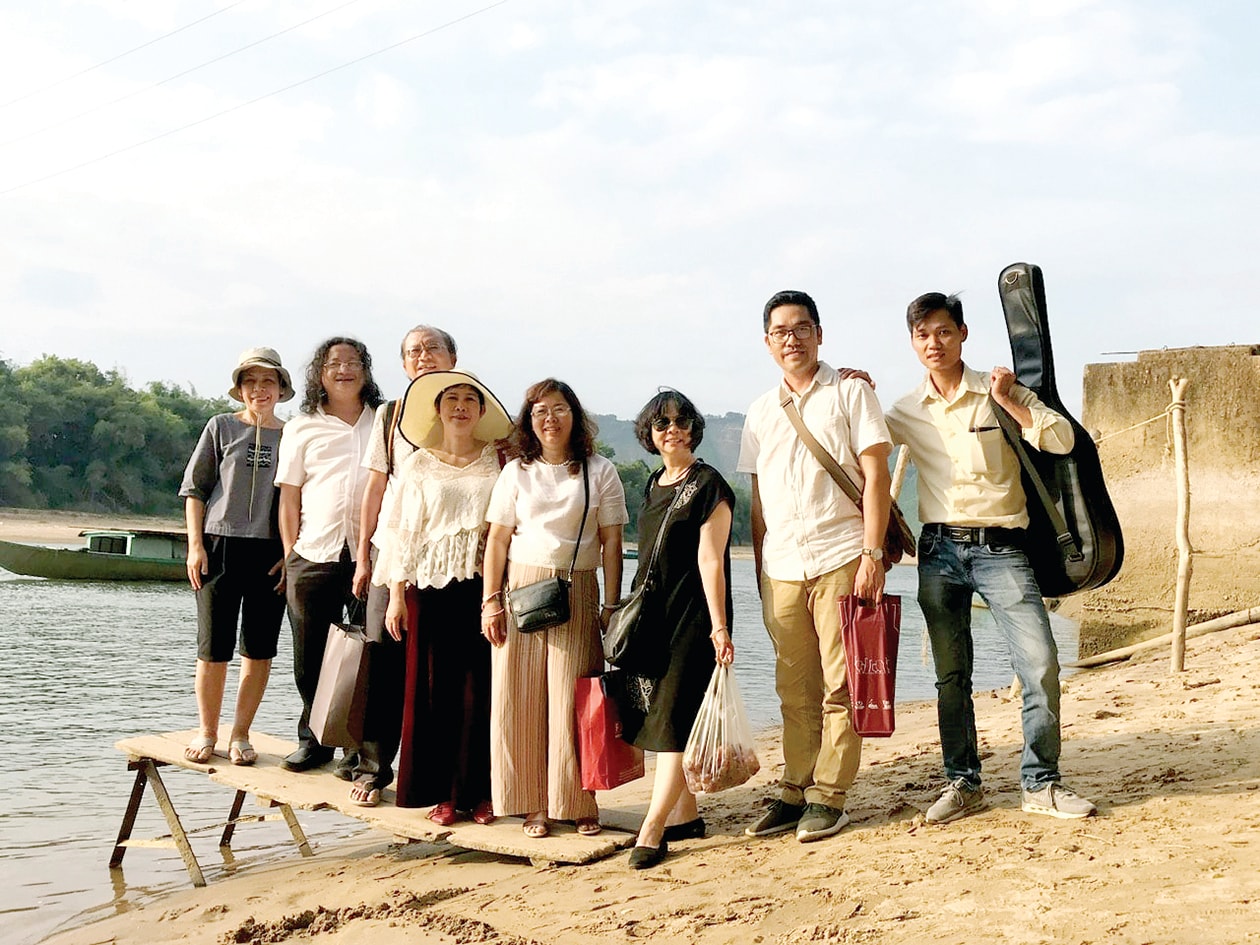
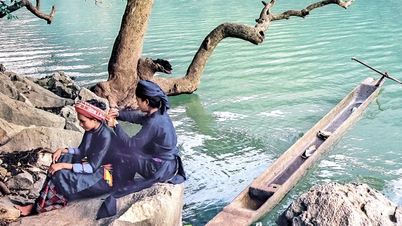
My village lies at the foot of Ca Tang mountain. To the right is the emerald green Thu Bon River, both banks covered with wildflowers and alluvial soil. My hometown is home to many journalists and poets, so literary friends often wander through this area. I am like a bridge connecting kindred spirits. And bolero is what captivates those with dreamy souls.
My mother entertained guests with fish from the Thu Bon River according to the season's water level, but my friend and I entertained guests with that familiar music, year-round. We sang the same song over and over again, sometimes at midday, sometimes at dusk, and often when our clothes were soaked with dew. But strangely, each time it felt as fresh as the first time. Our guests would sing along as if they'd never sung before, and our friendship deepened.
As I said, music is just a bridge; through lyrics, gestures, and visual and auditory experiences, people can become closer. And through songs, people can communicate many things that language sometimes fails to convey. That's how Bolero is in my village; it's not as good as professional singers' versions, but my friend sings it and is loved by many. Perhaps behind the lyrics lies the sentiment.
My friend lives by the sea, in a remote fishing village where the waves crash year-round. The men who go out to sea are sun-tanned and bare-backed, but strangely, they resemble the men who work in the forests of my hometown. They are simple, unpretentious, and gentle men, just like the songs they sing.
I think that singing amidst the vast ocean waves, the sound of the waves drowns out the gentle melody of bolero, so it doesn't sound as good as singing in a deep forest. That's just my opinion! But some people say that once you've started singing, you're singing for yourself, listening with your heart, and then you can judge whether it's good or bad for yourself.
Keep a song on your lips, whether happy or sad! Sing a lullaby to soothe yourself and overcome difficulties. Someone once said, "The most valuable thing to learn after literacy is music." If you can't learn music or compose, no one can forbid you from singing, because a song can lift all your worries.
Bolero can easily do that!
Source: https://baoquangnam.vn/bolero-va-chuyen-lang-toi-3154060.html
















































































Comment (0)