

 |
Mountains of used phones are sitting unsold in Chinese electronics markets as the chip bubble bursts. Photo: Tech Planet . |
The boom in the old phone recycling industry stems from the global chip shortage crisis of 2025-2026. As the price of new components skyrocketed, outdated phones suddenly became a "gold mine" for scrapped chips for manufacturers of low-cost electronic devices.
However, this fragile balance was shattered when a massive influx of supply far exceeded actual demand. The inflated bubble was forced to burst, bringing the entire supply chain, from small retailers to factories, to a standstill.
The "junk gold" craze
Starting in September 2025, the old phone recycling industry in China witnessed an unprecedented "earthquake." Data from recycling plants revealed a shocking figure: the volume of devices processed daily skyrocketed from 200,000 to nearly 1.5 million in March, more than sevenfold in just half a year.
This craze has completely transformed electronics markets. Gone are the days of repairing or selling new devices; everyone is now scrambling to collect scrap metal.
"The market boomed in March, the whole industry was injected with stimulants. Even barbers and fruit vendors started buying scrap phones," a trade insider lamented on social media.
The excessive expectations of the crowd have driven up the prices of older models day by day. Models like the OPPO A93 with larger memory have tripled in price, from $14.50 to $44 .
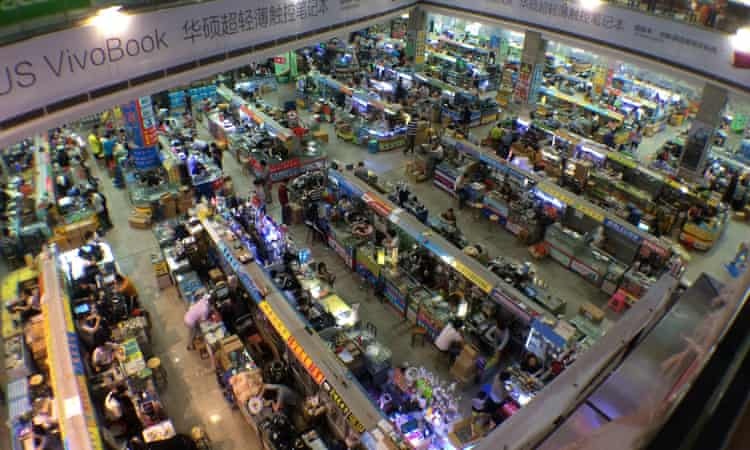 |
Huaqiangbei Electronics Market in Shenzhen, where the majority of used phone components are sold. Photo: Charles Arthur/The Guardian. |
To encourage people to "clear out" their old phones, retailers have also come up with creative programs to exchange old phones for gifts, ranging from printers and Phoenix bicycles to silk blankets and electric kettles.
Collectors like Haotian work 12-hour shifts, earning a net profit of over $730 per day—an unimaginable figure for the used goods collecting profession in the past. When short of capital, they readily borrow from friends to continue investing in inventory, with the unwavering belief that prices will continue to rise.
However, that "golden window" slammed shut on March 27th. In just five days, the overall market purchase price plummeted by more than 30%, and by April 1st, the drop had reached 50-60%.
In Shenzhen's Huaqiangbei electronics district, the bustling atmosphere has been replaced by an eerie silence as recycling facilities have collectively put up signs saying they are no longer accepting new items. Zhang Lei, a shop owner holding onto a "wall" of mobile phones over 1 meter high worth $733,000 , now faces financial ruin.
"We're not going to sell anymore, because if we do, we'll lose more than $150,000 ," Zhang Lei said, deciding to freeze the warehouse in desperation.
Old phone trap
The core reason for this collapse lies in the imbalance between the massive supply and the limited absorption capacity of the downstream market. Statistically, China discards up to 700 million mobile phones annually, but the vast majority are left unused in drawers.
As chip prices surged, tens of millions of these phones flooded the market simultaneously, putting immense pressure on dismantling factories.
"Market demand is only that much, but the supply reaches 30 million units per day," Zhao Li, a long-time industry expert, told Tech Planet.
The quality control system was so overloaded that sellers had to wait up to 20 days for results, causing disruptions in the supply chain.
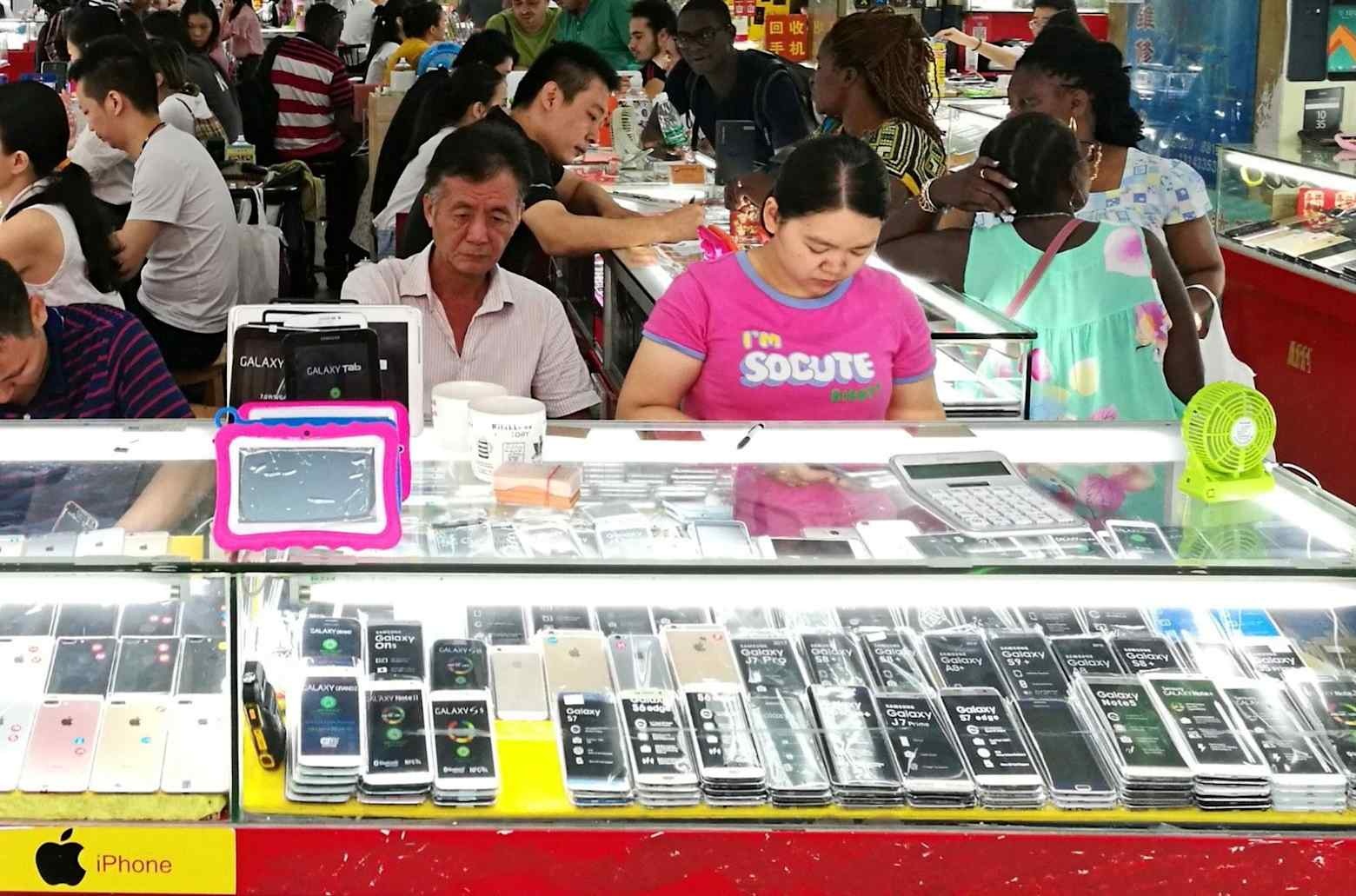 |
Small traders at a used goods market are stuck with mountains of old phones. Photo: Yu Nakamura/Nikkei Asia. |
The weakest link in this supply chain is the "white-label" electronics manufacturers. These are the companies that buy used chips (such as 2GB LPDDR chips) to assemble into low-cost devices for export to Southeast Asia, Africa, or Brazil.
When a price bubble pushes an old chip from $2 to over $11 , production costs become so expensive that dealers are no longer making a profit. When these manufacturers stop buying, the entire value of the pile of old phones instantly evaporates.
In addition, psychological and financial pressure caused many small business owners to flee. Some had earned $30,000 in the initial rounds, but due to greed, they continued to invest large sums of money in the final round, resulting in losses of nearly $90,000 .
"Stories about 'dreaming about buying and selling phones every night' or driving across provinces to sell off goods at 15% below market price just to cut losses have become commonplace," a small business owner told Tech Planet .
Although leaders like Xiaomi's Lu Weibing predict that memory costs will remain high until 2027, with millions of outdated chips currently in inventory, the market will need a very long time to absorb this entire stock.
The real competition only begins when the speculators leave, leaving behind a market that needs to be rebuilt based on real demand rather than artificial bubbles.
Source: https://znews.vn/bong-bong-dien-thoai-cu-tan-vo-post1644346.html





![[Photo] Speaker of the National Assembly meets with the Vietnamese community in Türkiye](https://vphoto.vietnam.vn/thumb/1200x675/vietnam/resource/IMAGE/2026/04/18/1776483346102_1-8136-jpg.webp)


























































































Comment (0)