

 |
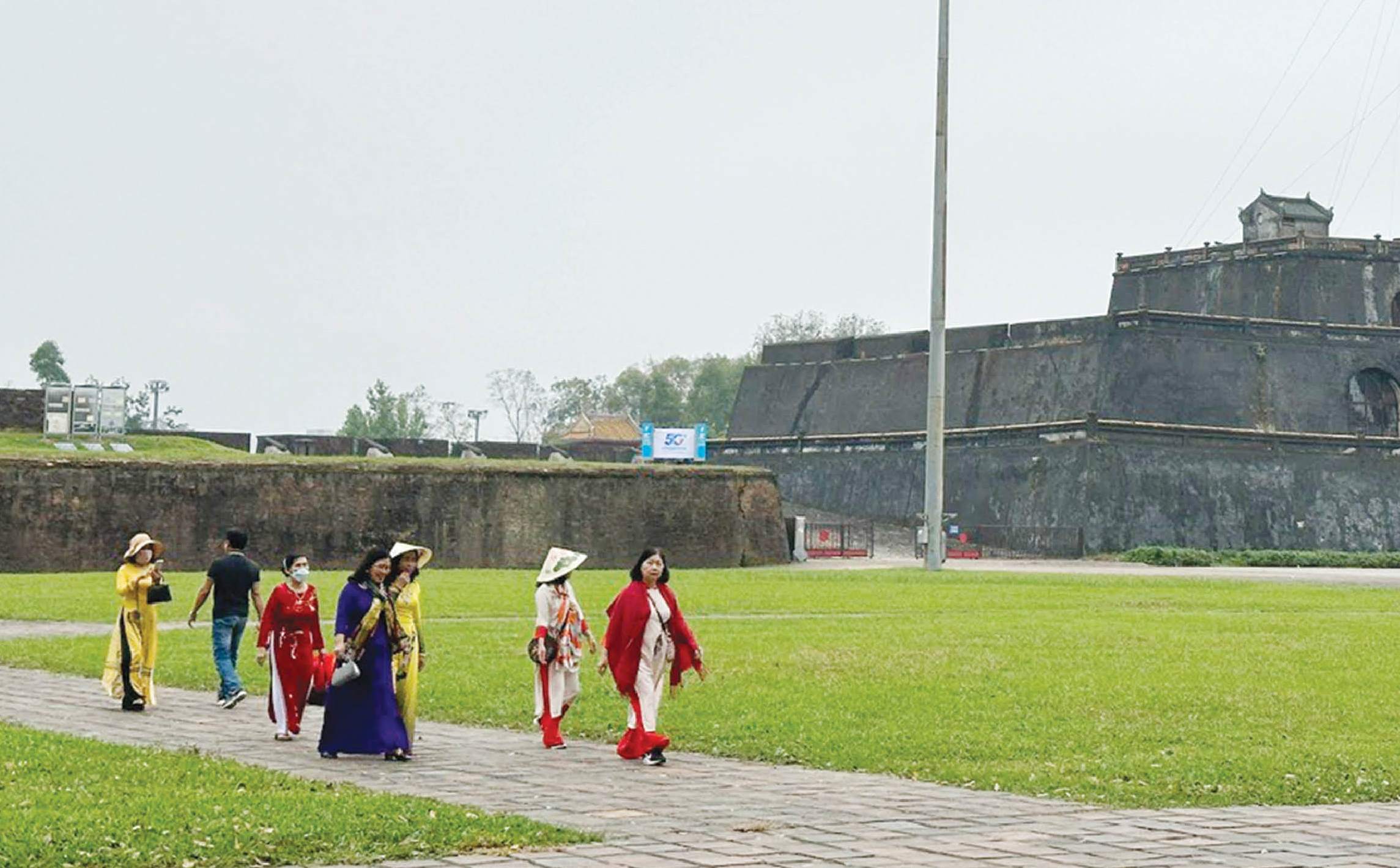
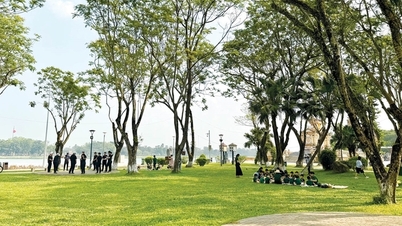
| Ngo Mon Square, where the Hue Citadel is located, is a favorite destination for many people. Photo: Bao Phuoc |
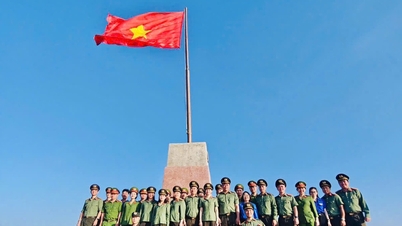
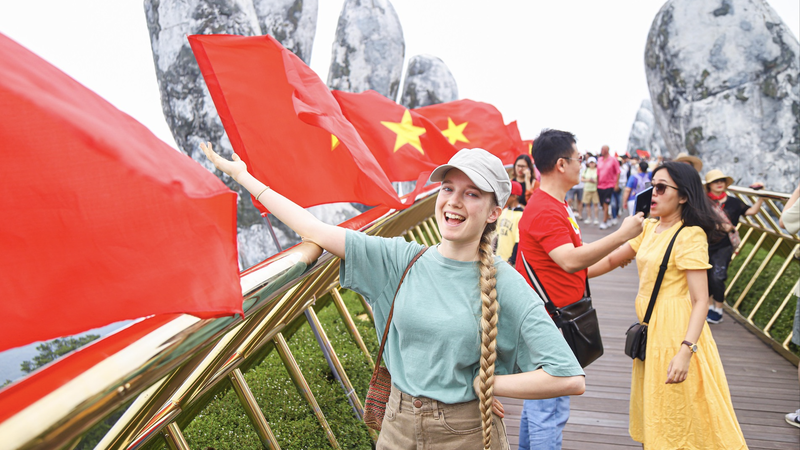
For many years, the red flag with a yellow star has been a sacred symbol associated with the revolution and national independence. Beneath the fluttering flag atop Phu Van Lau, one can almost hear the sacred call of history, of fiery struggles, and the pride of today's nation's resurgence.
Hue Citadel and significant historical events
For a long time, the revolutionary flag displayed at Phu Van Lau Monument has been associated with three main events: the August Revolution of 1945, the 1968 General Offensive and Uprising, and the Liberation Day of Hue on March 25, 1975.
During the August Revolution, at 9:00 AM on August 21, 1945, the red flag with a yellow star flew atop the flagpole in front of Ngo Mon Gate, replacing the flag of the Nguyen Dynasty. This event filled the people of Hue with joy. Mr. Dang Van Viet and Mr. Nguyen The Luong were the two people who performed the sacred task of raising the national flag on the flagpole that day. On August 30, 1945, under the revolutionary flag, at Ngo Mon Gate, Emperor Bao Dai read the abdication decree and handed over the royal seal and sword to the representative of the Provisional Revolutionary Government , marking the end of the Nguyen feudal regime and the birth of the Democratic Republic of Vietnam.
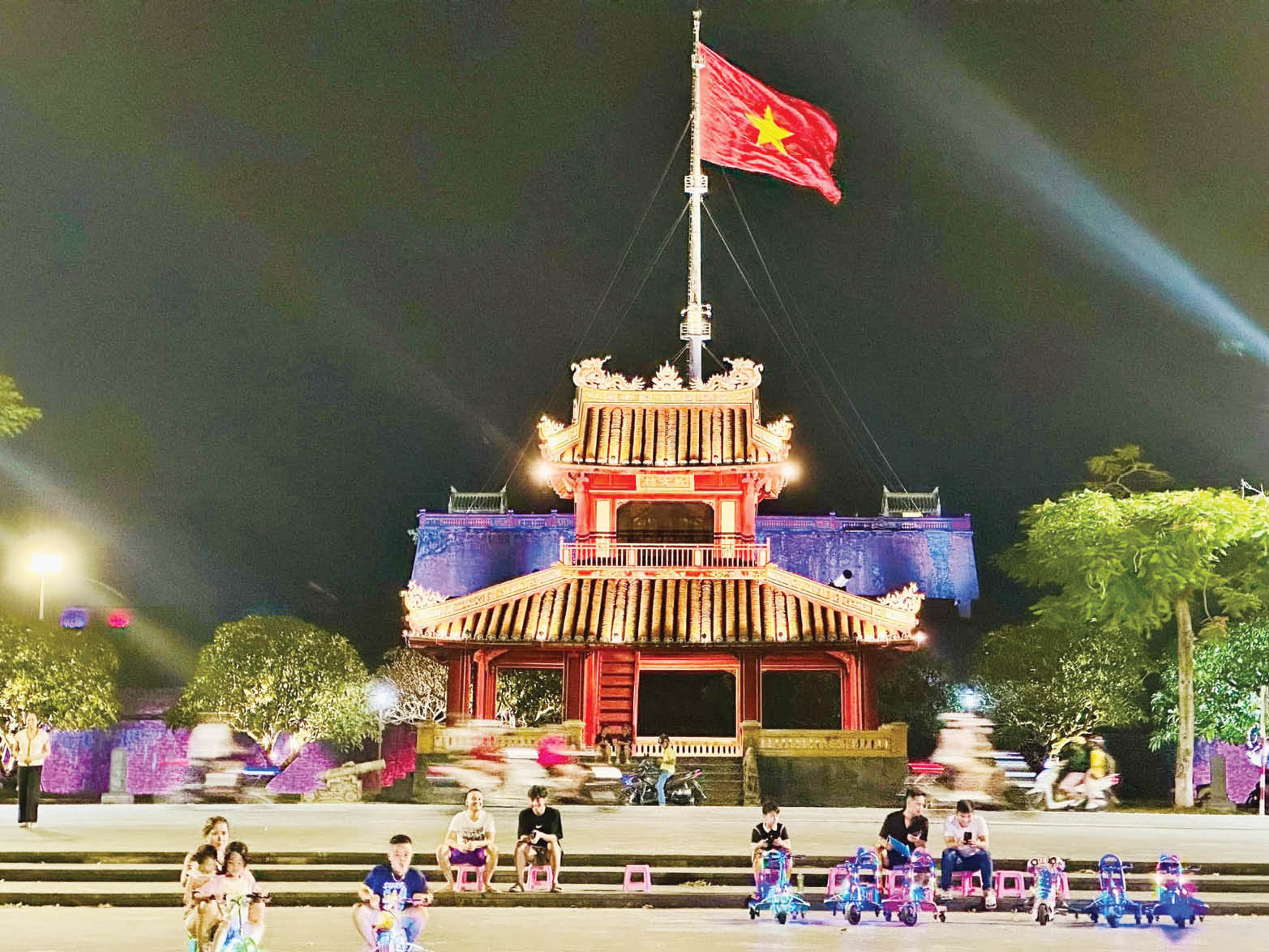 |
| Hue Citadel viewed from Phu Van Lau. Photo: Ngoc Hoa |
During the Spring Offensive of 1968, implementing the policy of national unity and mobilizing all strata of the people, especially in urban areas, the Party advocated the establishment of the Alliance of Democratic and Peaceful Forces, with its own flag consisting of three colors: red, blue, and a yellow star. The Hue City Party Committee assigned Huong Tra district the task of sewing the flag. Secretly, various colored fabrics were transported to the rear base to sew the 96m² flag. The Hue Front Campaign Command assigned the 6th Regiment, the unit that attacked the Hue Citadel, the task of hoisting the flag. The flag was hoisted on the Hue Flagpole on the morning of January 31, 1968. The revolutionary flag, fluttering proudly, was a source of pride for the people and soldiers of the Hue Front, who had occupied Hue for 26 days and nights.
Then, at noon on March 25, 1975, the Liberation flag flew atop the Phu Van Lau monument, signaling the liberation of Hue city. The flag fluttered in the clear, windy sky, accompanied by the triumphant song "March Sunshine" by composer Tran Hoan: "Oh, the beautiful sunshine of March! The beautiful sunshine of Hue, from now on, is free from foreign invaders! And the bright red flag flutters over the streets..."
Revolutionary flags in the urban movement
When it appeared in the heart of Hue, where the political symbol was the yellow flag of the former Saigon government, the revolutionary flag was not merely a flag, but a direct negation of the existing government. In Hue, the revolutionary flag appeared not only three times during the three major events mentioned above, but also in many other events.
In fact, revolutionary flags appeared in Hue very early on. After the establishment of the Thuan Hoa City Party Committee in April 1930, the Committee immediately approved a plan to commemorate International Labor Day in Hue, with the main content being a display of strength. The book "History of the Hue City Party Committee (1930 - 2000)" records that the first time the flag of the Communist Party of Vietnam appeared publicly was on May 1, 1930, at many locations such as at An Cuu village communal house, the Office of the Governor in front of the Central Annam Residency, along Paul Bert Street (Tran Hung Dao Street), Gia Long Street (Phan Dang Luu Street), at the Monument to Fallen Soldiers (in front of Quoc Hoc School), San Da fort, Mang Ca fort, the Lighthouse, Thuong Tu Gate, An Hoa Gate, on the top of Ngu Binh mountain... In essence, this was a movement of all strata of the people with large numbers and enthusiastic spirit; The enthusiastic support of the Party from the people right next to the royal court caused confusion and fear among the French colonialists and the feudal court.
During the resistance war against the French, the book "Chronicle of the History of the People's Public Security" records that in March 1950, a volunteer police unit bravely and intelligently advanced to the Phu Van Lau flagpole, lowered the trigram flag, and raised the red flag with a yellow star on top of the pavilion, causing joy among the people and surprise and fear among the enemy.
During the Hue urban movement, at Thuong Tu Gate on May 1, 1964, patriotic students raised the flag of the National Liberation Front of South Vietnam in a street demonstration...
Ordinary days today
To ensure the flag always flies proudly, its vibrant red against the blue sky, there are people who regularly sew and hang flags. Mrs. Hanh, a seamstress at Dong Ba Market, has been sewing flags for the Hue Citadel for nearly 20 years. The flag measures 12 meters in length and 8 meters in width, with a golden star reaching 4 meters in height, requiring a total of over 130 square meters of fabric. Each time she sews a flag, Mrs. Hanh has to borrow a hall to stretch the fabric, then use a needle and thread to carefully attach the star, a task that takes two days and nights. The most difficult part of sewing the flag for the Citadel is cutting and sewing the star onto the flag precisely. If the star is off-center, it will not convey the meaning of the national flag. Therefore, Mrs. Hanh personally performs all the steps, not relying on others.
Raising and lowering the flag on the Phu Van Lau flagpole is no easy task. Currently, two people are assigned this duty: Mr. Le Tien Si and Mr. Tran Thach Cuong. Mr. Le Tien Si was formerly a soldier in the Air Defense and Air Force Command. In 1997, he was hired to work in the flagpole protection team of the Hue Imperial Citadel Conservation Center. Mr. Tran Thach Cuong has been assigned the task of raising and lowering the flagpole on the Hue flagpole for exactly 25 years. In 2000, on his first day on the job, the team leader led him to the foot of the flagpole, pointed to the flagpole and instructed: "The flagpole has three levels of railings. On the first day, climb the first railing, on the second day climb the second, and on the third day climb the last railing." But that day, Mr. Cuong climbed all the way to the top of the flagpole in one go.
The flag, fluttering in the wind, represents the proud heartbeat of our beloved homeland, developing day by day amidst the ancient capital's landscape.
Source: https://huengaynay.vn/chinh-polit-xa-hoi/bong-co-157199.html
![[Photo] Prime Minister Pham Minh Chinh receives the Chinese Ambassador to Vietnam](https://vphoto.vietnam.vn/thumb/1200x675/vietnam/resource/IMAGE/2026/04/05/1775397481797_ndo_br_dsc-5512-jpg.webp)























































Comment (0)