He brought a vibrant red wildflower from the forest and planted it in front of the house. At first glance, it looked like a sunflower, and somewhat similar to a peony, but it wasn't. This plant grew in a more peculiar way. For it, sunlight was an indispensable source of energy, the key to life, nourishing it. Strangely, the intense sun of Central Vietnam only made the flower more radiant, its lips a rosy red, while other flowers were wilting. She called it "Sun-Thirsty Flower." He smiled and agreed as if it were the most natural thing in the world. Yes, "Sun-Thirsty Flower," like a water lily or a wild sunflower. A very Southern name. And as always, he unconditionally agreed to her demands, without a word of objection.

Illustration: LE NGOC DUY
The train heading south during the Lunar New Year season was sparsely populated. Of course, most workers leave their hometowns for work in the South at the beginning of the year and return home to reunite with their families at the end of the year, so train tickets for the South-North route have to be booked months in advance, while the North-South route is sparsely populated. Therefore, the ticket seller smiled warmly at her: "You can get on any carriage, sit in any seat you like. If you're tired, go to the sleeping carriage and sleep; there aren't many people on the train anyway."
Her choice to travel by train wasn't a coincidence; it marked the end of a connection with this land and its people. Long ago, at this very train station, he had casually greeted her, and their love story began. This land, full of sunshine and wind, showed her a country with people of the Southern Vietnamese spirit, known for their chivalrous nature.
Then, she fell in love, she loved the sun, the wind, a love that permeated every fiber of her being, as if she could grasp and caress it. She loved every region with its tragic war-torn names, every pain of separation along the gentle river, every wild daisy by the roadside... She loved as if she had never opened her heart like this before. And now, at this moment of transition between heaven and earth, when people reunite, the ship has completed its extraordinary mission, bringing her back to the South like a cycle of reincarnation. She calls it destiny.
The train whistle blew a long, drawn-out blast before rumbling and slowly moving away. The group of people bidding farewell faded into the distance, and of course, he wasn't among them. This was the first time he'd seen her at this station, so shouldn't he be seeing her off for the last time? But he was probably taking the kids to school now, and they were arguing about something. The older one liked history, the younger one preferred literature, so he often had to mediate the conversation.
The night before boarding the train, she went to his house – a rural area not far from the city. The three-room tiled-roof house was nestled amidst a vast expanse of fruit trees. She had lived there with him for a while, but eventually had to return to her old house in the city to dedicate more time to her spiritual practice. He had a passion for collecting fruit trees and planting them all over his garden.
Honestly, she once wanted to guide him down the path she had chosen, but she felt he was too emotional and couldn't let go of his own feelings, so she gave up. He recounted how, as a child, he used to carry a can of rice and run almost a kilometer to give it to a beggar woman. Once, while on a business trip, he gave his last penny to a poor mother in a mountain village who was in trouble, and on the way back, his car ran out of gas in the middle of the road, forcing him to call for help from friends.

Then he became entangled in the worries of everyday life. This man finds it difficult to let go of everything, let alone himself. She began her chosen path, learning to ignore his pensive gaze and his subtle reproaches. Gradually, he drifted further and further away from the path of married life, focusing all his energy on the children, just as she intended.
She chose a secluded corner to observe. Dinner was being served inside, and she could clearly hear her youngest daughter calling "Dad," the clinking of spoons and bowls, and the whirring of the electric fan. Her eldest son had a habit of using the fan regardless of whether it was sunny or freezing cold. She heard him telling someone to bring him his meal. He was up to his old tricks again. When they were married, she had often complained to him about eating at his desk, a common cause of illness. After their divorce, he lived with their youngest daughter down here, and she still occasionally sent him messages reminding him about it.
"Let go," the teacher told her.
The master said that in her previous life she was a palace maid. Coincidentally, every night in her dreams she saw herself and the princess being chased by a group of people. Then the master said she had a predestined fate, that she had to practice spiritual cultivation, to let go, to abandon all her relatives, and all the rituals of ancestor worship. Before meeting the master, she found life too troublesome. Why get caught up in the anger, greed, and hatred of everyday life, and then embrace suffering? Why live that kind of life?
She once confessed that she wasn't a homemaker. She didn't want to dedicate much time to that thankless job. The same went for family life. It made one feel insignificant in the face of an infinite world .
"You have to free yourself," the teacher told her.
Someone asked her to help revise a collection of poems before publication. His poems were always deeply troubled, burdened by a sense of obligation to life and people, and therefore lacked a certain elegance.
"You have to let go, my dear, only then will you find peace of mind," she told the author. He pondered, knowing the truth but certain he couldn't do it. "Oh dear, why does everyone have to suffer so much?" she sighed.
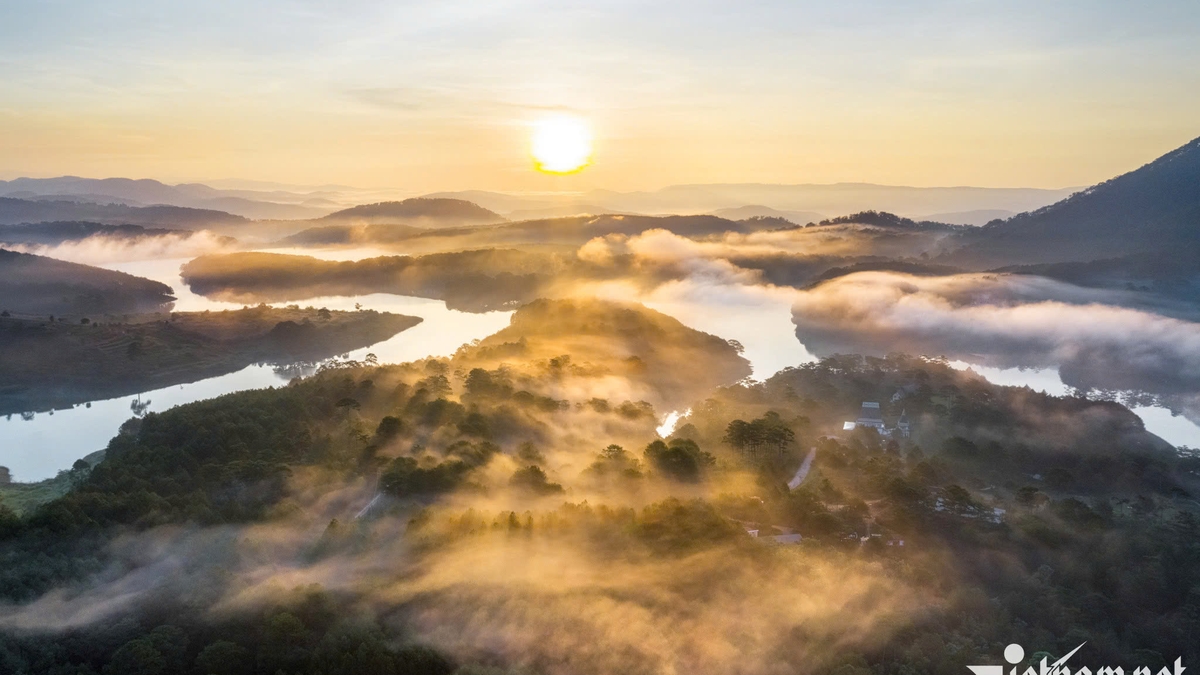
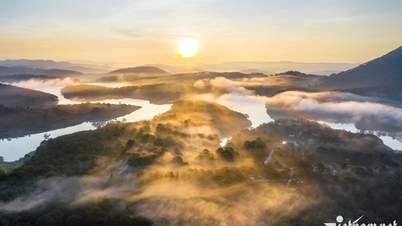
"We're almost in the tunnel," someone said. "Look at Hai Van Mountain, isn't it beautiful?" The train, like a giant python, coiled tightly around the mountain pass. On this breathtaking curve, everyone on board had a rare moment to fully admire the entire shape of the long train hurtling through the clouds.

Then the locomotive blew its whistle before hurtling into the dark tunnel. Darkness was swallowing each carriage of the train.
"My carriage is almost here," she sighed, her heart heavy. She glanced around at the scenery; the sun was casting warm rays through the clouds drifting over the mountaintops.
Time seemed to stand still; she was caught between two halves of the world, and in a few more seconds, she would drift into the world of darkness. At this moment, she suddenly felt a deep longing for "Sun-Thirsty Flower," the flower she had named.
Minh Anh
Source