Now, before my eyes, a completely different world unfolds, one centered around concrete and greenhouses: a verdant vegetable garden beside an old wooden house, like a parallel space extracted from a distant past...
Minutes of a gardening trip
The garden is surrounded by a closed dike. The back of the dike at the end of the three-thousand-square-meter plot also functions as a dam to prevent the flow of water from the Canal (a tributary of the Cam Ly River, connecting Than Tho Lake with Xuan Huong Lake). The entrance to the garden is a clean, paved road, flanked by slopes of wildflowers. In the right corner of the garden is a rose bush with a sturdy, broad base like the tentacles of an octopus clinging to a crumbling wall. It is undoubtedly an ancient rose bush, several decades old. Its roots penetrate deep into the earth, its main branches, full of sharp thorns, shoot upwards and sprout lush, young leaves, their tips aching with hundreds of buds of vibrant pink blossoms, a gentle, simple greeting throughout the four seasons of the garden.
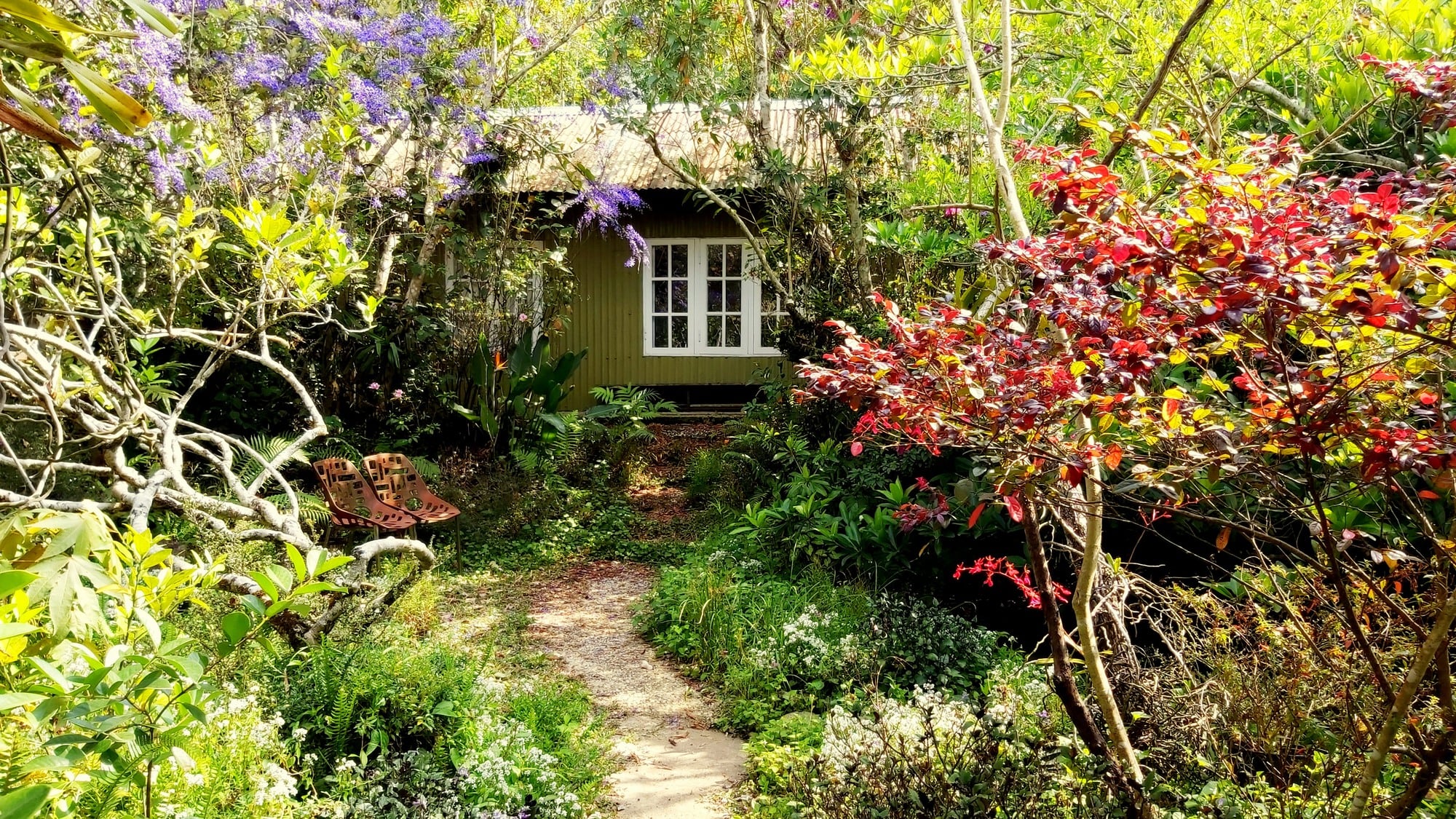
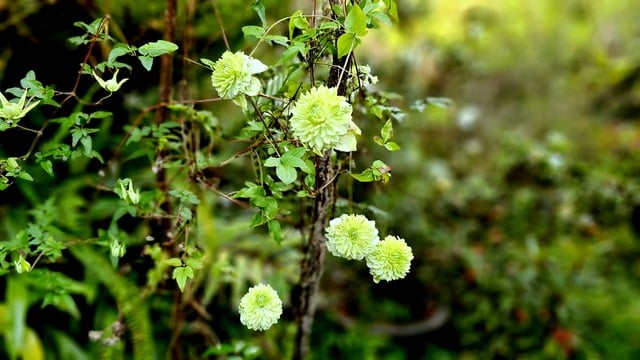
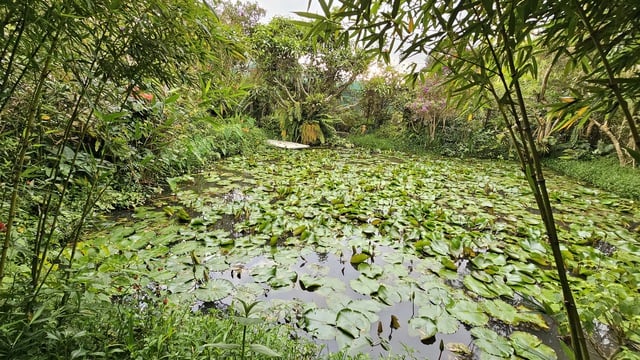
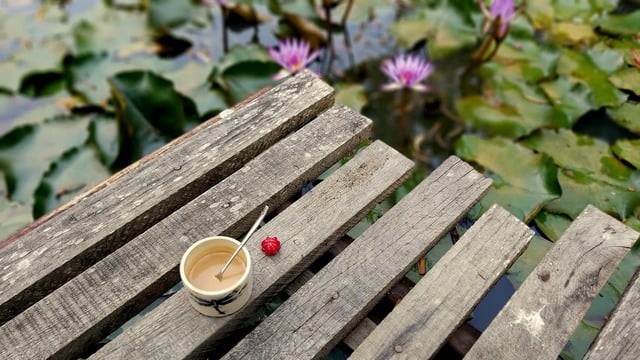
The lush and tranquil garden of Ms. Thanh Quynh and her husband on Co Giang Street, Da Lat.
PHOTO: NGUYEN VINH NGUYEN
Like many gardens along Lu Gia Street, in the 1960s and 70s, this land originally belonged to the Command and Staff School, part of the Da Lat Military Academy (of the old regime). Local residents gradually encroached on and expanded the vacant plots of land to create cultivated gardens. Later, after the war ended, this very area became lush green gardens, contributing to Da Lat's vegetable production, while a large portion of the land belonged to the Army Academy.
Gardening is largely dependent on traders and the weather. When prices are good, it's enough to make a living, but sometimes the produce goes to waste (being dumped in the stream). With increasingly harsh weather and more frequent floods, the cost of building dikes and repairing pathways after floods has also increased. But gardening is like a way of life; I can't stand not visiting my garden every day. I also grow ornamental plants and fruit trees, experimenting with new varieties like guava, myrtle, apple, and pear, as a hobby. Taking care of the plants in the garden is also a joy.
The garden I was entering, with an indescribable feeling of nostalgia, like being transported back to Da Lat of the 1990s, belongs to Mr. Che Quang Lanh, 79 years old, originally from Hue. His parents were laborers who immigrated to Da Lat during the early days of the city's establishment. Mr. Lanh and his father cultivated the swampy area along the Rach Canal from around 1968-1970 to create a garden. Since then, from his parents' generation to his family, they have been connected to the land of this garden as pure farmers, despite the rapid changes in Da Lat's landscape.
Day after day, three generations of his family regularly made their way from their home on An Duong Vuong Street to Lu Gia to "work in the garden," a leisurely, unhurried pace of farming, as if nothing had changed.
In the wooden annex, there were farming tools that had been used for decades; the kitchen and storage areas also exuded an old-fashioned smell, as if time itself had lingered. Their gardening, year after year, transcended mere livelihood, becoming more like a ritual in their lives connected to the land. Mrs. Hoang Thi Nga, Mr. Lanh's wife, and their son, with genuine smiles, told me that they found solace in working and listening to the earth, the water, the flowers, the plants, and the sky. They retained the gentle smiles of true gardeners. Their garden was open to the elements, while plastic roofs and greenhouses surrounded it all. A pure, unwavering dedication moved me deeply.
The owner said that previously, the garden mainly grew potatoes, cabbage, Chinese cabbage, carrots, and seasonal leafy vegetables. Now, it mainly grows some short-term leafy vegetables like onions and imported vegetable varieties for restaurants, and especially potatoes. With climate change and the majority of farming being done in greenhouses in the suburbs, the garden has become a breeding ground for many harmful insects, posing a challenge for those who practice natural farming outdoors. Many times, she has had to stand by helplessly watching her vegetable garden wither overnight, but gradually she has adapted thanks to solutions for controlling natural predators and biological products. The garden always offers new lessons in the face of changing weather conditions.
"Gardening mainly depends on traders and the weather. When prices are good, it's enough to live on, but sometimes the produce goes to waste (being dumped in the stream). With increasingly harsh weather and more frequent floods, the cost of building dikes and repairing pathways after floods is also high! But gardening is like a way of life; I can't stand not visiting the garden every day. I also grow ornamental plants and fruit trees, experimenting with new varieties like guava, myrtle, apple, and pear, as a hobby. Taking care of the plants in the garden is also a joy," Mr. Lanh recounted.
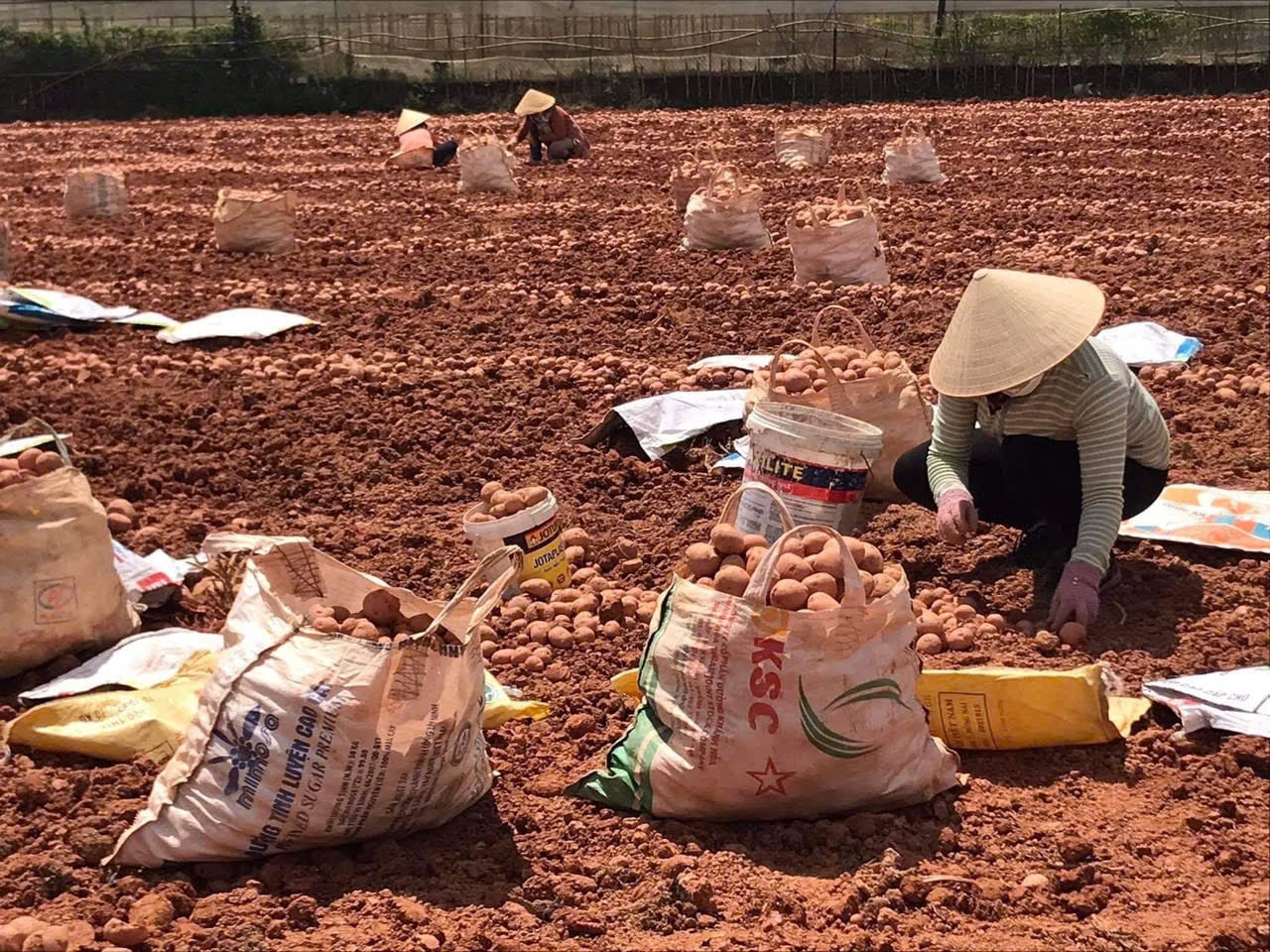
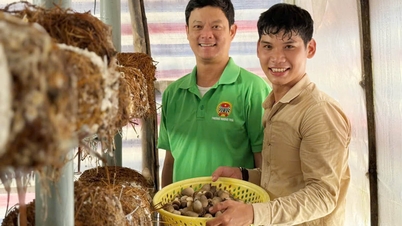
Harvesting potatoes in Mr. Lanh's garden.
PHOTO: CHE QUANG THO
As I write these lines, the prolonged rains of mid-November 2025 have caused the Cam Ly stream to become turbulent. The rising water flooded the garden, submerging crops ready for the year-end harvest. The water also uprooted the old rose bushes. When the water receded, it left mud marks about a third of the height of the wooden walls of the house. All the trees in the garden were covered in a thick layer of dark brown mud. Mrs. Nga and her children searched through the mud for any remaining plants and roots, propped up the fallen fruit trees, and grafted fresh rose cuttings to revive them. They did all this as a way of healing the garden, believing it to be the most peaceful place for them to maintain their tranquil way of life.
The garden, a sanctuary.
Returning to the founding history of Da Lat, the garden (le jardin) was once the number one priority in the urban spatial structure of this city. Gardens provided a source of green food, a vision envisioned by Governor-General Paul Doumer in 1898, when he tasked the Central Vietnam agricultural inspector Jacquet with transforming Langbiang into a French vegetable garden in Indochina. This led to the formation of a farm in Dankia, overseen by agricultural advisor Paul Domerc, and later by Deputy Inspector of the Agricultural Department Auguste-Félix-Marie d'André. During the period of mass Vietnamese immigration to Ha Dong, Nghe Tinh, and Thai Phien (1930s-1960s), the garden house also served as a space fostering a peaceful lifestyle and contributing to the city's identity.
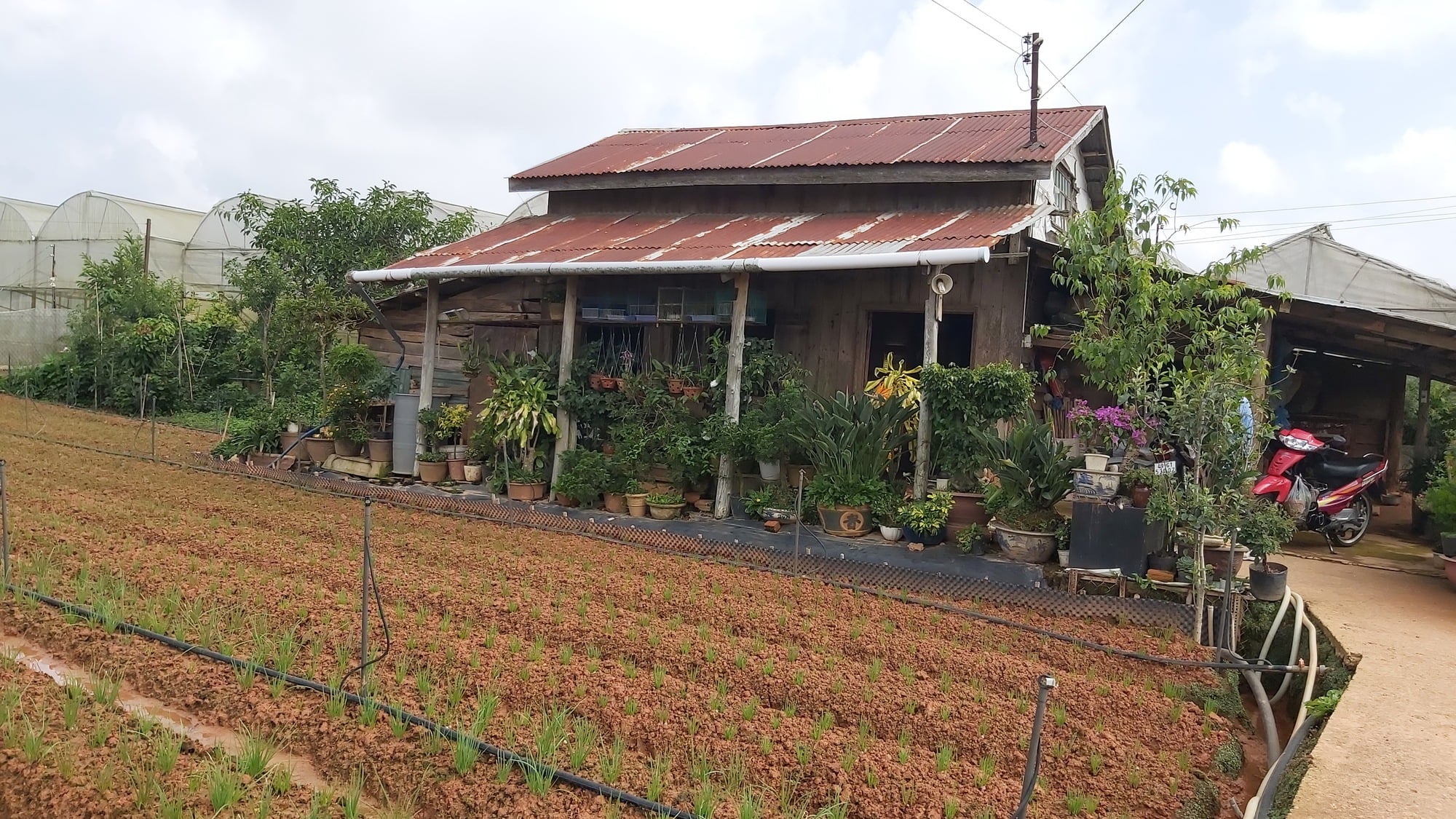
Mr. Lanh's garden in Lu Gia, Da Lat
PHOTO: NGUYEN VINH NGUYEN
The gardens of Da Lat city center appear in the writings of travelers from afar who have visited, as part of the landscape that defines Da Lat. Journalist VM, in the newspaper L'Echo annamite in 1925, used the symbol of "garden" to praise Da Lat, honoring it as "the Garden of Eden in Indochina." A French journalist, writing in L'Asie nouvelle in 1937, stated that Da Lat's elegant living space is partly due to its gardens: "When designing the city, we avoid ostentatious and tasteless buildings. Everywhere, charming villas nestle behind lovely flower gardens, gardens full of European flowers."
The people of Da Lat live peacefully in their gardens, perhaps this is where it all began: a structure and arrangement of living space that creates an ecosystem for people to take refuge in, connect with nature, and build a lifestyle associated with values of tranquility and leisure.
I recalled the history of the gardens while sitting on the veranda of the low wooden house of Mr. and Mrs. Hieu and Quynh on Co Giang Street, leisurely admiring the garden they cared for as a priceless treasure. Situated in a nearly basin-like position, the garden was shaded by the canopies of pine and mint trees and the large walls of the neighboring multi-story houses and villas.
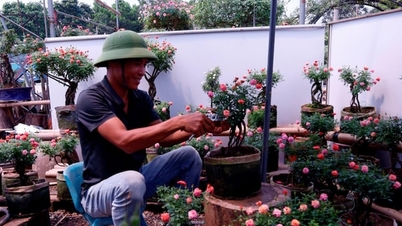
For over thirty years, a couple from Da Lat has maintained a tranquil garden with a gentle ecosystem beside their small, charming wooden house. Pathways winding through meadows and hedges overflowing with various orchids, guava trees, maple trees, native green apricot blossoms, water chestnut trees, orange trumpet trees, and purple myrtle... lead down to a pond teeming with purple water lilies. Looking up from the end of the plot, one can see five consecutive layers of trees in the garden. These five layers have become a small "forest" where squirrels and various birds, from bulbuls and sparrows to quail, come to nest and live. The garden owners are familiar with the habits of each bird species. In the afternoons, they prepare buckets of fresh water for the birds to drink and bathe in. Some bird species, such as the warbler and the fan-tailed bird, are usually shy around people, yet in this garden, when Mr. Hieu sits and plants seedlings in pots before delivering them to customers to beautify other gardens, they can hop and play right next to him, chirping and chatting...
In this garden, the layers of vegetation, from clumps of damp moss, weeds, and clumps of snowdrops to bamboo, papyrus, hydrangeas, and even taller trees like maples and myrtle, are all interconnected in a harmonious ecosystem.
One day, sitting with a cup of coffee amidst the tranquil light filtering through the leaves and the thick mist enveloping the garden, the gardener told a guest that, in Da Lat, if people are willing to step back, the trees will naturally regenerate and bring invaluable gifts to life. But is that still possible?
Thanhnien.vn
Source: https://thanhnien.vn/da-lat-tim-dau-vuon-xua-185260131184323485.htm


![[Photo] Admire the coral "masterpiece" amidst the million-year-old heritage of Dak Lak province.](https://vphoto.vietnam.vn/thumb/1200x675/vietnam/resource/IMAGE/2026/05/30/1780107638639_y25-jpg.webp)



























































































Comment (0)