

Crop failure due to late blooming.
Hiep Thanh has long been known as the largest gladiolus flower "capital" in the country. This flower, with its upright stems and vibrant colors symbolizing good fortune and prosperity, is a key product supplying the Central and Northern regions of Vietnam during the Lunar New Year. This year, the entire Hiep Thanh commune planted over 200 hectares of gladiolus, embodying dreams of a prosperous and abundant New Year. However, one-third of the flowers did not bloom in time for the recent Lunar New Year and had to be completely uprooted.
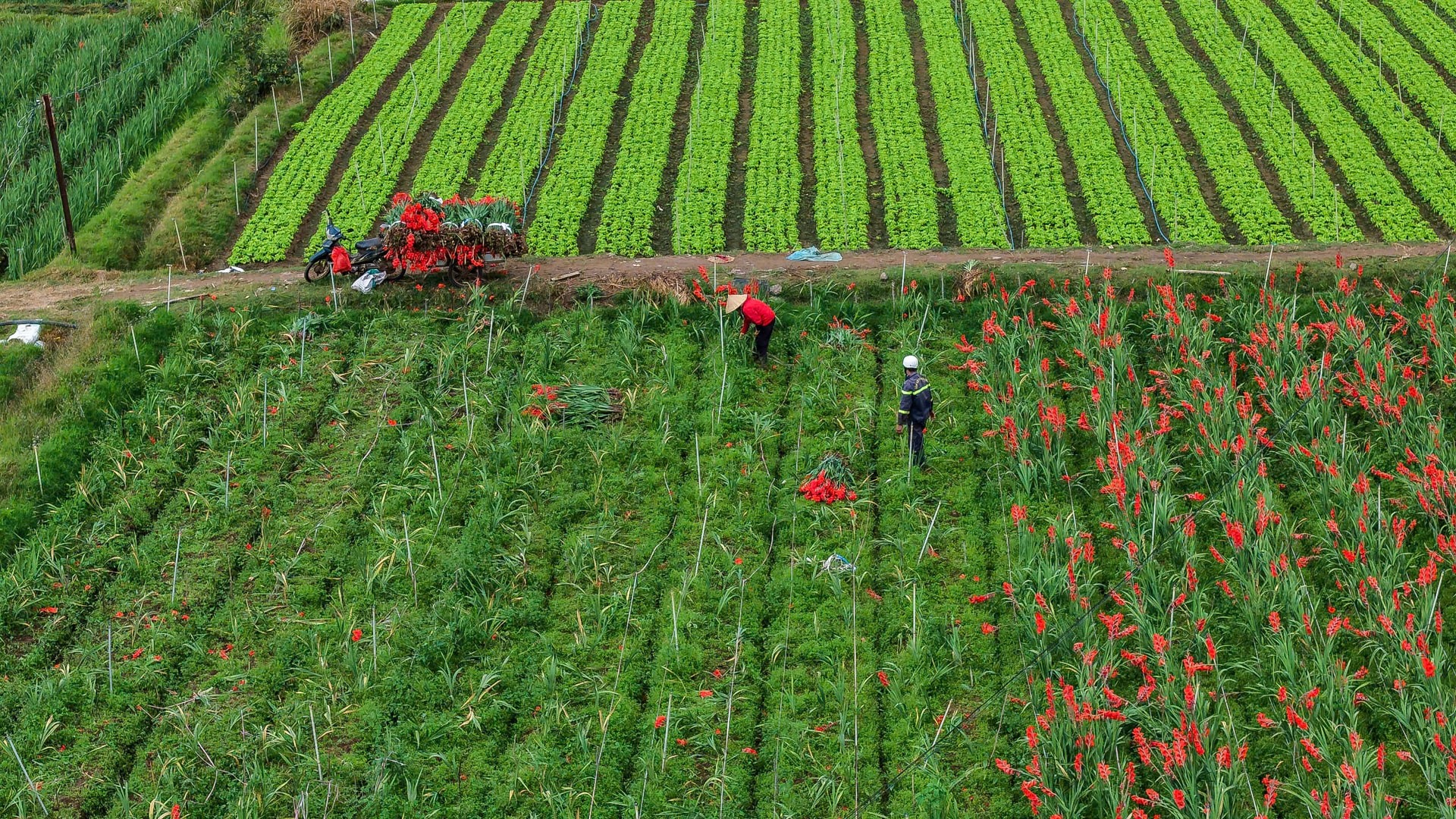
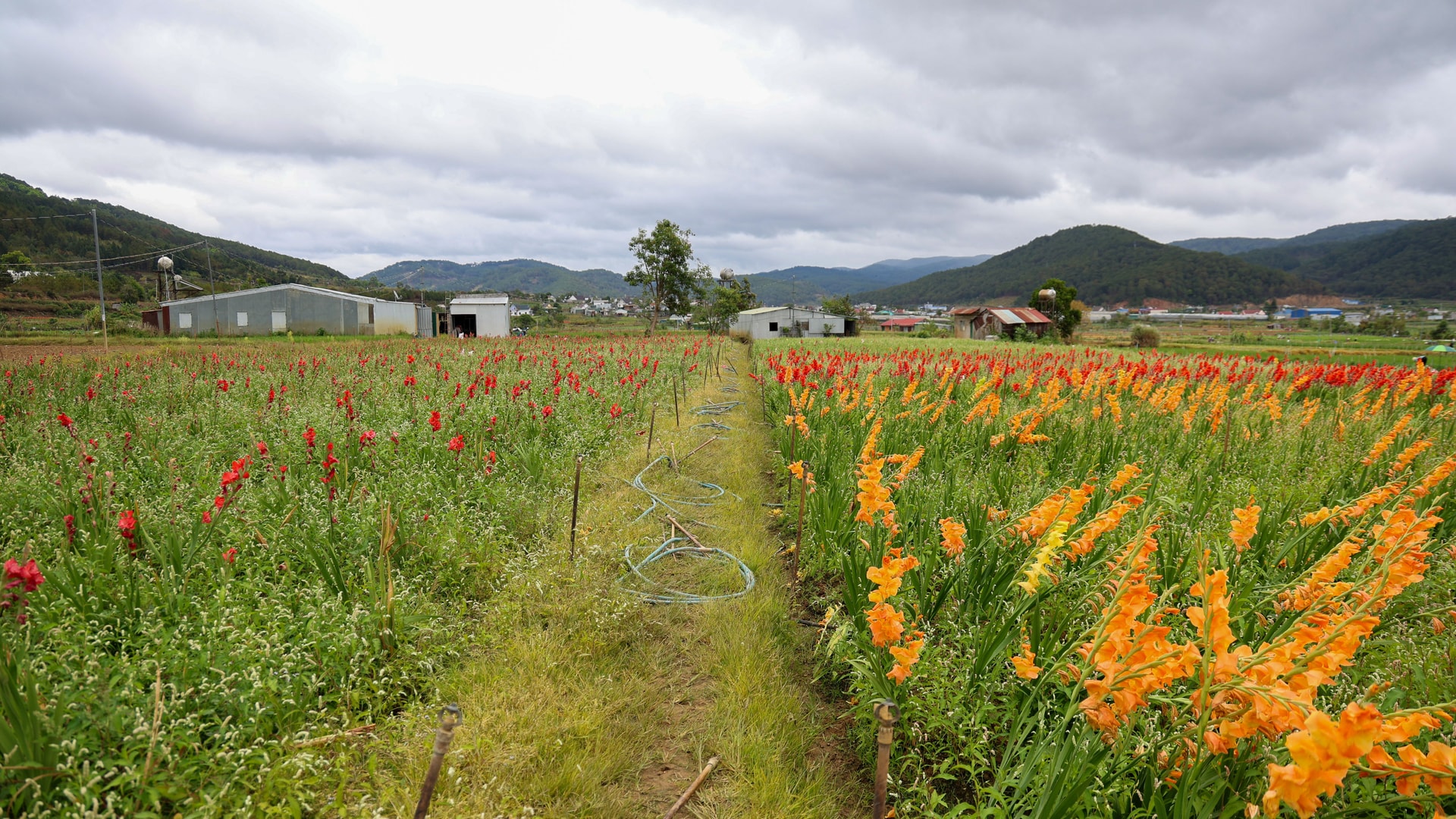
Arriving at K'Long village on the morning of February 27th, we were struck by a heartbreaking contrast. An entire area of flowers in K'Long village, each bloom large, uniform, and brilliantly colored, bloomed profusely despite the gloomy weather of the highland region.
Mr. K'Vuong, a farmer in K'Long village, stood dejectedly beside his family's 1.5-acre flower garden, his eyes sunken as he looked at the rows of flowers being uprooted, unable to hide his regret. He shared: "My family planted these 1.5 acres of gladiolus. If they bloomed in time for Tet (Lunar New Year), with a selling price of 30,000 - 45,000 VND per bunch at the garden, we could have earned about 80 million VND. But now... we've lost everything. The flowers bloomed too late; Tet is over, who will buy them now? And this type of flower, once it reaches its blooming stage, opens very quickly."
Unable to bear the thought of the flowers withering away needlessly, Mr. K'Vuong asked his acquaintances, Ms. Bong and her husband from the neighboring village, to uproot the entire flower garden to feed their dairy cows. Seeing the bundles of vibrant red flowers piled up on the truck, anyone who witnessed it couldn't help but feel a pang of sadness.
Production is also dependent on the weather.
K'Vuong's story is not unique. According to the head of the General Economic Department of Hiep Thanh commune, preliminary statistics show that the entire commune has up to 75 hectares of gladiolus flowers that bloomed late. That figure of 75 hectares is equivalent to billions of dong in capital that farmers have lost. The root cause of this crop failure stems from the unusually prolonged rains in September and October 2025. The extreme weather caused planting to be delayed, disrupting the growth cycle of the flowers, resulting in them not blooming in time for the peak consumption period.
Along the newly paved rural roads in Dinh An village, the atmosphere of labor in the fields at the beginning of the new year remains bustling. Interspersed with images of bountiful lettuce harvests are the somber faces of farmers who missed out on the Tet flower season. Numerous late-blooming gladiolus gardens are being uprooted and plowed haphazardly to prepare the beds for the new planting season.
In a 2-acre garden in Dinh An village, we met Mr. and Mrs. Nguyen Van Binh from Don Duong commune, busily uprooting flowers, bundling them into large bunches, and loading them onto an ox cart. Mr. Binh said his family raises 10 dairy cows. Hearing that many gardeners in the area were abandoning their flowers without harvesting them, he and his wife drove over to ask for some to use as green fodder for their cows. “It’s such a shame to feed these beautiful flowers to the cows, but what can we do? The gardeners need to clear the land urgently to plant a new crop. We asked for some, and they gave them to us right away. We didn’t even have time to ask each other’s names; we just exchanged a sad smile and then went about our work,” Mr. Binh confided as he loaded the flowers onto the cart. That sad smile held a deep empathy for those who share the same farming profession, where the fruits of their labor depend so heavily on the weather.
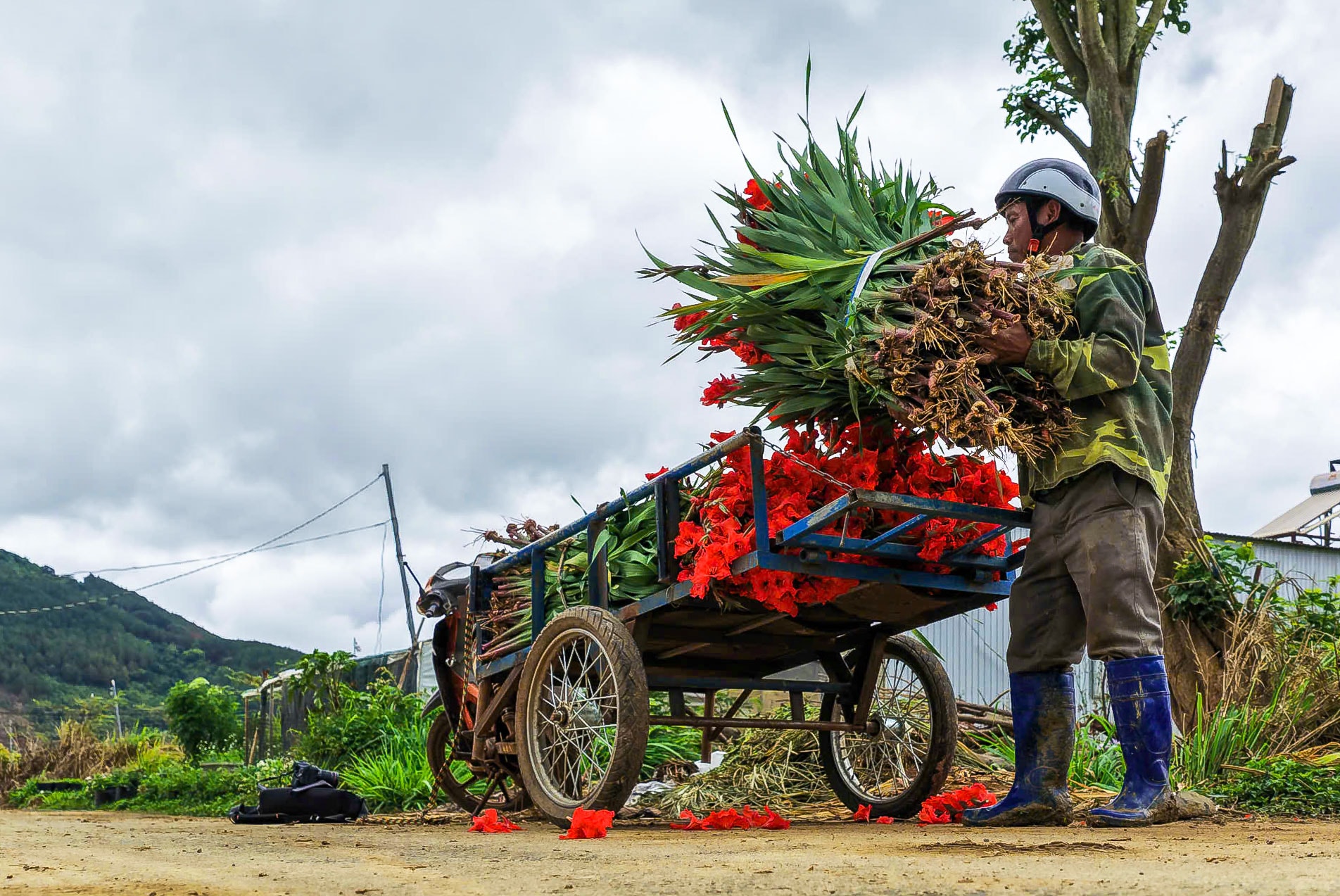
This year's failed gladiolus crop is a costly and painful lesson for the farmers of Hiep Thanh. Gardens worth tens of millions to hundreds of millions of dong before Tet (Lunar New Year) are now completely lost, becoming an unwanted luxury food source for cattle. However, despite the total loss, the farmers are now starting a new season after Tet, nurturing hope for a better and more successful harvest in the future.
Source: https://baolamdong.vn/xot-xa-mua-hoa-lo-hen-426908.html
![[Image] Nearly 125,000 Hanoi students completed the Literature exam for the 10th grade entrance exam.](https://vphoto.vietnam.vn/thumb/1200x675/vietnam/resource/IMAGE/2026/05/30/1780117233041_ndo_br_thiet-ke-chua-co-ten-2-png.webp)




































































































Comment (0)