

Many experts have offered explanations for the use of violence to resolve everyday conflicts, citing psychological issues and life pressures as reasons. However, the root cause remains the lack of a foundation in cultural conduct among a segment of the population today. Culture is not limited to art, festivals, or heritage; it encompasses how people treat each other, their communities, and themselves.
It is no coincidence that throughout history, culture has always been considered an important "guiding principle" that directs people towards what is good and right.
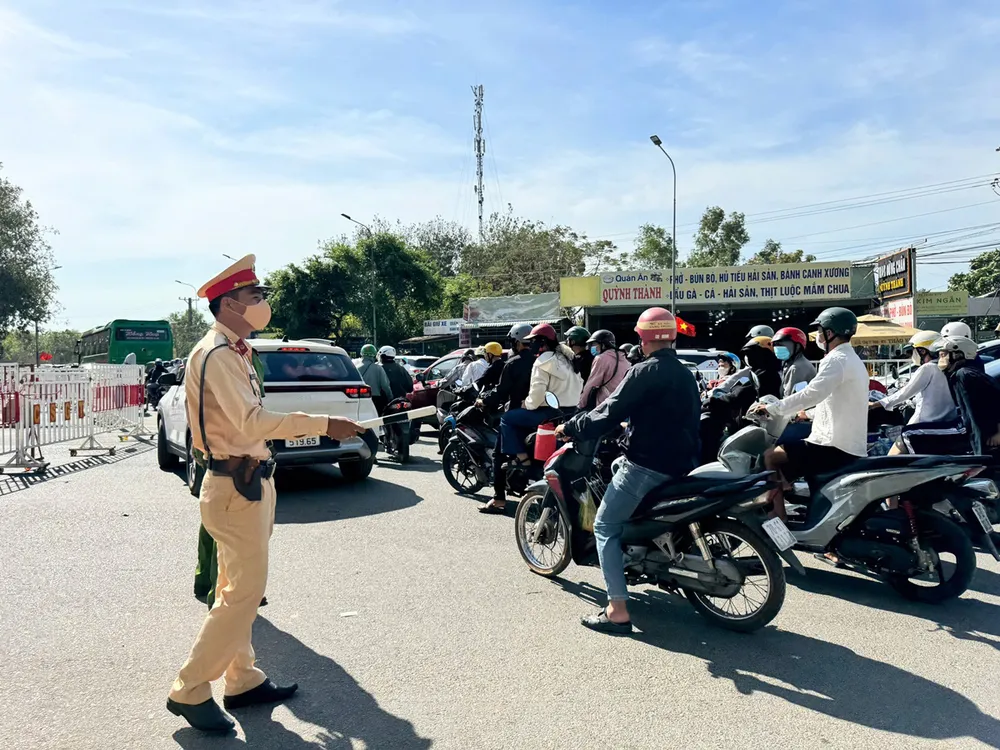
However, despite the importance of culture being frequently discussed at all levels, from the national to individual wards, communes, and families, in reality, for many people, culture remains a distant, abstract concept, sometimes even impractical and unnecessary. They are preoccupied with making a living, so their spiritual lives are often monotonous; outside of work, their only forms of entertainment are browsing Facebook or watching short videos on TikTok…
Recognizing the aforementioned issues, many policies and guidelines have been issued in recent times to strive to truly integrate culture into daily life, most recently the Politburo 's Resolution No. 80-NQ/TW on the development of Vietnamese culture.
This emphasizes the need for a radical shift in approach and communication regarding culture, ensuring it is both accessible and useful. From public etiquette and traffic culture to family life and a sense of responsibility at work, culture should be viewed as an integral part of daily life.
The transformation is happening, slowly but surely. With mass media, especially on social media, many short videos have emerged with relatable and easy-to-understand content on topics such as "traffic culture helps reduce accidents," "civilized behavior in public," "community spirit," or the "culture in every meal" series, combining regional cuisine with nutritional value and family affection…
These cultural products all share a commonality: they target specific audiences through people of the same generation. For example, a series of short videos on traffic safety aimed at young people, created by a Gen Z police officer in collaboration with a TikToker, attracted a large number of young people. They saw in the videos images, stories, and lessons that resonated with them.
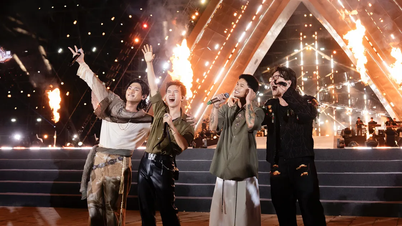
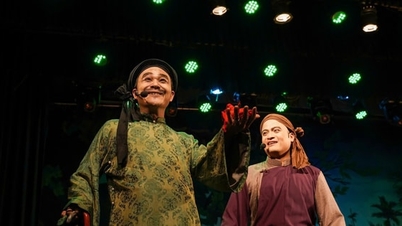
On the scale of the cultural industry, investment in products that are both entertaining and highly educational is also being encouraged and supported. Increasingly, there are more visually appealing and artistically rich performance products that convey meaningful stories about love for one's homeland, family affection, friendship, neighborly solidarity, and the will to strive for success…
Of course, much remains to be done to ensure that culture truly permeates society as a whole. This includes efforts to narrow the gap in cultural access between urban and rural areas, including remote regions.
This could involve building multi-functional cultural centers that combine free digital libraries and community spaces, allowing people to relax and access culture without incurring high costs. It could also include organizing awards to encourage young people to create content that promotes a cultured lifestyle; and establishing official cultural communication channels on social media platforms…
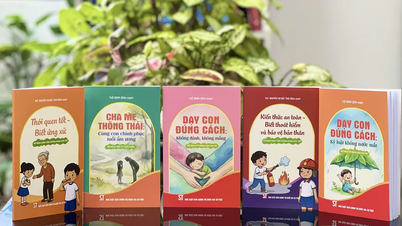
When culture becomes a natural part of daily life, from behavior and consumption to entertainment and learning, compassion, kindness, respect for differences, and a sense of responsibility will be emphasized. A child who grows up in an environment where they learn to be considerate, to say thank you and apologize, to appreciate beauty, and to value hard work, is also subtly shaping their character through culture.
And then, spiritual life will be richer, happiness will increase, and the inherent strength of the nation – as emphasized in Resolution No. 80-NQ/TW of the Politburo on the development of Vietnamese culture – will be strongly awakened, contributing to building a prosperous, happy, and civilized country.
Source: https://www.sggp.org.vn/gia-co-nen-tang-van-hoa-ung-xu-post855223.html
![[Image] A brilliant symphony and explosive power in the skies of Da Nang.](https://vphoto.vietnam.vn/thumb/1200x675/vietnam/resource/IMAGE/2026/05/31/1780196945787_anh-man-hinh-2026-05-31-luc-10-08-51.png)











![[Video] Sunset at Lap An Lagoon – Where the sun sets over the fishing nets](https://vphoto.vietnam.vn/thumb/340x192/vietnam/resource/IMAGE/2026/05/31/1780192137701_beach-landscape-sea-water-nature-grass-745871-pxhere-com.jpeg)





















































Comment (0)