

The decline of the internal combustion engine.

The Vietnamese motorcycle market, particularly the electric motorcycle segment, underwent significant changes in early 2026 as major players began competing directly, leading to a strong shift in consumer behavior. Many new policies came into effect, intensifying the race for market share.
According to data from the Vietnam Motorcycle Manufacturers Association (VAMM), 2025 saw a significant slowdown for the major traditional motorcycle manufacturers, with total market sales reaching 2.6 million units, a 1.5% decrease compared to the previous year. Although Honda still held the leading position (accounting for 86% of the market share) with nearly 2.25 million units sold, this was largely due to existing gasoline-powered models, while the company's electric vehicle segment remained modest despite the launch of models like the ICON:e and the e:CUV. This decline is not simply a market fluctuation, but a consequence of changing consumer behavior under pressure from rising fuel costs.
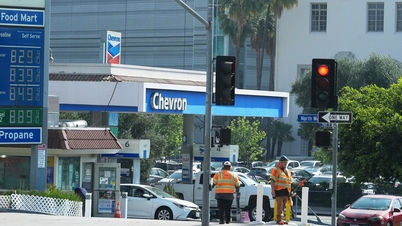
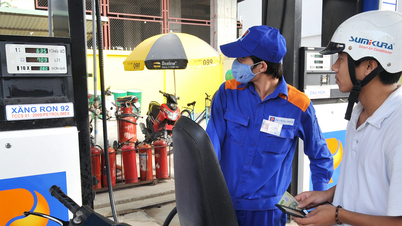
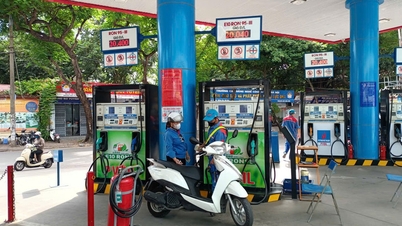
And by the end of March 2026, when RON 95 gasoline soared to over 30,000 VND/liter, the cost of operating a gasoline-powered vehicle became a constant financial burden for the vast majority of workers.
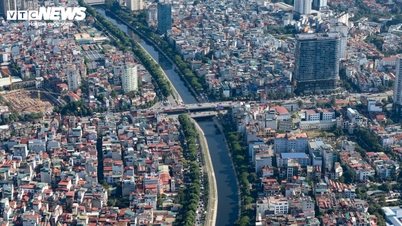
In particular, the decisive impetus came from the implementation roadmap for the Capital's Low Emission Zone (LEZ). On November 27, 2025, the Hanoi People's Council passed a Resolution stipulating the implementation of the Low Emission Zone, effective from July 1, 2026, for gasoline-powered motorcycles and scooters, prohibiting them during certain hours within Ring Road 1. This roadmap will continue to expand to Ring Road 2 in 2028 and the entire Ring Road 3 by 2030. This pressure has directly changed user perception from "wanting to switch" to "being forced to switch" to electric vehicles.
Mr. Vu Anh Phuong (Ha Dong ward, Hanoi), a gasoline-powered motorcycle user for over 10 years, shared: "Previously, I thought electric motorcycles were only suitable for short distances, had weak power, and lacked convenience. But now, with many new models featuring beautiful designs, high speeds, lower operating costs, and especially increasingly convenient charging and battery swapping systems, I see that electric motorcycles can completely replace gasoline motorcycles in daily life." This awareness is spreading as consumers realize the double benefit: complying with the law, saving on gasoline costs, and also benefiting from VinFast's free electric motorcycle charging program.
A new order from a holistic ecosystem.

While traditional car manufacturers are still struggling to adjust their strategies, VinFast has pioneered market positioning. 2025 marks the beginning of a new phase of development for electric motorcycles. VinFast plans to achieve sales of 406,453 electric motorcycles in 2025, a nearly 500% increase compared to the previous year. This result not only reflects the company's exceptional growth rate but also demonstrates the strong shift in Vietnamese consumers' attitudes towards fossil fuel-powered vehicles and green transportation options.
Notably, according to the plan announced on January 30, 2026, VinFast will complete three lines of electric motorcycles: entry-level, premium, and sports. The entry-level line will continue to play a leading role, with more than 10 models already on the market, serving both personal transportation and business needs. Meanwhile, the launch of three premium models and four sports models marks a significant expansion of electric motorcycles into segments previously dominated by gasoline motorcycles. The new models are heavily invested in design, power, and driving experience, thereby rapidly narrowing the gap between electric and traditional gasoline motorcycles. With a product portfolio ranging from entry-level to premium, VinFast almost covers all user needs, further shrinking the competitive "space" for other motorcycle manufacturers.
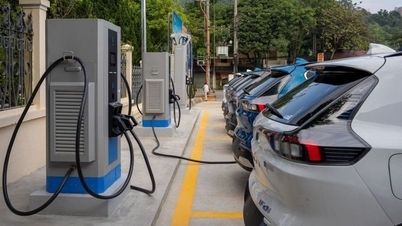
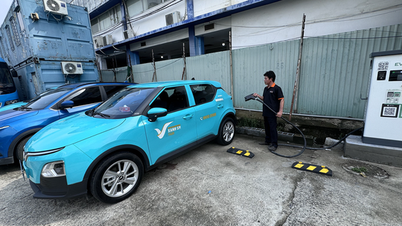
VinFast's success lies not only in the number of models but also in its infrastructure. Its strategy of developing flexible charging stations and battery swapping stations has solved the most difficult problem for residents in urban apartment buildings. Automotive expert Mạnh Thắng (Whatcar) believes that combining "fixed battery" and "flexible battery rental" is the perfect solution for people living in urban apartment buildings. As electric motorcycles increasingly meet both functional and user experience needs, traditional manufacturers will be forced to enter a rapid "electrification" race or accept being left behind in the clearly emerging era of green transportation in Vietnam.

Assessing the Vietnamese electric two-wheeler market, Mr. Liu Jia - General Director of YADEA Vietnam electric motorcycle company, stated: "Vietnam is one of the most promising two-wheeler markets in the world. With the roadmap to restrict gasoline motorcycles, the electric vehicle segment could double in growth annually over the next 3-5 years. YADEA has set a target of capturing 20% market share by becoming completely self-sufficient in three core systems: motor, battery, and controller. The company's strategy for 2026 is to cover all districts nationwide and integrate online rescue services via the Zalo platform based on GPS positioning."
This competition directly benefits consumers as manufacturers continuously diversify their products. Electric vehicles are no longer just for students. A premium segment, replacing luxury scooters like the SH or Vespa, is gradually emerging, targeting practical customers who are more concerned about operating costs than ostentation.
According to motorcycle experts, this fierce competition is accelerating the "purification" process of the market, where green, technology-integrated, and cost-effective vehicles will become the new focal point of competition. 2026 will officially become a pivotal year, paving the way for an era where electric motorcycles will become the "backbone" of urban transportation in Vietnam.
Source: https://baotintuc.vn/o-to-xe-may/bung-no-thi-truong-xe-may-dien-20260401075118969.htm




















































































Comment (0)