 |
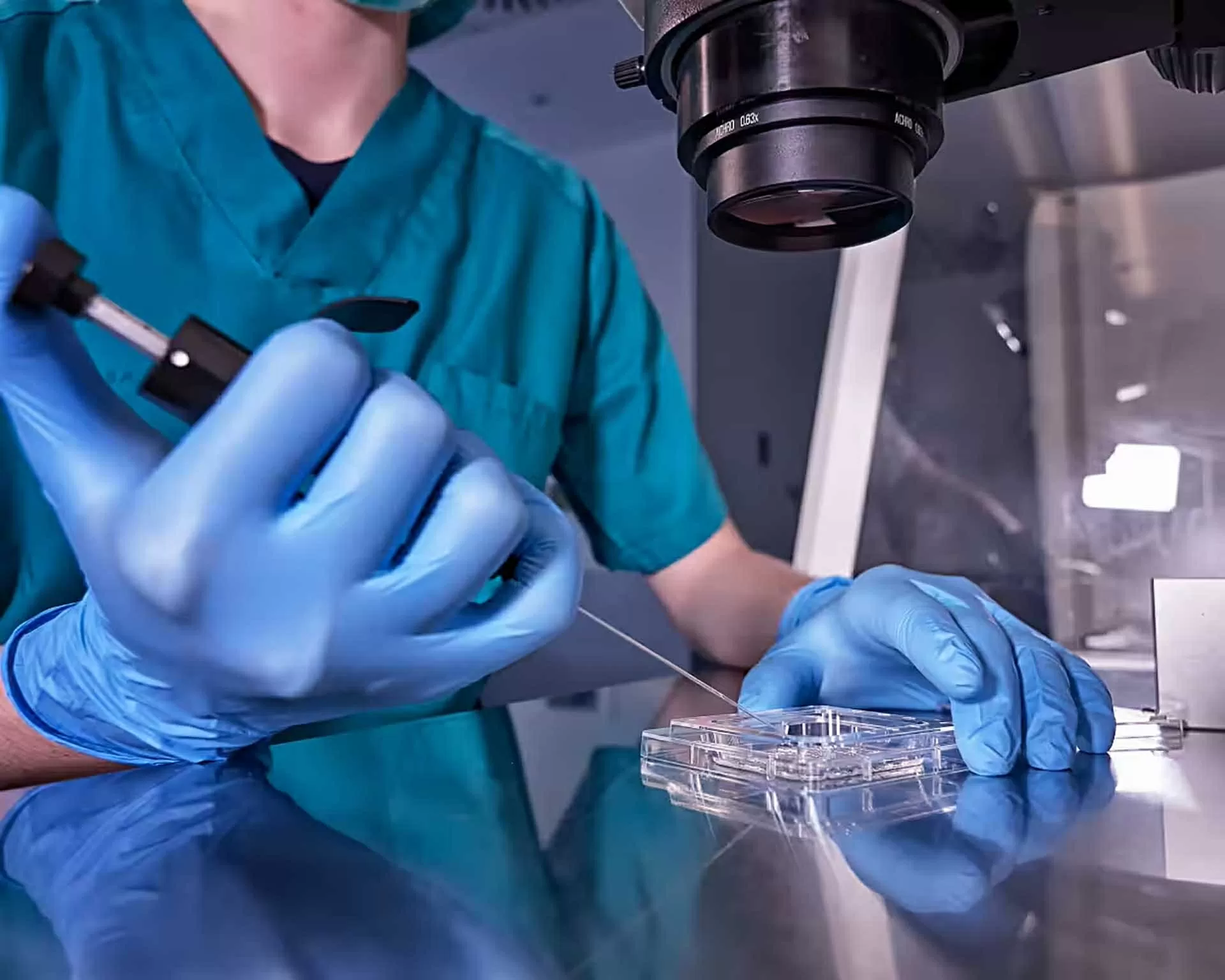
| If proven safe, this technology could open up opportunities for anyone, regardless of age or fertility, to have their own biological children. (Source: Getty Images) |
According to Professor Katsuhiko Hayashi, a developmental genetics expert at Osaka University (Japan), in-vitro gametogenesis (IVG) is making rapid progress. Within just a few years, this achievement could be applied in practice.
IVG is a process that transforms skin or blood cells into stem cells, which are then converted into germ cells – the precursors of sperm and eggs. These cells are then introduced into artificial reproductive organs (organoids) to receive biological signals that help them develop into complete gametes.
Speaking at the annual meeting of the European Society for Reproduction and Embryology (ESHRE) in Paris, Professor Hayashi shared that his laboratory had successfully created spermatogonia in artificial testicular tissue. Although the cells had not yet developed into mature sperm, the research team was improving the oxygen delivery system to achieve better results. He predicted that it would only take another seven years to create viable human sperm in the laboratory.



In the US, the startup Conception Biosciences is also pursuing this direction with support from major investors such as Sam Altman – founder of OpenAI. The company's CEO, Matt Krisiloff, asserts: "Artificial eggs could be the most effective tool to reverse the declining population." He believes that this technology significantly expands the "family planning window," allowing women to have children at a much older age than they do now.
However, experts emphasize that IVG must undergo years of testing to ensure biosafety and avoid the risk of gene mutations being passed on to future generations. Some mice born using artificial eggs have shown normal lifespan and reproductive capacity, but this is not enough for application in humans.
From an ethical standpoint, scientists are cautious about possibilities such as offspring from two fathers or from a single parent. Professor Hayashi shared: "I created baby mice from two males, but that's not natural. Science that creates something unnatural needs even more caution."
Furthermore, the potential for gene editing and mass screening of embryos has also been raised as a potential consequence, requiring a strict legal framework. In the UK, current law prohibits the use of artificial reproductive cells in infertility treatment, and regulatory bodies are working to establish safety standards for this new technology.



Despite remaining ethical and legal hurdles, the scientific community agrees that IVG is a promising approach not only for infertile individuals but also for same-sex couples, transgender people, and those with a history of cancer. Professor Rod Mitchell from the University of Edinburgh stated: “It’s possible that in the next five to ten years, we will see sperm or eggs created from immature cells. This is no longer a pipe dream.”
Source: https://baoquocte.vn/buoc-ngoat-cong-nghe-ho-tro-sinh-san-320553.html





![[Image] National conference summarizing one year of operation of the overall organizational model of the political system, the three-tiered government model.](https://vphoto.vietnam.vn/thumb/1200x675/vietnam/resource/IMAGE/2026/07/01/1782882811691_ndo_br_1-jpg.webp)