

Nestled beside the picturesque Ea Kao Lake, Tong Ju village possesses the serene beauty of the ancient Central Highlands. It is the long-standing home of the Ede ethnic community, preserving many distinctive customs of their slash-and-burn agriculture. The village currently has 467 households and over 2,092 inhabitants, primarily Ede people, along with Kinh, Tay, and Muong ethnic groups.
No longer confined to traditional longhouses, the culture of the Ede people in Tong Ju village is flourishing, blending creatively into modern life. In particular, the story of preserving traditional brocade weaving has been skillfully linked with community tourism . Instead of just weaving and selling products, the villagers have transformed their living spaces into attractive destinations. Four households have pioneered the construction of bungalows in the stilt house style, using beds and mattresses made of brocade, creating a space that is both comfortable, cozy, and rich in cultural identity. This model not only showcases the beauty of Ede brocade but also creates jobs for 19 families and 42 members, with an average income of 4-6 million VND per month. Each year, Tong Ju village attracts approximately 2,700 visitors who come to explore, experience, enjoy local specialties, and immerse themselves in the culture of the Ede people.
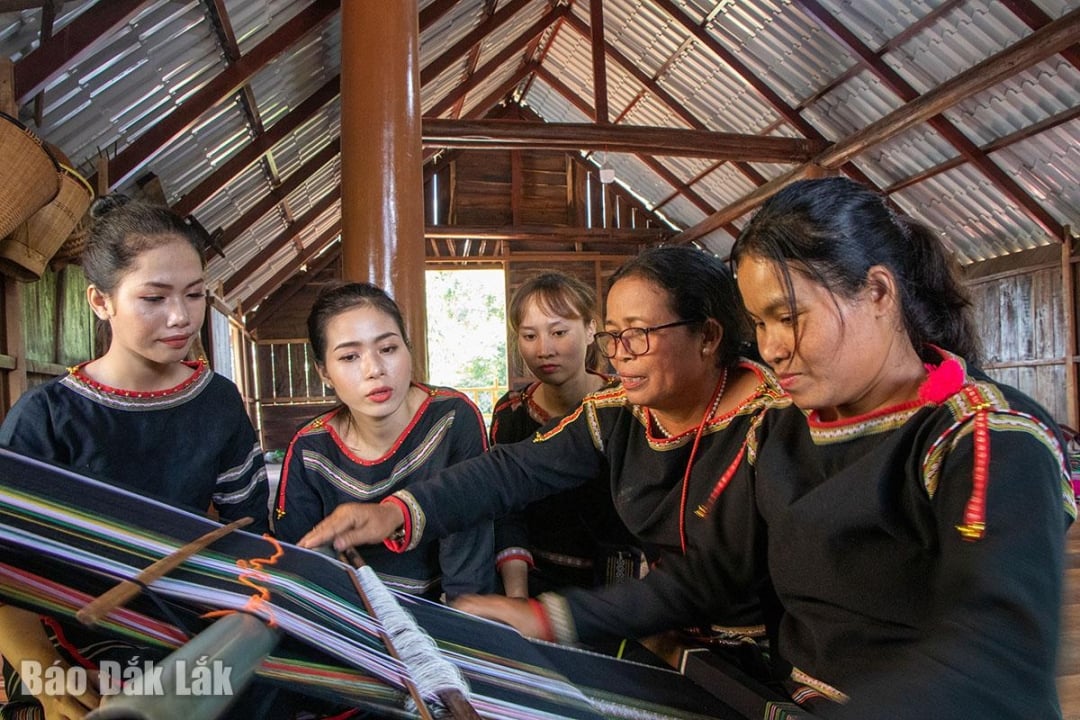 |
| The traditional brocade weaving craft of the Ede people in Tong Ju village is being preserved and developed. Photo: Nguyen Gia |
Ms. H'Yam Bkrong, Director of the Tong Bong Brocade Weaving Cooperative and Head of the Tong Ju Community Tourism Group, shared that amidst the wave of industrialization, traditional brocade products became difficult to sell, and young people were not interested in traditional clothing, leading to the decline of the weaving craft. Based on this situation, in 2003, she mobilized women in the village to establish the Tong Bong Brocade Weaving Cooperative, starting with 10 members. After many ups and downs, the cooperative has now developed stably, creating seasonal jobs for about 100 women. Many diverse brocade products, from clothing, handbags, tablecloths, to ao dai (traditional Vietnamese dress) and cushions, are now available in many provinces and cities nationwide.
In harmony with contemporary life, Alê A village – the oldest village in Dak Lak province – has chosen a more comprehensive approach to developing and preserving its cultural identity.
Located in the northern part of Ea Kao ward, where the Ea Tam stream flows through, and primarily inhabited by the Ede people, the lives and activities of the people here are closely linked to the slash-and-burn farming civilization. However, due to the transition to a market economy and rapid urbanization, the cultural identity of the ethnic minorities in Alê A village has been significantly affected and is somewhat fading away.
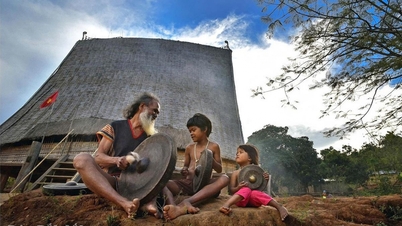
Deeply aware of the importance of preserving ethnic cultural identity, the Party Branch and the Self-Management Board of A Le village proactively established a brocade weaving group with 20 members, including 6 artisans. Furthermore, traditional rice wine brewing models, folk song clubs, Xoang dance troupes, and gong ensembles have been maintained and strongly developed. Currently, the village has a youth gong ensemble with 18 members; a traditional Xoang dance troupe with 16 members. The village also possesses 10 sets of gongs, 16 sets of bronze gong percussion instruments, and many ancient jars. Local ethnic minority households have shown interest in promoting traditional cultural values during festivals and holidays, as well as preserving the traditional stilt house architecture of the Ede people. In particular, the awareness of preserving their roots is also demonstrated through the organization of Ede language classes for the younger generation in the village, ensuring that the flow of culture in contemporary life is not interrupted.
According to the Culture and Social Affairs Department of Ea Kao ward, the locality currently has 25 residential units, including 15 residential groups and 10 ethnic minority villages, with 26 ethnic groups living together. The diverse culture, with the presence of ethnic groups such as Kinh, Ede, Muong, Tay, Nung, etc., has created a rich and varied cultural community.
However, to prevent ethnic minority villages from being "dissolved" and to ensure sustainable development within the modern era, the ward is setting a goal: to develop Ea Kao ward into an eco-tourism destination offering experiential activities combined with distinctive cultural elements to create economic value and strengthen community bonds.
 |
| Many diverse brocade products are made by the skillful hands of members of the Tơng Bông Brocade Weaving Cooperative. Photo: Nguyễn Gia |
To realize this goal, a series of key solutions are being implemented. These include focusing on upgrading transportation infrastructure, building parking lots, rest stops, and attractive check-in points. Cultural preservation efforts are being intensified through the inventory, digitization, and documentation of tangible and intangible cultural values; and the restoration of traditional festivals and crafts at risk of disappearing.
The local authorities will also open training courses to improve tourism skills for the community, encouraging participation from all ages and establishing the Ea Kao Tourism Community Group. In particular, the application of digital transformation is considered a crucial leverage. Building a digital tourism map of Ea Kao, QR codes at tourist destinations; developing communication channels on social media such as Fanpages, YouTube, TikTok, and organizing annual events will contribute to promoting the image of Ea Kao in a strong and professional manner to domestic and international tourists.
According to Dang Gia Duan, Secretary of the Party Committee and Chairman of the People's Council of Ea Kao Ward, the ward will focus on preserving and promoting the cultural values of the 10 ethnic minority villages. At the same time, it will develop a brand identity for Ea Kao Ward linked to the development of trade, services, and tourism, especially in the area around Ea Kao Lake. Over the next five years, the ward's development will be guided by the strategic motto "Modern, civilized, compassionate, and distinctive." This is not just a slogan, but a pillar of comprehensive development for Ea Kao in the 2025-2030 period.
Source: https://baodaklak.vn/xa-hoi/202508/buon-lang-song-cung-nhip-tho-do-thi-3bc0a26/









































































Comment (0)