

Over 17,000 products meet the standards.
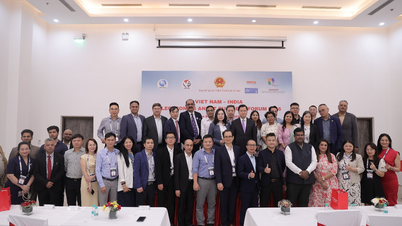
On the afternoon of September 29th, in Hanoi, under the chairmanship of the Ministry of Industry and Trade , the Industry and Trade Newspaper and the Department of Domestic Market Management and Development jointly organized the Conference on Connecting and Promoting the Consumption of OCOP Products.

Overview of the conference. Photo: Hanh Nhung
The "One Commune, One Product" (OCOP) program, approved by the Prime Minister in 2018, aims to develop the rural economy based on the potential and advantages of each region. After more than 7 years, the program has created significant changes, contributing to increasing the value of agricultural products and reviving many distinctive local products.
As of July 2025, the whole country had 17,068 OCOP products rated 3 stars or higher, including 126 5-star products at the national level. OCOP products are diverse, ranging from agricultural products, processed foods, beverages to handicrafts, medicinal herbs, and natural cosmetics. Many products have reached international markets, affirming their quality while promoting the cultural identity and creativity of the community.
Currently, there are over 132 points of sale and distribution for OCOP products nationwide, acting as a bridge between producers and consumers. However, for OCOP to develop sustainably, it is necessary to focus not only on standardizing quality but also on connecting with markets, promoting trade, and establishing brands.
According to Nguyen Ba Hai, Deputy Director of the Center for Trade and Investment Promotion Support, Trade Promotion Department (Ministry of Industry and Trade), the Ministry of Industry and Trade, through the Trade Promotion Department, has recently coordinated with localities and industry associations to organize many trade promotion activities for OCOP products.
Notable examples include OCOP fairs in the North and Central regions with hundreds of booths; three intensive training courses for over 200 trainees from 61 cooperatives; and online sales programs and livestreaming on e-commerce platforms and TikTok. In particular, the VIETNAM OCOPEX 2025 fair, held in August, brought together over 300 booths from 34 provinces and cities, along with international businesses (Peru, Laos, Cambodia, etc.). The event attracted over 20,000 visitors, numerous distributors and importers, helping OCOP businesses access modern trade trends and expand their export markets.
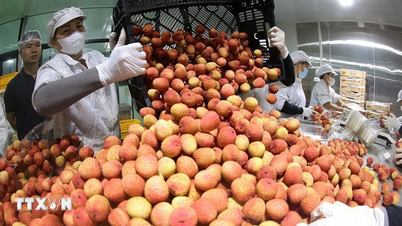
Bac Ninh currently has 773 OCOP products, including 1 five-star product, 114 four-star products, and 658 three-star products. Many specialties such as lychees, Chu noodles, Yen The hill chicken, and Danh mountain ginseng flower tea are available in major supermarkets and exported to more than 30 countries. According to Ms. Nguyen Thi Hiep, representative of the Bac Ninh Department of Industry and Trade, the province has promoted trade, organized trade fairs, supported businesses in registering trademarks, applying traceability systems, developing e-commerce, and linking value chains. As a result, more than 60% of OCOP businesses have seen an average annual revenue growth of 18%, creating thousands of jobs and improving rural life.
A strategy is needed to expand the market for OCOP products.
Despite the achievements, the OCOP program still faces many difficulties.
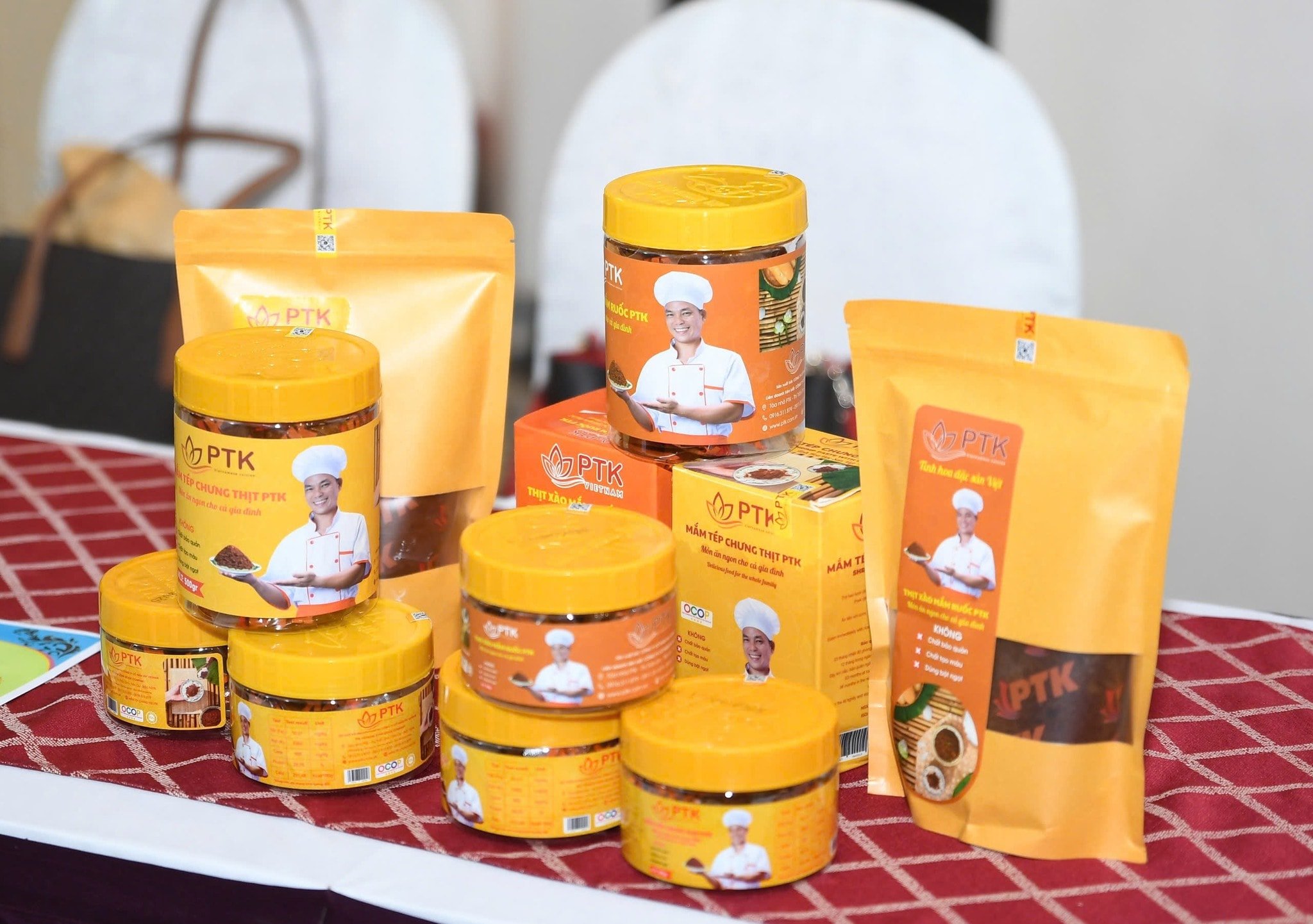
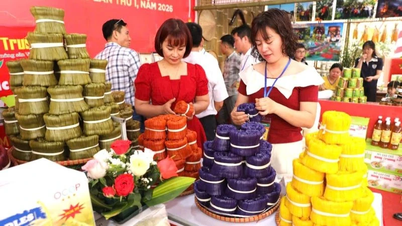
OCOP products are displayed in the conference space. Photo: Hanh Nhung
Mr. Bui Nguyen Anh Tuan, Deputy Director of the Department of Domestic Market Management and Development, stated that the budget allocated to support the program is limited. Notably, OCOP product sales points have not been widely introduced and promoted on media platforms; there is a lack of websites, social media, and QR codes for product promotion. Furthermore, the lack of linkages between sales points has prevented the formation of a strong consumption chain; display and experience spaces are insufficient; and packaging and branding are not standardized. These are obstacles hindering the expansion of many products' markets.
To address this, Mr. Tuan suggested that a strategic direction is needed for the OCOP program to ensure more synchronized and effective implementation. Integrating the OCOP program with activities such as stimulating consumer demand, the "Vietnamese people prioritize using Vietnamese goods" movement, and national target programs will help achieve higher overall effectiveness. Simultaneously, focus should be placed on increasing the percentage of products achieving 4-5 stars, emphasizing quality and uniqueness; investing in infrastructure, building spacious sales points combined with tourism experiences; establishing OCOP product sales points in tourist areas and rest stops to increase product accessibility; and promoting the application of the digital economy and e-commerce connectivity for sustainable development.
Representatives from the Bac Ninh Department of Industry and Trade also proposed the need to improve the inter-regional and international distribution network, develop OCOP (One Commune One Product) showrooms in urban areas and tourist zones; strengthen linkages with retail chains and e-commerce; and organize professional "regional OCOP product weeks." At the same time, they suggested promoting digitalization, building digital brands, online traceability, livestream training, and multi-platform promotion.
In addition, it is recommended to invest in post-harvest preservation and processing technologies, improve packaging, and build brands that meet national and international standards. Production areas should be planned in conjunction with experiential tourism and shopping; and targeted international trade promotion should be intensified.
On the part of the Ministry of Industry and Trade, the agency is committed to continuing to support and strengthen the distribution system, establishing product showrooms in urban areas, tourist zones, and international border gates; promoting digital transformation, linking OCOP with e-commerce and exports, and building strategies for penetrating foreign markets.
Source: https://daibieunhandan.vn/ca-nuoc-co-hon-17-000-san-pham-ocop-10388504.html






































































































Comment (0)