

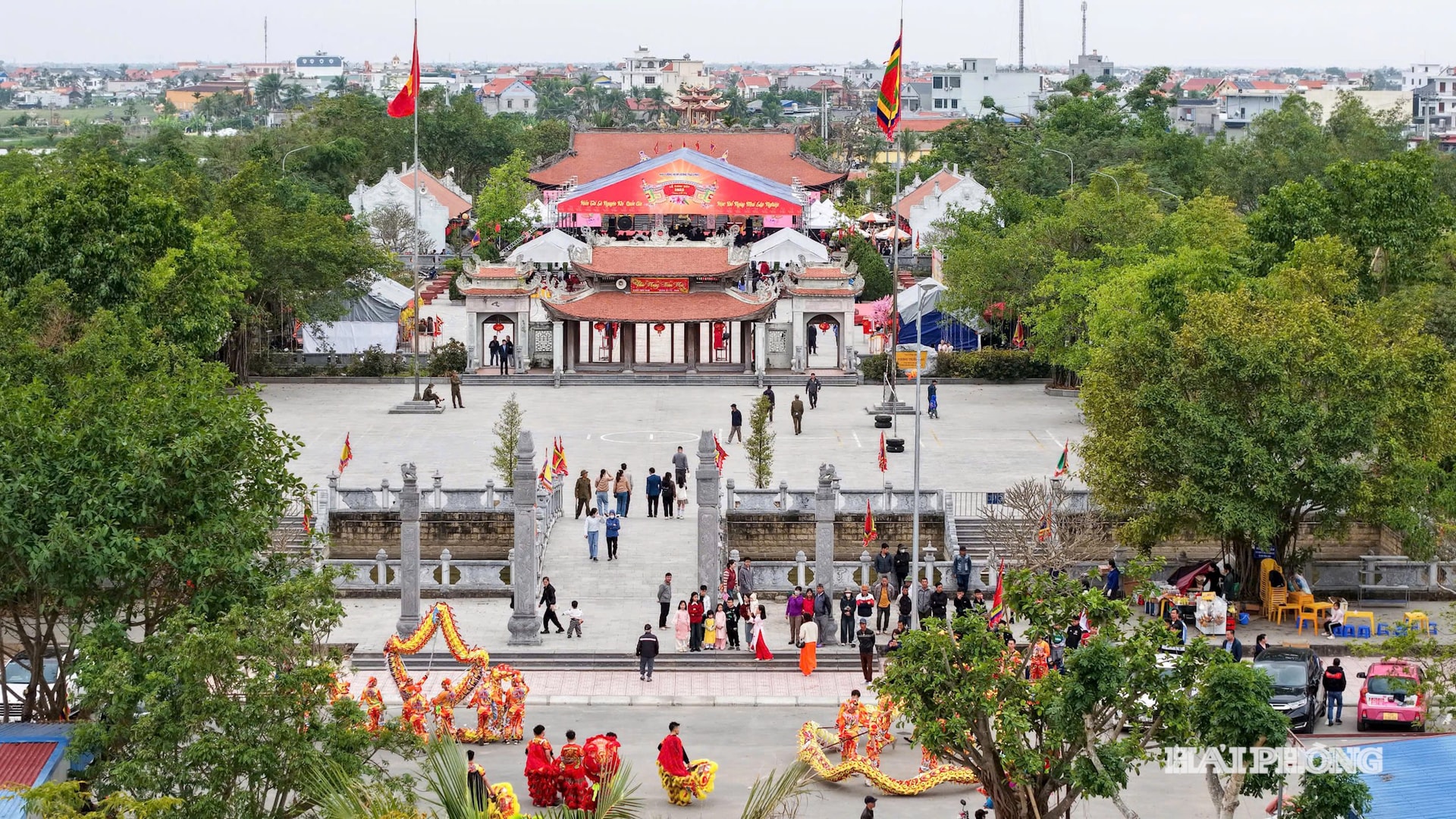
For Hai Phong, a dynamic port city of the country, the answer is gradually becoming clearer as historical and cultural values are re-identified, restored, and placed at the heart of development strategies.
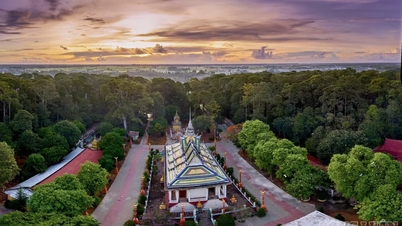
Throughout this process, the event of the Mạc Dynasty-related relics complex in Dương Kinh, Kiến Thụy being classified as a special national historical site in early 2025 is not just an administrative decision, but a turning point in awareness: History is not only for remembering, but also a resource for development. And within that whole, the Temple of the Mạc Dynasty Kings stands out as a typical symbol, a place where memory, belief, and the aspiration for heritage revival converge.
Looking back at history, the Mạc dynasty was one of Vietnam's most unique dynasties. Born in a coastal region and growing up amidst a turbulent society, the Mạc dynasty gradually established its position through practical reforms, focusing on production, encouraging trade, and promoting education and the imperial examination system. The construction of Dương Kinh at Cổ Trai, a coastal capital, was not merely a geographical choice but also a manifestation of a strategic vision towards the sea, expanding the development space of Đại Việt. These significant achievements, for a long time, were sometimes obscured by historical prejudices, but today they are gradually being re-evaluated in a fairer and more scientific manner.
It is in this context that the restoration and preservation of the Mạc Dynasty King's Temple takes on a significance that transcends the scope of an architectural work or a spiritual destination. It is an act of "recovering memory," an effort to restore the rightful place of a historical period that played a crucial role in the nation's development. Notably, this entire process does not rely primarily on budgetary resources, but is carried out through the collective efforts of the community, especially descendants of the Mạc family both domestically and internationally. This is a vivid testament to the power of social mobilization in the cultural field, where heritage is no longer "the property of the past," but becomes "the responsibility of the present."
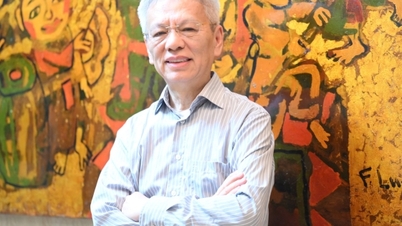
In this journey, the role of dedicated individuals cannot be overlooked. People like Mr. Hoang Van Ke, former Vice Chairman of the People's Committee of Hai Phong City and Chairman of the Mac Clan Council of Hai Phong, have spent many years persistently campaigning, connecting, and gathering resources, gradually realizing an idea that seemed very difficult: Recreating a space worthy of the stature of the Mac dynasty right on the very land where it originated. But with only a few individuals, this project could hardly have taken shape. What created the real strength was the unity of the community, from descendants of the Mac clan everywhere to local people, all sharing the same will: Preserving and restoring the heritage as part of their identity.
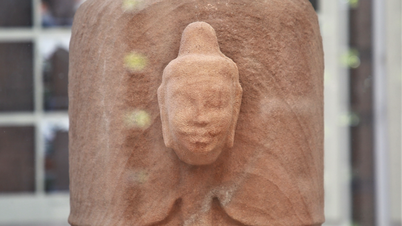
The temples dedicated to the Mạc dynasty kings are therefore not merely spaces of worship, but consciously organized structures of memory. There, the complete veneration of the kings, queens, consorts, princes, and princesses is not simply an expression of faith, but also a way of "recreating history" through cultural language. Ceramic reliefs recounting 65 years of reign in Thăng Long, spaces dedicated to the Holy Mother, prophecies of Trạng Trình Nguyễn Bỉnh Khiêm… all create a multi-layered symbolic system, allowing visitors not only to see, but also to feel and reflect.
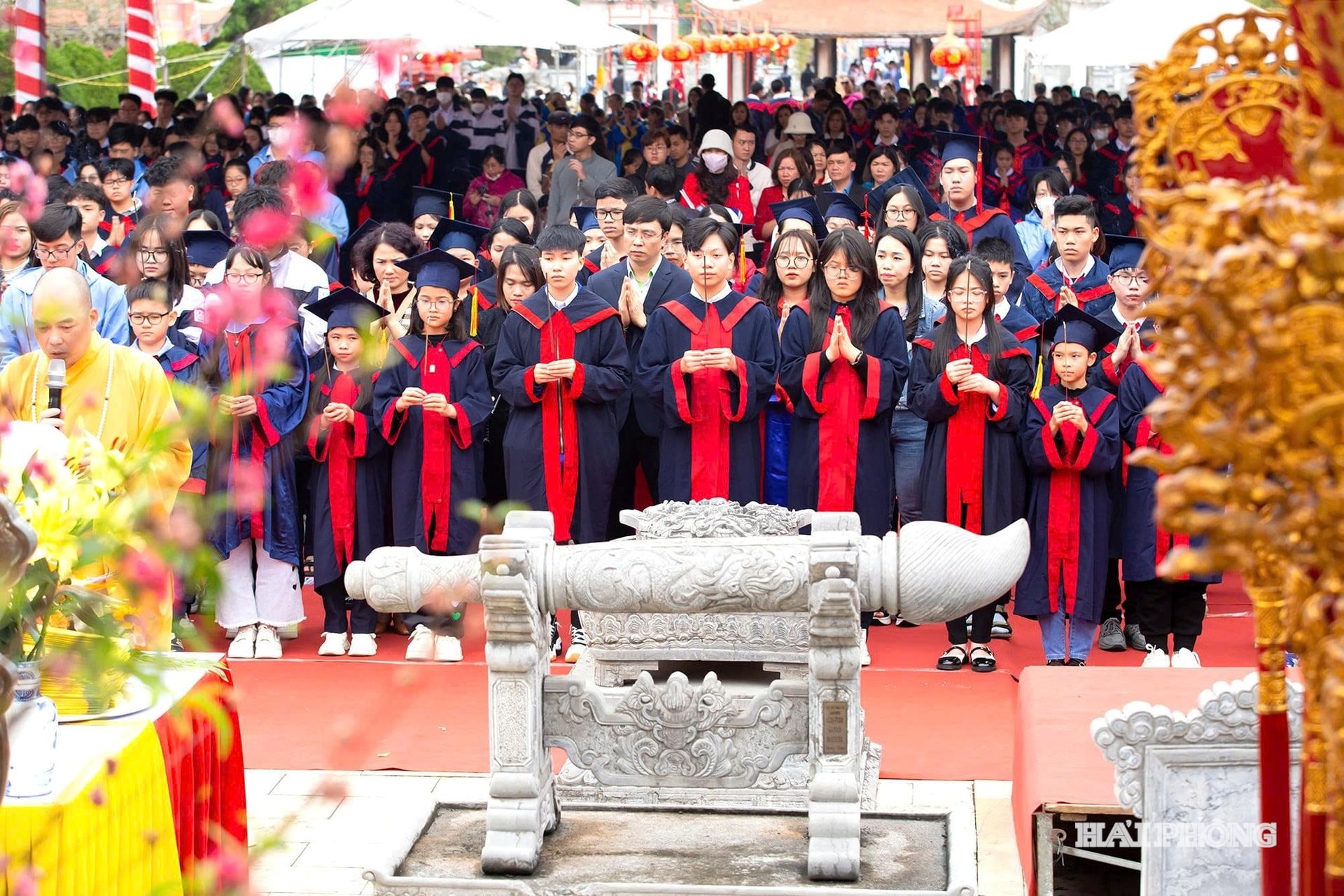
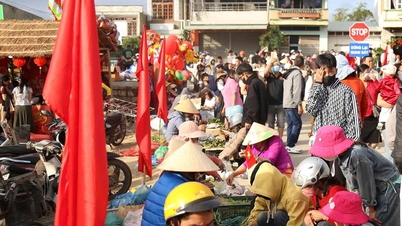
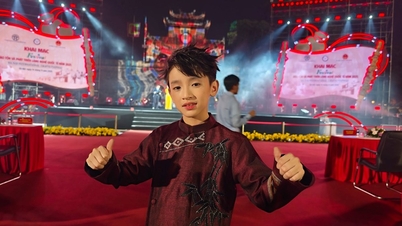
More importantly, this historical site is not standing still in the past, but is gradually becoming a "living heritage." Festivals such as the Spring Calligraphy Ceremony, the Traditional Wrestling Festival, and the Mac Dynasty-era Village Market are not merely a reenactment of form, but a rebirth of cultural values in contemporary life. These activities create a cultural ecosystem where heritage is connected to the community, to tourism, to education, and thus generates sustainable added value. This is also the direction consistent with the spirit of Resolution 80-NQ/TW of the Politburo : Cultural development is not just about preservation, but must be linked to socio-economic development and become an endogenous resource.
From a broader perspective, the story of the Mạc Dynasty King's Temple raises a larger issue for localities, especially cities rich in heritage: How to transform heritage into a driving force for development. The answer lies not in individual investment projects, but in a holistic approach: correctly identifying the value, mobilizing the community, reorganizing heritage spaces in an open and vibrant way, and especially creating cultural products with the potential for widespread dissemination. In the case of Hai Phong, the Mạc Dynasty relic complex in Duong Kinh ward has the potential to become a unique cultural and historical tourism center, linked to journeys back to the roots, traditional education, and experiential tourism products.
It can be said that the Temple of the Mạc Dynasty Kings today is the result of a process of "restructuring memory," where history is re-examined, restored, and placed in a new position. But more importantly, it offers a suggestion for the future: Development cannot be separated from identity, and heritage, if properly recognized, is not a burden of the past, but a resource for the present and a driving force for the future.
PHAN THANH HAISource: https://baohaiphong.vn/hoi-sinh-mot-di-san-cua-dat-cang-540563.html
![[Image] Shipbuilders exposed to steel and record-breaking heat.](https://vphoto.vietnam.vn/thumb/1200x675/vietnam/resource/IMAGE/2026/06/04/1780545781745_ndo_br_img-5402-4683-jpg.webp)

![[Podcast] Capital City Law 2026: Increased penalties for violations in the fields of culture and advertising](https://vphoto.vietnam.vn/thumb/402x226/vietnam/resource/IMAGE/2026/06/03/1780487283783_4522222.png)

























![[Video] Sunset at Lap An Lagoon – Where the sun sets over the fishing nets](https://vphoto.vietnam.vn/thumb/1200x675/vietnam/resource/IMAGE/2026/05/31/1780192137701_beach-landscape-sea-water-nature-grass-745871-pxhere-com.jpeg)












![[INFOGRAPHICS] Sustainable Business Support Program (2026 – 2030)](https://vphoto.vietnam.vn/thumb/402x226/vietnam/resource/IMAGE/2026/06/04/1780552996067_1780552915.webp)









Comment (0)