

The recent revival of Thai Binh 2 Thermal Power Plant, Ninh Binh Fertilizer Plant, Dinh Vu Fiber Plant, etc., shows that it is possible to stop the waste in large-scale projects worth trillions of dong that have been "shelved" for many years.
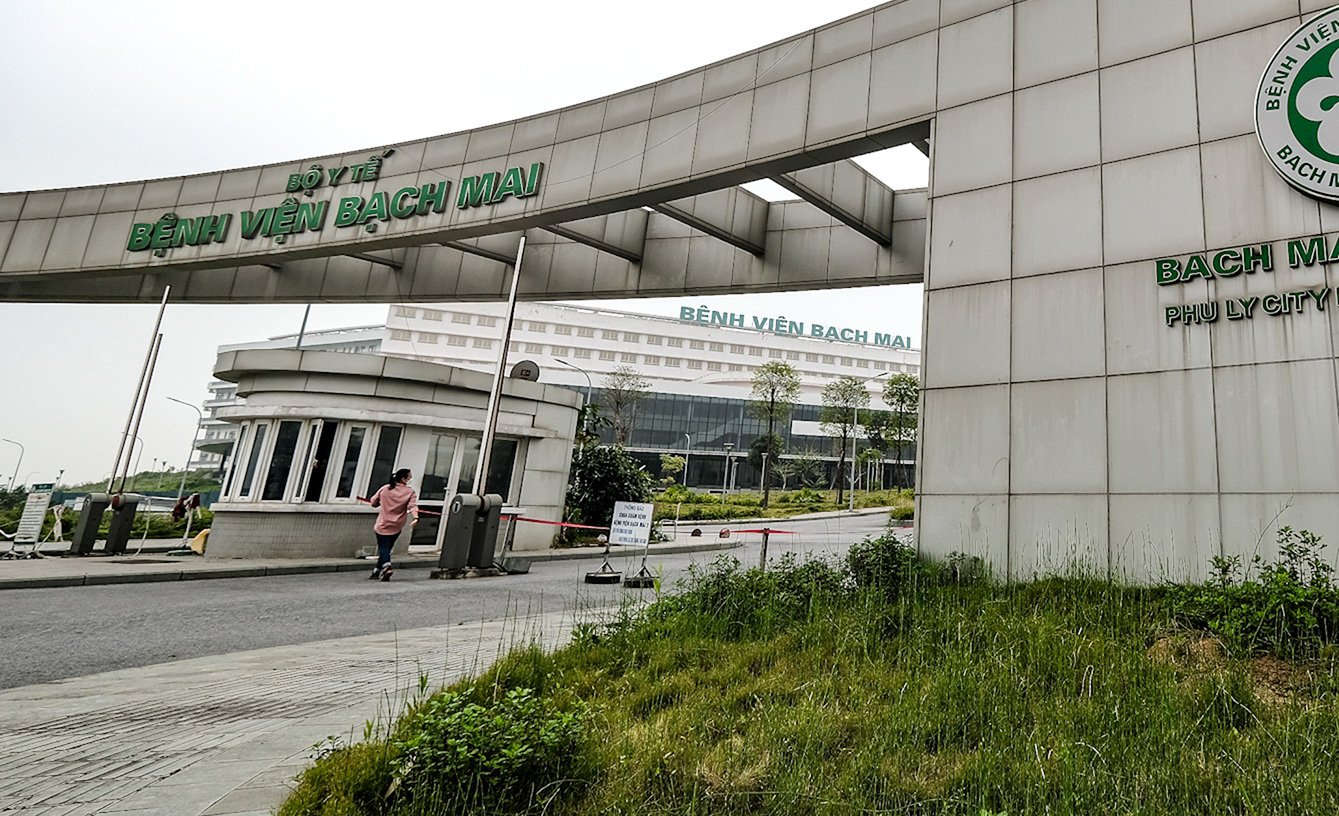
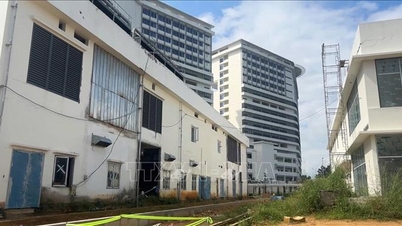
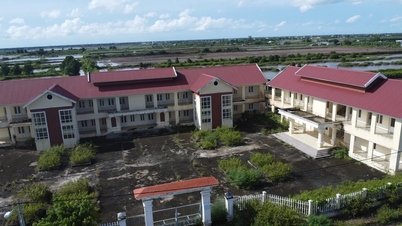
The Bạch Mai Hospital's second facility (Phủ Lý City, Hà Nam Province), which has been under construction for a long time without completion, has now been ordered by the Prime Minister to be finished and put into operation within the next 6 months - Photo: NAM TRẦN
There are still many large-scale projects worth trillions of VND such as Long Phu Thermal Power Plant, Thai Nguyen Steel Plant Phase 2, Bach Mai Hospital Branch 2, Viet Duc Hospital Branch 2...
The wasteful spending of investment budgets on stalled projects is all too evident, causing distress to society as a whole. However, reviving these large-scale projects and eliminating these wasteful "fortresses" requires strong, groundbreaking solutions, even accepting risks from those directly involved in the projects. Where can we learn from experience?
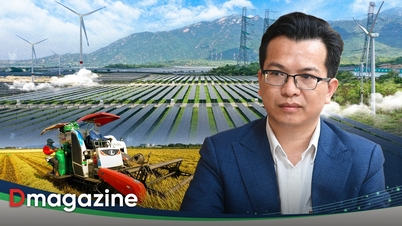
Mr. Nguyen Thanh Huong
From a series of violations to generating electricity on schedule.
To date, the Thai Binh 2 Thermal Power Plant, with a capacity of 1,200MW and a total investment of nearly 42,000 billion VND after adjustments, has been operating efficiently for over a year. On average, the plant produces approximately 7.2 billion kWh of commercial electricity annually, contributing to meeting the country's electricity needs.
But just five years ago, in 2019, the Thai Binh 2 Thermal Power Plant project was still mired in difficulties, with no clear completion date. Over the more than 12 years of construction (2011-2023), the project was plagued by numerous irregularities. Auditing, inspection, and investigation agencies successively intervened to clarify these violations. As a result, a series of project management officials and officials of the Vietnam National Petroleum Group (PVN) – the project's investor – were prosecuted, arrested, and investigated.
However, the project ultimately reached its goal, commencing commercial power generation in 2023, much to the surprise of many. A PVN leader shared that this will be a prime example of overcoming difficulties and obstacles to meet deadlines, preventing the waste of billions of USD of the country's assets. The experience from this project will be included in the report for the upcoming 14th National Congress to draw lessons for combating waste.
Speaking to Tuoi Tre newspaper, Mr. Nguyen Thanh Huong, head of the Risk Management Department (PVN), former head of the Thai Binh 2 Oil and Gas Power Project Management Board - the unit directly managing the Thai Binh 2 Thermal Power Project from 2013 to 2021, said that thanks to the guidance of the Government, the Prime Minister, leaders of ministries, sectors, localities and PVN, with the belief that the project would be resolved and completed, the project has reached its goal. In particular, in 2018, the Central Working Group No. 2, led by the Minister of Public Security, still urged the investor to be determined to complete the project ahead of schedule.
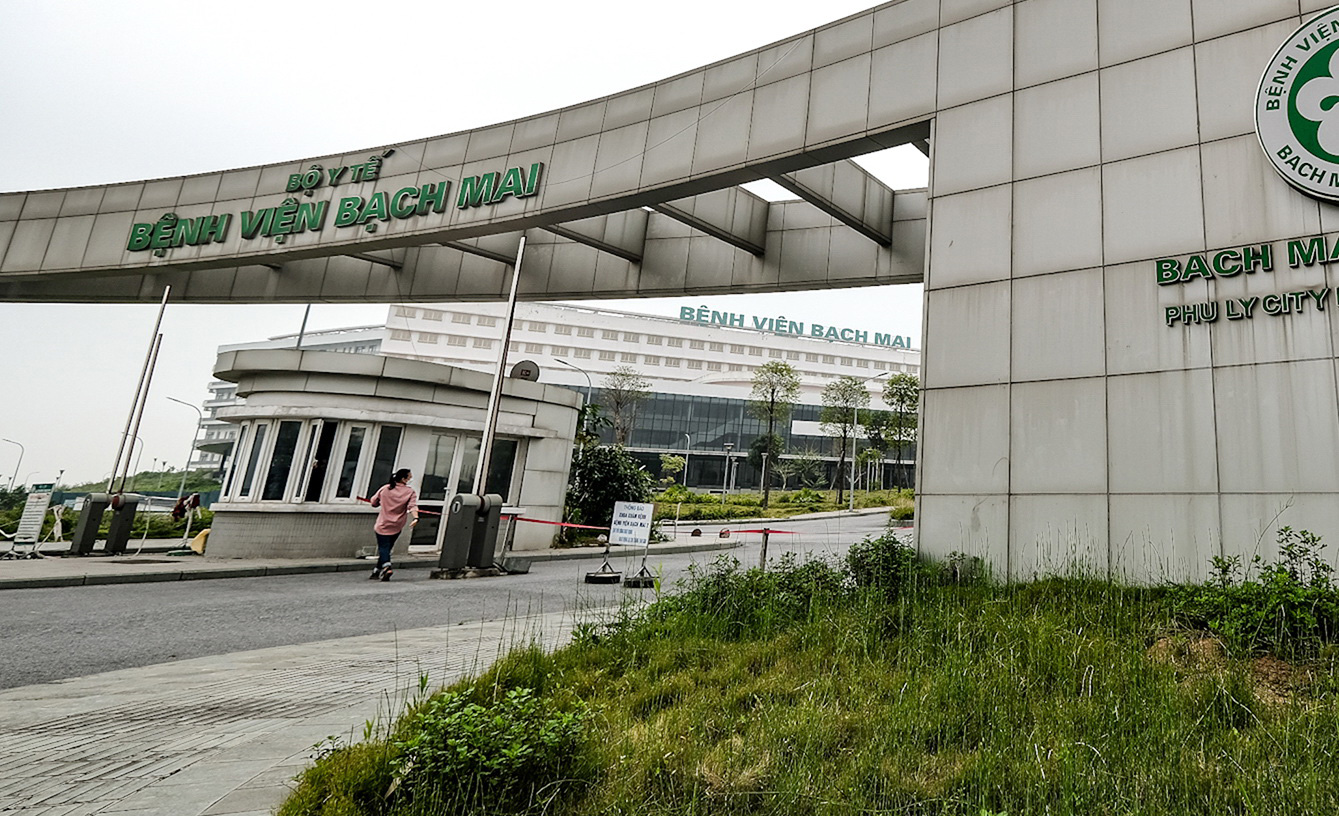
The Bạch Mai Hospital's second facility (Phủ Lý City, Hà Nam Province), which has been under construction for a long time without completion, has now been ordered by the Prime Minister to be finished and put into operation within the next 6 months - Photo: NAM TRẦN
How were the knots untangled?
Regarding funding for the Thai Binh 2 Thermal Power Plant project, PVN did not face any difficulties. However, immediately after signing the EPC (design - equipment supply - construction) contract in 2011, the investor PVN advanced 1,115 billion VND to PVC. But this general contractor misused the money, so the police launched an investigation into the project.
Mr. Huong recounted that in March 2013, when he took over as head of the project management board, he proposed in October 2013 adjustments to the Thai Binh 2 Thermal Power Plant project to better suit investment realities, because without adjustments, contractors would not proceed with construction. It wasn't until December 2014 that the investor, PVN, officially proposed the adjustments to the Thai Binh 2 Thermal Power Plant project. Subsequently, various ministries and agencies formed specialized teams to provide expert opinions before submitting the proposal to the Government.
And in January 2016, the government leaders approved the project adjustment, after which PVN officially approved the adjustment of the Thai Binh 2 Thermal Power Plant project to increase the total investment capital to reflect the actual construction.
To ensure the project's continued implementation, even while the police were investigating, in 2014 the Thai Binh 2 Oil and Gas Power Project Management Board still proposed a second advance payment of approximately 800 billion VND to subcontractors for the project's foundation work. Many group leaders objected at the time, but the project management board committed to using the second advance payment for its intended purpose.
Mr. Huong said: "Without the second advance payment, we wouldn't have the money to build the piles and foundation for the factory. The imported equipment wouldn't be able to be installed or properly stored, resulting in wasted costs and reduced equipment quality. Only with the piles and foundation can we install the steel structure and factory equipment, thus preventing damage."
Regarding the funding bottleneck for the Thai Binh 2 Thermal Power Plant when banks stopped providing loans, the project management board reported to the investor, PVN, and proposed to the Government that the corporation be allowed to use its own capital to repay both principal and interest on loans for the project, while also self-financing the project. This plan was subsequently approved by the Government, which increased the project's efficiency.
Retain the main contractor, re-evaluate subcontractors.
A PVN leader shared that, according to regulations, if the main contractor for a project lacks capacity, it should be replaced. The competent authority also proposed replacing the main contractor for the Thai Binh 2 Thermal Power Plant project. However, the Thai Binh 2 Oil and Gas Power Project Management Board, based on the project's realities, proposed not replacing the main contractor PVC with another contractor.
The reason is that the main contractor, PVC, had signed contracts with approximately 200 domestic and foreign subcontractors to handle the project, from supplying equipment and materials to providing consulting services. The project management board also realized that if they dismissed PVC, hundreds of contracts already signed with subcontractors would lead to disputes, and settling accounts for work already completed by these subcontractors would be very difficult.
Furthermore, if a new EPC contractor is chosen to replace PVC for the Thai Binh 2 Thermal Power Plant project, the new contractor will not be responsible for the quality of the completed plant components, the construction time will be extended by approximately two years, the plant investment cost will increase by more than $300 million, and the new contractor will not be responsible for the quality.
Therefore, the project management board's solution was to continue keeping PVC as the EPC general contractor for the project, but for subcontractors who were weak and lacked the necessary capabilities, the project management board would cut their work and organize a bidding process to select other units to carry out the work at a lower cost than initially planned. Many re-tendered packages saw price reductions of 30-40%, Mr. Huong stated.
Errors in "estimating" bid values.
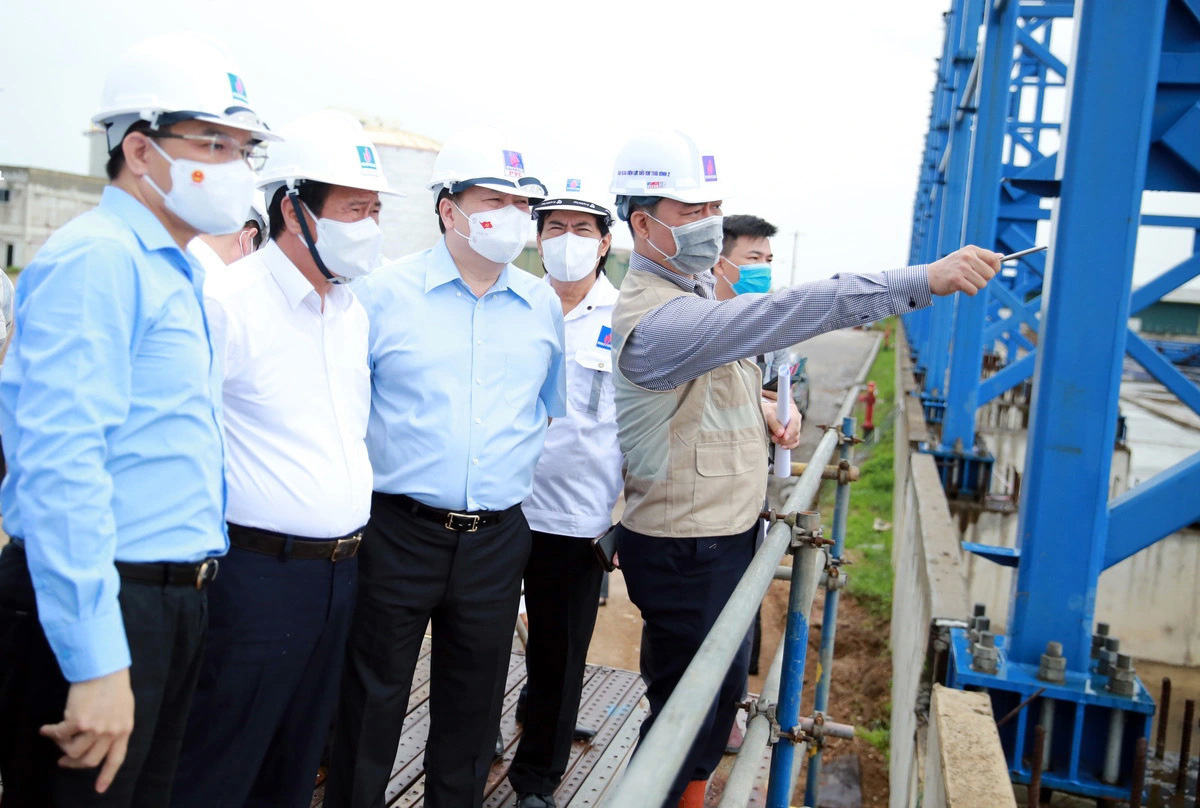
Government inspection team at Thai Binh 2 Thermal Power Plant project in September 2021 - Photo: VGP
Regarding the irregularities at the Thai Binh 2 Thermal Power Plant project, Mr. Huong shared that in 2011, PVN's direct awarding of the contract to the Vietnam Oil and Gas Construction Corporation (PVC), now renamed Vietnam Oil and Gas Construction Joint Stock Corporation (Petrocons), as the EPC general contractor for the Thai Binh 2 Thermal Power Plant project was the first violation, leading to other consequences. At that time, PVC lacked the capacity to undertake the project but was still awarded the contract.
The approval of the EPC (design - supply - construction) contract value for the Thai Binh 2 Thermal Power Plant project at $1.2 billion at that time lacked clear justification. The investor only based its approval on the total investment of a comparable project, the Vung Ang Thermal Power Plant, at $1.17 billion, which was insufficient. However, because PVN appointed PVC as the EPC general contractor, the value could not be excessively high compared to projects with similar power generation capacity to the Vung Ang Thermal Power Plant. This led to many complications in the subsequent adjustment of the total investment capital for the Thai Binh 2 Thermal Power Plant.
In 2016, the case of Mr. Trinh Xuan Thanh using a government-issued vehicle in Hau Giang province in violation of regulations immediately affected those working at PVC. In early 2017, several former PVN leaders were prosecuted and arrested, and banks simultaneously stopped providing funding for the project as per commitments. In 2019, the Government Inspectorate conducted a comprehensive inspection of the Thai Binh 2 Thermal Power Plant project. In October 2020, the Government Inspectorate issued a conclusion clearly outlining the right and wrong aspects of the project's implementation.
Source: https://tuoitre.vn/ca-thoat-hiem-cua-nhiet-dien-thai-binh-2-20241121083033068.htm





![[Photo] “Red Journey” 2026: Vietnamese Youth Continue Building the Bridge of Friendship Between Vietnam and China](https://vphoto.vietnam.vn/thumb/1200x675/vietnam/resource/IMAGE/2026/04/20/1776629730866_4055880775670638308-9618-4200-jpg.webp)


































































Comment (0)