Amid rising aquaculture production costs and increasingly stringent requirements for quality, food safety, and environmental protection, many fish farmers in Bac Ninh province have boldly changed their practices. Instead of relying entirely on experience, farmers are beginning to introduce smart devices into pond management, especially in intensive farming models combining grass carp with tilapia and common carp.
This new approach not only reduces labor but also allows for better control over the care, feeding, oxygenation, and pond environment management. As a result, the productivity and quality of aquatic products are improved, opening up a more stable and sustainable production direction for freshwater fish farming areas.
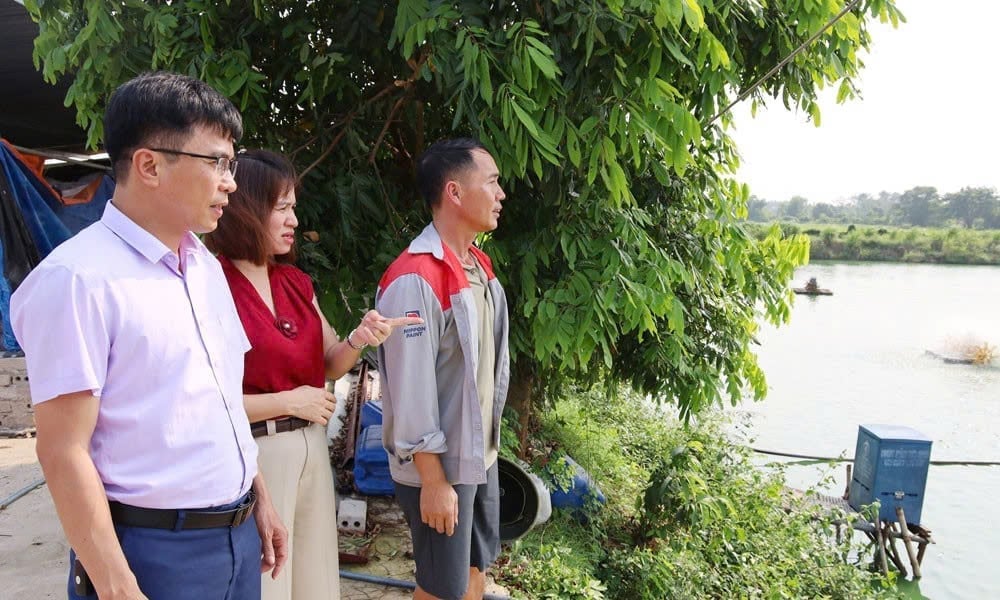
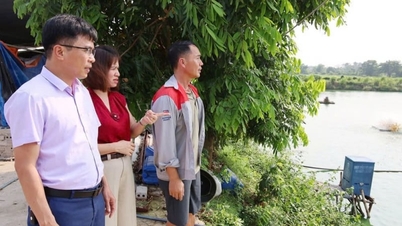
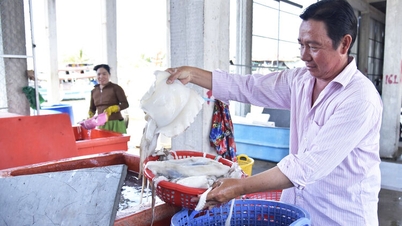
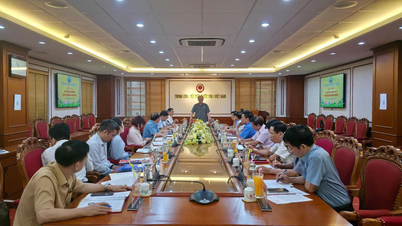
Leaders from the Bac Ninh Provincial Agricultural Extension Center visited a model of applying digital technology to intensive grass carp farming at the farm of Mr. Tran Van Tinh. Photo: Pham Minh.
The family of Mr. Tran Van Tinh in Tan Cuong residential area, Yen Dung ward, is one of the households participating in the model of applying digital technology to intensive farming of grass carp combined with tilapia and common carp from 2025. With 2.3 hectares of ponds, his family previously mainly raised tilapia combined with grass carp, common carp, silver carp, and catfish using traditional methods.
In 2025, with support and guidance from the Bac Ninh Provincial Agricultural Extension Center, Mr. Tinh's family participated in an intensive farming model, in which grass carp accounted for 60-70% of the fish species. This ratio is suitable to leverage the advantages of a fish species with stable selling prices and easy marketability, while also effectively utilizing space and food resources in the pond when raising them together with other fish species.
Participating in the model, farmers receive technical training and transfer of intensive farming processes; they also receive partial support for the cost of purchasing fish fry, feed, chemicals, biological products, water aerators, automatic feeders, and smart control systems for water aerators and automatic feeders. As a result, pond operation is no longer heavily reliant on manual labor as before.
Throughout the rearing period, technical staff from the Provincial Agricultural Extension Center regularly inspected and guided farmers on pond care and environment management. Technical recommendations were given promptly, emphasizing the avoidance of using equipment, chemicals, and tools that could harm the fish.

Mixed feed, disease prevention medications, and biological products are selected from reputable, licensed manufacturers and are on the list of permitted products. Besides commercial feed, farmers also utilize homemade feed sources such as elephant grass, corn, and sprouted rice, ensuring quality standards. This is a crucial factor in promoting good fish growth, reducing disease risks, and limiting the overuse of antibiotics and chemicals during the farming process.
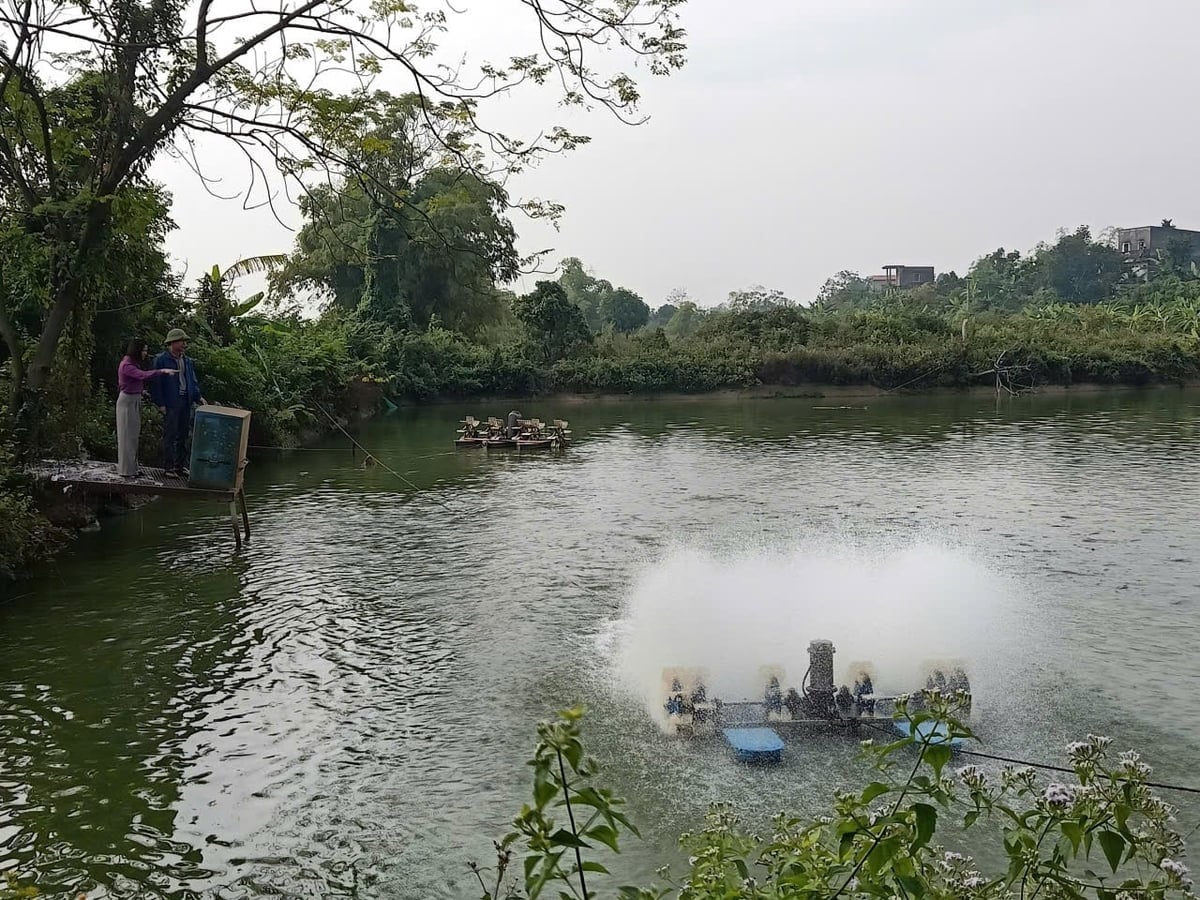
With properly controlled water aerators and automatic feeders, the fish receive the right amount of oxygen and food, resulting in a more stable pond environment. Photo: Pham Minh.
According to Mr. Tran Van Tinh, smart devices make caring for and managing fish ponds easier and significantly reduce costs. In particular, grass carp farming has many advantages because it doesn't require high nutritional standards, has low production costs, while the selling price is high and relatively stable. Currently, the price of grade 1 commercial grass carp ranges from 50,000 to 65,000 VND/kg at the pond, with a favorable market.
After 8 months of farming, the fish reached a weight of 2.1 kg/each, an increase of 1.8 - 1.9 kg compared to the start of farming. The yield of the pond using this model reached approximately 28.5 tons/ha. Total revenue reached nearly 940 million VND, with a profit of nearly 180 million VND/ha, 20% higher than the remaining pond area of Mr. Tinh's family.
These figures demonstrate the clear effectiveness of combining farmers' production experience with technological advancements and smart equipment. When water aerators and feeders are properly controlled, fish receive the right amount of oxygen and feed, and the pond environment becomes more stable. This is a crucial foundation for reducing losses, shortening the rearing time, increasing productivity, and boosting profits.
According to Mr. Ngo Thanh Hai, Deputy Director of the Bac Ninh Provincial Agricultural Extension Center, the province currently has 16,200 hectares of water surface exploited for fish farming. The fish farming structure in ponds usually combines many species according to the principle of multi-layered polyculture to utilize food resources and maximize pond space.
Depending on the pond conditions, capabilities, and investment level, each household can arrange a suitable fish farming structure. Currently, grass carp accounts for about 50% of the fish farmed in ponds in the province. This is an aquatic species with potential for development if production is organized in a safe, intensive manner, with good environmental control and improved commercial quality.



The application of digital technology to intensive farming of grass carp combined with tilapia and common carp is proving to be a practical direction for Bac Ninh's fisheries industry. Not only does it reduce labor costs, but the model also contributes to limiting the use of antibiotics and chemicals, minimizing environmental pollution, and increasing economic value per unit area of water surface.
Based on the initial success of the model in Yen Dung ward, it is clear that digital transformation in aquaculture is no longer a distant dream. When smart devices are introduced at the right stage and according to production needs, fish farmers have more tools to manage their ponds more scientifically, proactively, and sustainably.
Source: https://nongnghiepmoitruong.vn/ca-tram-co-len-doi-nho-cong-nghe-so-d809411.html