

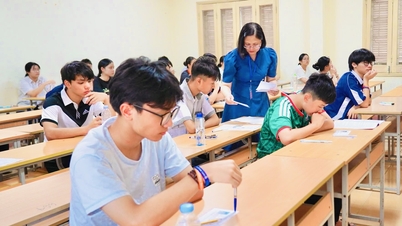
Most students choose to take 2 compulsory subjects and 2 elective subjects.
At the National Council for Education and Human Resource Development meeting on the morning of November 14th, the Ministry of Education and Training presented a draft report on the plan for the high school graduation exam starting in 2025. Accordingly, the Ministry of Education and Training stated that it had proposed three exam options for feedback.
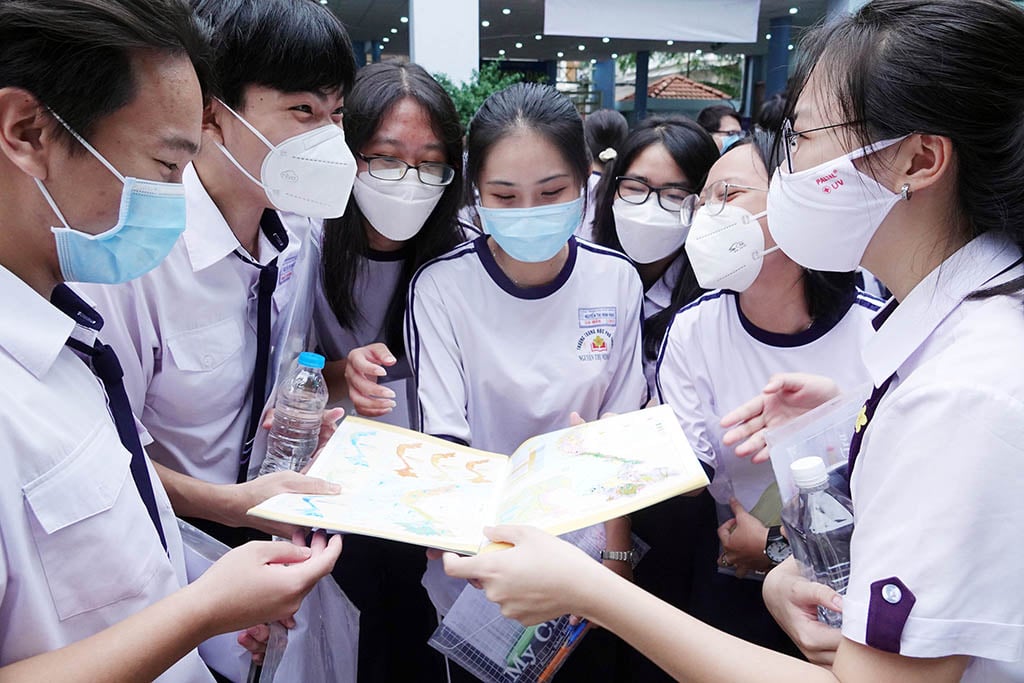
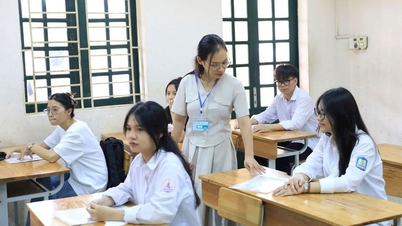
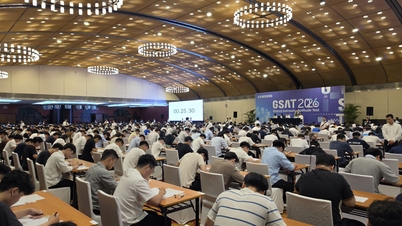
Candidates participating in the 2023 high school graduation exam. The Ministry of Education and Training proposes that from 2025, this exam will consist of only 4 subjects, applicable to candidates studying under the 2018 General Education Program.
Option 1, choice 2 + 2: candidates are required to take the compulsory subjects of Literature and Mathematics, and 2 elective subjects from the remaining subjects studied in grade 12 (foreign language, history, physics, chemistry, biology, geography, economics and law education, informatics, technology).
Option 2, choice 3 + 2: Candidates are required to take exams in Vietnamese language and literature, mathematics, and a foreign language, plus two elective subjects chosen from the remaining subjects studied in grade 12.
Option 3, choice 4 + 2: Candidates are required to take exams in Vietnamese Literature, Mathematics, Foreign Language, and History, and 2 elective subjects from the remaining subjects studied in grade 12.
When surveying 130,700 officials and teachers nationwide regarding options 2 and 3, nearly 74% chose option 2 (taking 3 compulsory subjects). Subsequently, the ministry surveyed nearly 18,000 more officials and teachers in Ho Chi Minh City, Long An, Tay Ninh, Lang Son , and Bac Giang, comparing all three options, and found that 60% chose option 1 (taking 2 compulsory subjects).
Based on objective analysis, feedback from provincial Departments of Education and Training, and the core principles in the exam planning process, the Ministry of Education and Training proposes that the high school graduation exam from 2025 be conducted according to Plan 1. This means each candidate will take four subjects: compulsory Literature and Mathematics, and two optional subjects from grade 12.
The exam will still be multiple-choice, except for Literature.
The Ministry of Education and Training also stated in the draft report that the content of the high school graduation exam from 2025 onwards will closely follow the objectives of the 2018 General Education Program. The exam questions will focus on enhancing competency assessment, in accordance with regulations and the roadmap for implementing the new program. Regarding the exam format, the Ministry of Education and Training still proposes that the Literature exam be in essay format; the remaining subjects will be in multiple-choice format.
The Ministry of Education and Training will regulate the timeframe for organizing the exams (common exam schedule) in accordance with the academic year timetable to ensure uniformity nationwide; while also allowing flexibility to respond to situations severely affected by natural disasters and epidemics nationwide and in each locality.
The method for recognizing graduation will combine the results of process assessments and graduation exam results in a proportion consistent with the implementation roadmap of the 2018 General Education Program.
During the period 2025-2030, the paper-based examination method will remain stable, while the application of information technology will be strengthened. After 2030, computer-based testing will be gradually piloted for multiple-choice subjects in localities with sufficient resources (a combination of paper-based and computer-based testing may be implemented). The goal is to transition to computer-based testing for the high school graduation exam for multiple-choice subjects once all localities nationwide meet the necessary conditions.
Students will have 36 ways to choose their exam subjects.
According to the Ministry of Education and Training, the reason for choosing the 2+2 exam format is to ensure several requirements are met. The first requirement is to reduce exam pressure on students and lower costs for students' families and society (currently, there are 6 subjects in the exam); it also reduces the number of exam sessions from 1 to 3.
The second reason is to avoid the current imbalance where more students choose social sciences than natural sciences. The Ministry of Education and Training cites the following figures for the past three years of the high school graduation exam: 64.72% in 2021, 66.96% in 2022, and 67.64% in 2023. This creates favorable conditions for students to develop their abilities and strengths in accordance with the objectives of the 2018 General Education Program.
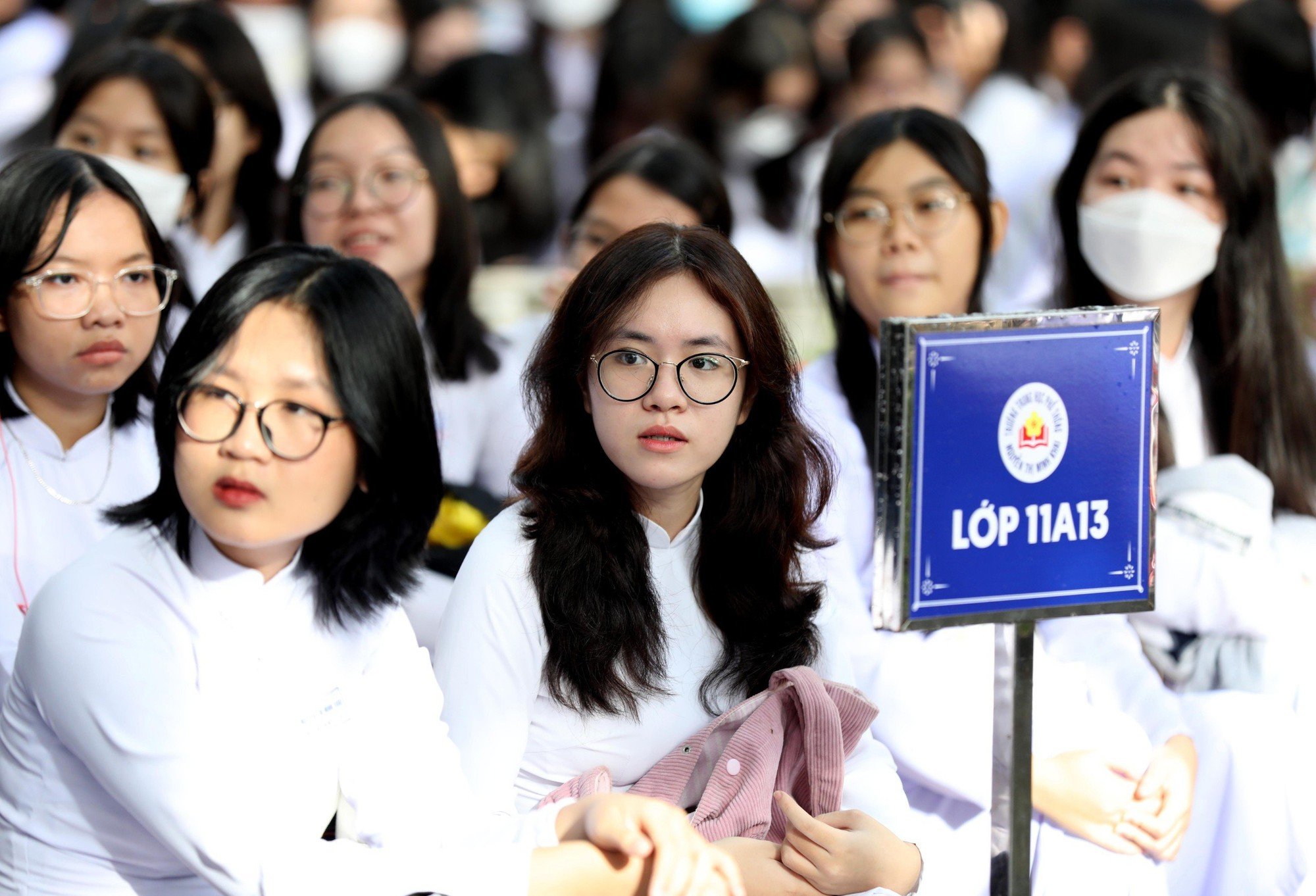
This year's 11th-grade students will be the first group of candidates to participate in the new high school graduation exam format.
Regarding the nine subjects selected for the entrance exam, including foreign languages, history, physics, chemistry, biology, geography, economics and law education, informatics, and technology, the Ministry of Education and Training believes that these subjects have already been tested and evaluated, with grades recorded in the student's academic record; and that students' learning process has been comprehensively assessed during the teaching and learning process.
According to the Ministry of Education and Training, choosing two subjects out of these nine will offer 36 different options, allowing candidates to select subjects that align with their career aspirations, abilities, interests, circumstances, and conditions, whether for further education, vocational training, or entry into the workforce.
Mr. Le Truong Tung, a member of the National Council for Education and Human Resource Development, shared with Thanh Nien newspaper at the meeting on the morning of November 14th that the majority of opinions (about 95%), including his own, supported the option of taking exams in four subjects.
The high school graduation exam will undergo fundamental changes.
Concluding the meeting of the National Council for Education and Human Resource Development on November 14th, Deputy Prime Minister Tran Hong Ha emphasized that the number one goal of the high school graduation exam is to assess the quality of secondary education.
At the meeting, the council spent considerable time discussing the Ministry of Education and Training's proposals for organizing and evaluating high school graduation exams (graduation exam plan) from 2025. Delegates argued that the graduation exam plan must be approached comprehensively and systematically, stemming from innovations in teaching and learning methods, curriculum, textbooks, teacher training, exam assessment, and state management of education…
Deputy Prime Minister Tran Hong Ha affirmed that the number one goal of the high school graduation exam is to assess the quality of secondary education. Vocational training, college, and university education should be oriented towards assessing the abilities, qualities, and aspirations of students, not chasing after degrees and achievements.
Therefore, the graduation exam plan from 2025 onwards must adhere to the spirit of Resolution 29/NQ-TW on fundamental and comprehensive reform of education and training, and the directives of the Government and the National Assembly, aiming to reduce pressure and costs for society while ensuring reliability, honesty, and accurate assessment of students' abilities, serving as a basis for vocational and higher education admissions.
The Deputy Prime Minister emphasized that the graduation exam plan from 2025 onwards must be simple, scientific, targeted, and effective, aiming to accurately assess students' abilities and learning process in a substantive way, "testing what they have learned." Any plan must have a high-quality, standardized question bank and regulations ensuring consistent implementation. He also requested that the Ministry of Education and Training provide highly scientific, open, and transparent information so that the public is aware of the policy, implementation process, and methods of exam reform compared to the set objectives.
Mai Ha
Source link





























































































Comment (0)