

 |
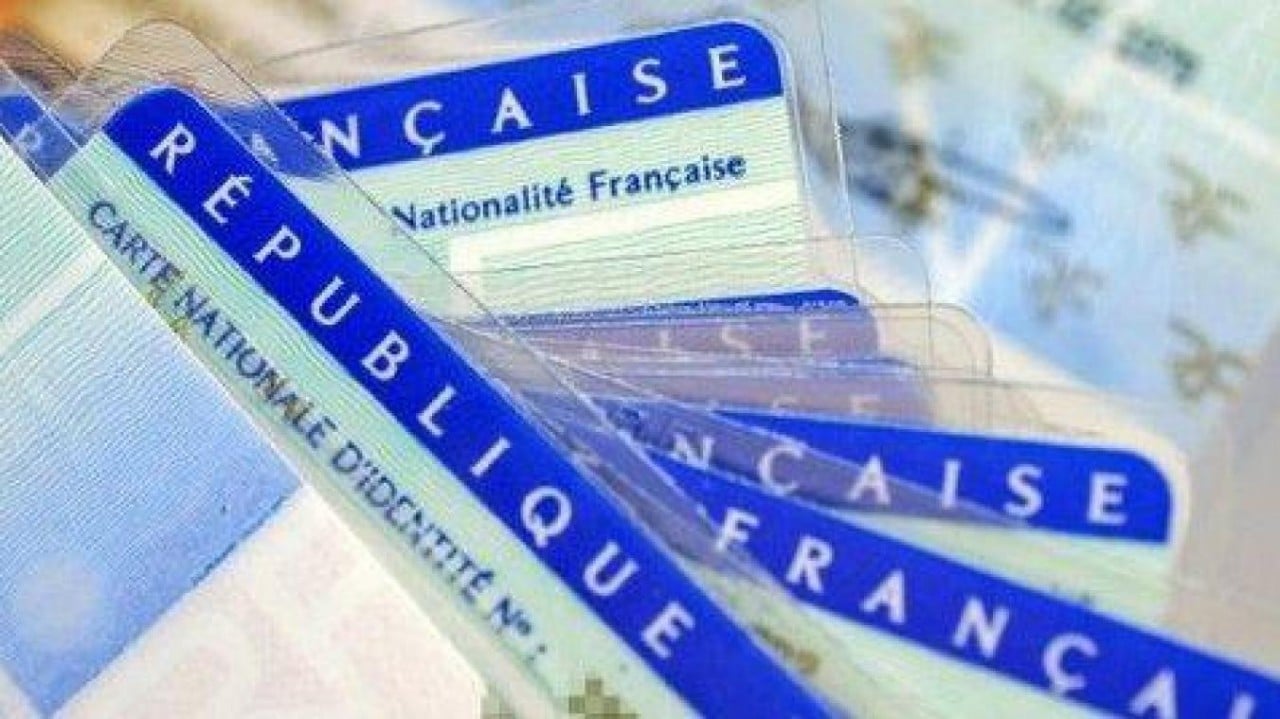
| In fact, every French adult has an identity card, and many children are also issued identity cards at a young age for convenience when traveling within the EU. (Source: AFP) |
France has undergone several changes to its laws and decrees regarding identity cards. This began with the law of October 27, 1940, regulating identity cards, which was later amended by the law of March 28, 1942. Two related decrees are the Decree of April 12, 1942, on identity cards and Decree No. 55-1397 of October 22, 1955, on simplifying administrative procedures. Decree No. 55 has been amended by Decrees No. 2010-506 dated May 18, 2010, No. 2016-1460 dated October 28, 2016, No. 2017-1522 dated November 2, 2017, and most recently No. 2021-279 dated March 13, 2021 (standardized according to the regulations of June 20, 2019, of the European Union - EU).
The new French identity card, conforming to EU standards, is an electronic card, the size of a bank card, valid for 10 years, a reduction from the previous 15 years. The card includes the following information: surname, given name, place of birth, gender, height, nationality, address or residence, date of issue and expiry, identity card number, code for automatic scanning, support number (for contact in case of loss or damage), photograph, and signature of the cardholder. A unique feature of the new identity card is the embedded chip containing biometric data, a digitized image of the citizen, and two fingerprints.
The section for automatic scanning includes the following information: surname, given name, date of birth, gender and nationality of the cardholder, country of issuer, identity card number, and expiration date. In addition to the chip, there is also an electronic code in 2D-Doc format containing the following information: surname, given name (or first name - French people have multiple names arranged in order), gender, nationality, place of birth, date of birth, identity card number, and date of issue.
Identity cards are issued to applicants without age restrictions and are newly issued or renewed by the prefect or deputy prefect. In Paris, however, identity cards are issued by the police chief. Applicants must prove their residence or domicile with proof of home ownership, tax payment receipts, rental receipts, electricity, gas, or telephone bills, or property insurance certificates.
Applications are submitted to the city hall and forwarded to the governor if the applicant resides in the provincial capital; otherwise, they are forwarded to the deputy governor. After processing, the identity card is returned to the city hall for delivery to the recipient. In Paris, applications are submitted to the police station and results are received there. However, citizens have the right to choose any city hall to submit their application, not necessarily the city hall of their place of residence, as long as that city hall is equipped with a system for storing information.
Abroad, citizens can go to the French embassy or consulate to submit their applications and obtain results. In-person presence is mandatory for fingerprinting. Children and adults requiring guardianship must also be present along with their guardian or representative.
For first-time ID card applications, the required documents include a passport, one recent passport-sized photograph taken within the last six months, and proof of residence. If the passport has expired for more than five years, a birth certificate is also required. If born abroad and one or both parents were also born abroad, proof of French citizenship is required. If you do not have a passport, the procedure is the same as for passports that have expired for more than five years.
For identity card renewal, the required documents include the old identity card, one new passport-sized photo taken within the last six months, and proof of residence. If the identity card expired more than five years ago, a valid passport is required; otherwise, a new birth certificate issued within the last three months and proof of French citizenship are also needed if born abroad and one or both parents were also born abroad.
New and replacement identity cards are issued free of charge (since 1998), except in cases of loss, theft, or when the old identity card cannot be recovered to switch to the new one, in which case a fee of 25 Euros will be charged.
France does not mandate or specify an age for citizens to obtain an identity card, but if you are stopped and cannot produce one, the process can be complicated and time-consuming. Furthermore, without identification, individuals face numerous difficulties in registering for exams, applying for jobs, voting and running for office, opening bank accounts, and more.
Therefore, in practice, every French adult has an identity card, and many children are also issued identity cards at a young age for convenience when traveling within the EU.
With a French identity card, French citizens can travel without a passport in almost all European countries, except Belarus, the United Kingdom, Russia, and Ukraine.
Source

![[Photo] General Secretary and President To Lam meets with National Assembly delegates from ethnic minorities.](https://vphoto.vietnam.vn/thumb/1200x675/vietnam/resource/IMAGE/2026/04/20/1776696701056_a1-bnd-8331-3342-jpg.webp)
![[Image] National Assembly discusses the implementation of the socio-economic development plan.](https://vphoto.vietnam.vn/thumb/1200x675/vietnam/resource/IMAGE/2026/04/20/1776696707422_ndo_br_img-20260420-185419-jpg.webp)














































































































Comment (0)