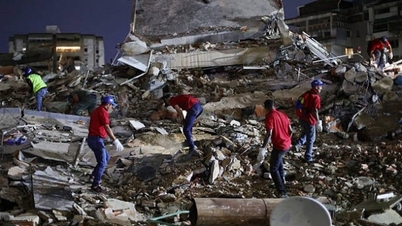
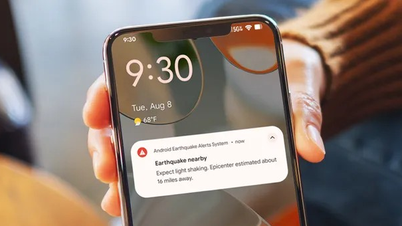
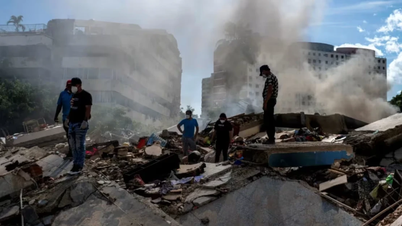
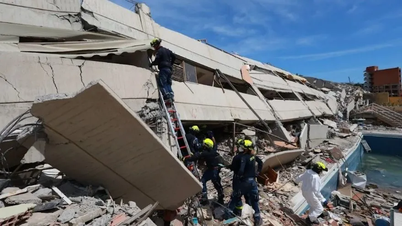
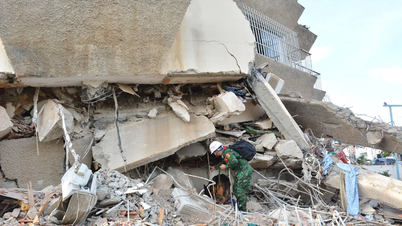
According to Google, the earthquake alert feature on Android sent alerts to approximately 11.4 million people before the double earthquake struck Venezuela on June 24th. The system is currently integrated into about 2.5 billion Android devices globally and is enabled by default in supported countries (excluding Vietnam).
According to the New York Times , some users received early warnings up to two minutes before the ground shook. Google said the first alert was issued just nine seconds after the earthquake began underground.
How does Android detect earthquakes?
Since 2021, Android phones have been equipped with earthquake detection systems using accelerometer sensors built into the device. The system identifies primary seismic waves (P-waves) – a type of wave that travels quickly but is weaker in intensity and appears before strong tremors.
Data collected from devices is anonymized and automatically sent to Google. When the system detects a sufficient number of matching signals from multiple phones in the same area, alerts are sent to users at risk of being affected.
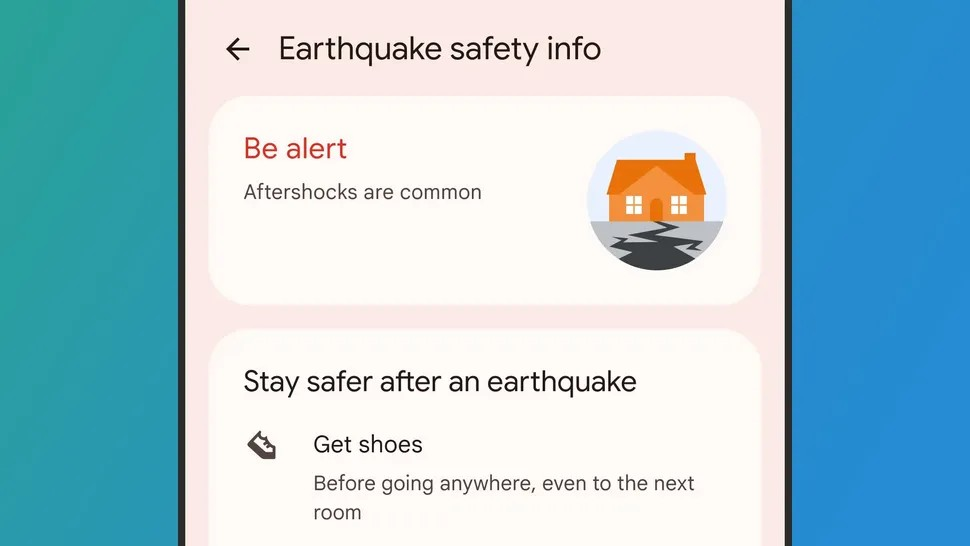
Only stationary phones can be used as "earthquake sensors." Data from moving devices will not be counted to avoid inaccuracies. Additionally, an earthquake must have a magnitude of 4.5 or higher to trigger an alert. In densely populated areas with many active Android devices, alerts are often sent faster due to more validating data.
In three US states—California, Washington, and Oregon—Android doesn't use data from the phone itself, but instead relies on a network of 1,675 seismic sensors belonging to the ShakeAlert system, operated by the US Geological Survey (USGS).



How to check the earthquake alert feature
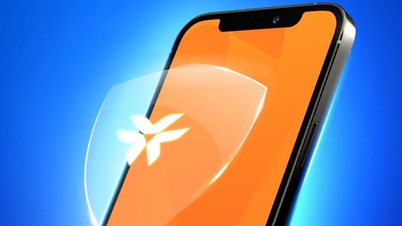
On newer Android phones, the Earthquake Alerts System is enabled by default.
To check, users open Settings > Safety & emergency > Earthquake alerts.
This feature is currently supported in 98 countries, excluding Vietnam. If your country of residence is on the supported list, users usually do not need to activate it manually.
The alert level will depend on the distance from the user to the epicenter. For severe earthquakes, the alert will appear full-screen, play a loud sound, and remain active even when the phone is in "Do Not Disturb" mode. If only mild shaking is predicted, the system will display a normal notification.
Over 18,000 earthquakes have been detected.
Google says that by 2025, the Android Earthquake Alerts System will have detected more than 18,000 earthquakes worldwide and issued more than 2,000 alerts.
Thanks to its integration across approximately 2.5 billion Android devices, the system provides billions of people with access to early earthquake warning technology, even in countries without official government warning systems.



Currently, Apple does not offer a similar feature on the iPhone, and Google has not released an app to support this function on iOS. However, iPhones can still receive emergency alerts issued by authorities, including earthquake warnings. Users can check this in Settings > Notifications, and then enable Extreme Alerts and Severe Alerts.
There are currently no statistics on the number of casualties prevented thanks to the Android warning system during the Venezuelan earthquake. However, according to Google, millions of people received warnings seconds to minutes in advance, giving them more time to find shelter or take safety precautions.
(According to TechRadar)
Source: https://vietnamnet.vn/cach-kich-hoat-he-thong-canh-bao-dong-dat-tren-android-2531253.html


![[Image] National conference summarizing one year of operation of the overall organizational model of the political system, the three-tiered government model.](https://vphoto.vietnam.vn/thumb/1200x675/vietnam/resource/IMAGE/2026/07/01/1782882811691_ndo_br_1-jpg.webp)