

According to Clause 1, Article 3 of the 2014 Housing Law, housing is defined as a construction built for the purpose of habitation and serving the living needs of households and individuals.
Housing is classified into the following six types:
- Detached houses are houses built on separate plots of land under the legal ownership of organizations, households, or individuals, including: detached houses; terraced houses; and independent houses.
Detached houses are the most common type of house in Vietnam today. Based on the scale and structure of the building, detached houses are classified into different categories: Level 1, Level 2, Level 3, and Level 4.
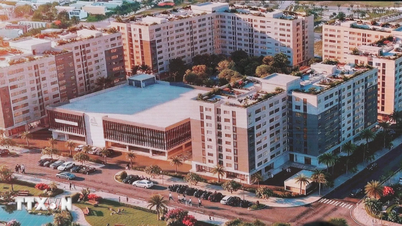
- An apartment building (or simply apartment building) is a building with two or more floors, containing multiple apartments, with common walkways and staircases, private and common ownership areas, and shared infrastructure for households, individuals, and organizations. This includes: Apartment buildings constructed for residential purposes; Apartment buildings constructed for mixed use (residential and commercial).
- Commercial housing refers to housing that is built for sale, rent, or lease-purchase under market mechanisms.
- Public housing refers to housing provided to eligible individuals for accommodation or rental during their tenure in office or employment.
- Housing for resettlement purposes refers to housing provided to households and individuals eligible for resettlement when the State reclaims residential land or demolishes their houses in accordance with the law.
- Social housing refers to housing that receives state support for eligible individuals who are entitled to housing support policies as stipulated in Article 49 of the 2014 Housing Law.
Currently, detached houses are classified into different categories, including: Category I, Category II, Category III, and Category IV, based on the scale and structure of the building.
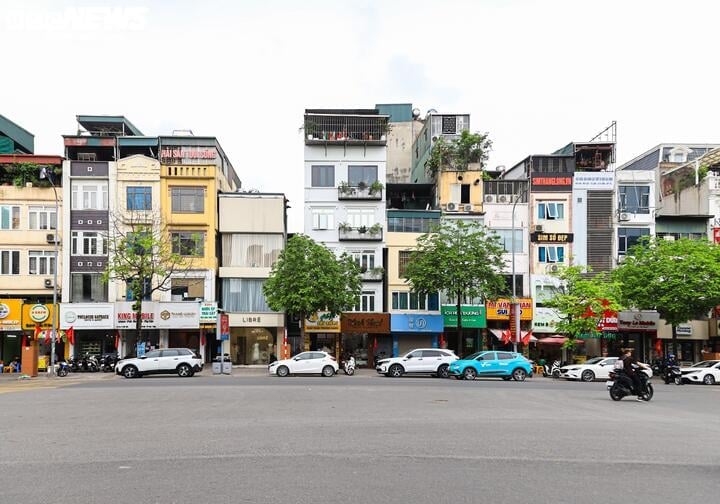
Types of housing and criteria for classifying houses into categories 1, 2, 3, and 4. (Illustrative image)
Level 1 house
These are considered the most luxurious, owned by high-income earners, with valuations reaching tens of billions of VND. Typical Grade 1 properties are limited to 10,000 m2 to 20,000 m2, with heights ranging from 20 to 50 floors (75 to 200m) and a lifespan exceeding 100 years.
Grade 1 houses have a load-bearing structure made of reinforced concrete or brick with a prescribed lifespan of over 80 years; the house enclosure and partition walls between rooms are made of reinforced concrete or brick; the roof is made of reinforced concrete or tiled, with a good insulation system; the finishing materials (plastering, tiling, cladding) inside and outside the house are of good quality; living amenities (kitchen, toilet, bathroom, electricity and water) are complete and convenient, with no limit on the number of floors.
Two-story house
Level 2 houses typically meet high aesthetic standards, are very durable over time, and have construction costs of billions of VND, with areas ranging from 5,000 to 10,000 m2 and height limits from 8 to 20 floors.
For houses of level 2 and above, the load-bearing core must use reinforced concrete. With a lifespan of up to 50-70 years, all materials used must be of good quality, durable over time, and able to withstand natural disasters.
Level 3 house
Grade 3 houses are a common type of housing in cities today. They have a sturdy structure, using reinforced concrete and brick. Ranked one level above Grade 4 houses, Grade 3 houses have a load-bearing structure combining reinforced concrete and brick, with an area of 1,000 - 5,000 m2, a height limit of 4 - 8 floors, and a lifespan of 20 - 50 years.
Single-story house
According to the traditional definition, a level 4 house is a type of house with low cost, a sturdy structure, and good load-bearing capacity. The house can be made of brick or wood and has walls made of brick or a fence. The roof can be made of tiles or composite cement roofing sheets, or it can simply be a roof made of bamboo, reeds, wood, or straw.
This is one of the most common types of houses in Vietnam and other Southeast Asian countries. Most are concentrated in rural areas, and the load-bearing structure varies depending on the climate and natural conditions of each region. Single-story houses (level 4 houses) are primarily intended for customers with average to low incomes .
Single-story houses are those with a construction height of one story or less, built on an area smaller than 1,000 m2, and with a height of less than four stories.
Temporary house
Temporary houses are constructions that are "temporary" and temporary in nature, so they usually lack investment in both building materials and design.
People often use wood and bamboo to build temporary homes. Temporary homes have low levels of comfort and living conditions because they are structures that are only built for short-term use.
Source


























































































Comment (0)