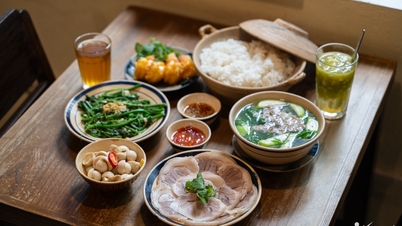
Prolonged hot weather makes food more susceptible to spoilage, and leftover rice is a common food item that often goes bad if not stored properly.
Signs that rice has gone bad
Recognizing the early signs of spoiled rice helps reduce the risk of food poisoning and protect the health of the whole family.
A sour or unusual smell appears.
This is the easiest sign to recognize. Freshly cooked rice usually has a characteristic rice aroma. When it goes bad, the rice will have a slightly sour smell or an unusual fermented smell.
In some cases, rice may have a pungent, musty, or distinctly unpleasant odor. If these changes are detected, users should not continue to consume it.
The rice grains are unusually slimy and sticky.
Normal rice, when cooled, will gradually dry out and the grains will become loose or naturally sticky. Conversely, spoiled rice usually has a slimy layer on the surface of the grains.
When stirring with chopsticks or gently squeezing with the hand, users may feel an unusual stickiness, and even see long, slimy strands between the rice grains.
Change color
Spoiled rice may turn pale yellow, gray, or develop unusual colored spots. In some cases, white, green, or black patches may appear due to mold growth.
If you notice signs of discoloration in the rice, you should discard the entire portion instead of trying to remove the spoiled area.



The rice has an unusually sour taste.
In cases where the rice doesn't have a noticeable odor, consumers sometimes only notice the change when they taste it. Spoiled rice often has a slightly sour taste or an unusual flavor compared to freshly cooked rice.
However, you should not taste food if you suspect it has spoiled, as this still poses a potential health risk.
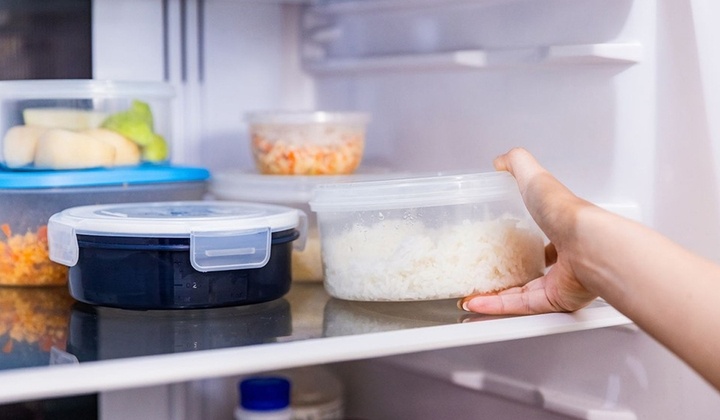 |
Rice should be refrigerated within 1-2 hours after cooking. |
How dangerous is it to eat spoiled rice?
Rice left at room temperature for too long can become contaminated with various disease-causing bacteria. One common culprit is Bacillus cereus – a bacterium that can survive in rice and thrive when rice is not stored properly.
After consuming contaminated rice, users may experience symptoms such as abdominal pain, nausea, and diarrhea.
In severe cases, especially in young children, the elderly, or those with weakened immune systems, food poisoning can cause serious dehydration and requires medical treatment.
How to safely store rice in the summer.
To prevent rice from spoiling, you can apply some of the following preservation tips:
Cool and refrigerate promptly: After cooking, if not all of the rice is used, let it cool naturally for a short time before storing it in a clean, airtight container. The rice should be refrigerated within 1-2 hours of cooking.



Rice stored in the refrigerator needs to be reheated evenly before serving. Higher temperatures help reduce the risk of bacterial growth and improve the quality of the dish.
Avoid prolonged storage: Even when refrigerated, rice should not be kept for too long. It is best to consume it within 24 hours to ensure quality and safety.
Do not mix freshly cooked rice with old rice : Mixing freshly cooked rice with rice that has been left out for a while can increase the risk of bacterial contamination and cause the entire batch of rice to spoil faster.
During hot weather, rice is very susceptible to spoilage if not stored properly. To protect your health and that of your family, you should store rice correctly and discard it immediately upon noticing any signs of spoilage instead of trying to avoid wasting it and continuing to use it.
Source: https://znews.vn/cach-nhan-biet-com-da-bi-oi-thiu-post1662586.html
![[Photo] Opening Ceremony of the 13th National Congress of the Ho Chi Minh Communist Youth Union](https://vphoto.vietnam.vn/thumb/1200x675/vietnam/resource/IMAGE/2026/06/24/1782286753905_ndo_br_1-8510-jpg.webp)
![[Photo] General Secretary and President To Lam attends the Central Public Security Party Committee Conference](https://vphoto.vietnam.vn/thumb/1200x675/vietnam/resource/IMAGE/2026/06/24/1782302063612_a1-bnd-9302-9166-jpg.webp)
![[Photo] The 13th National Congress of the Youth Union conducts personnel work.](https://vphoto.vietnam.vn/thumb/1200x675/vietnam/resource/IMAGE/2026/06/24/1782299943080_ndo_br_1-6868-jpg.webp)