In the context of a two-tiered local government system, commune-level civil servants face increasingly high demands for expertise, skills, and technological application capabilities. Therefore, training and professional development have become urgent tasks to meet the requirements of public service in this new era.
On May 22, 2026, the Provincial People's Committee issued Plan No. 203 to implement the Project on strengthening the training of cadres and civil servants at the commune and ward levels to meet the requirements of operating a two-tiered local government in the period 2026-2031 in the province. This is considered an important step to prepare a workforce with sufficient capacity and qualifications to meet the requirements of the tasks in the new phase.
"In the context of implementing a two-tiered local government system and accelerating digital transformation, commune-level officials not only need to master their professional skills but also possess management skills and the ability to adapt quickly to changes. Therefore, training and professional development must be proactive, ensuring consistency, practicality, and effectiveness." Ms. Hoang Thi Hai, Deputy Director of the Department of Internal Affairs |
According to the plan, the period from 2026 to 2028 will focus on improving professional knowledge, skills, and management capacity for commune-level officials and civil servants. The goal is that by the end of 2028, 100% of officials and civil servants who do not yet meet the requirements of their positions will receive professional training; 50% of professional civil servants will have updated knowledge of state management to serve the operation of local government at two levels; and 100% of officials and civil servants will receive professional training and necessary skills to effectively perform their assigned tasks.
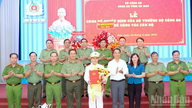

In implementing Plan No. 203, the Department of Internal Affairs proactively developed a plan for in-depth training and professional development tailored to each target group. Training courses were organized with practical content such as: financial and budgetary management at the commune level; public asset management; skills in preparing payment and settlement documents; administrative reform; digital transformation and the use of specialized software...

A new aspect of the training program is its emphasis on practicality, focusing on the learner and featuring experienced leaders from various departments and agencies as presenters. Besides imparting knowledge, the presenters also dedicate significant time to discussing situations arising during the performance of duties at the grassroots level, helping trainees improve their work-handling skills.
Ms. Hoang Thi Hai, Deputy Director of the Department of Internal Affairs, stated: The implementation of the Project to strengthen the training of commune-level officials and civil servants aims to build a team with strong political convictions and professional qualifications that meet the requirements of the tasks in the new situation. In the context of implementing a two-tiered local government and promoting digital transformation, commune-level officials not only need to master their professional skills but also possess management skills and the ability to adapt quickly to changes. Therefore, training and professional development must be proactive, ensuring consistency, practicality, and effectiveness.
Since the plan was issued, the Department of Internal Affairs has coordinated with relevant agencies and units to organize four intensive training courses for commune-level officials and civil servants. Each course had nearly 100 participants, who have updated their knowledge and resolved difficulties and obstacles in the process of performing their duties.
For grassroots officials, these training courses offer many practical benefits. Not only do they help improve professional skills, but the courses also provide opportunities for participants to exchange experiences, share best practices, and then flexibly apply them to local situations.
Mr. Huong Duy Tung, Vice Chairman of the People's Committee of Trang Dinh commune, shared: "In early June 2026, I participated in an intensive training course on public asset management. The training content was designed to closely match practical work, making it very useful and effective. Through the course, I updated and supplemented my knowledge, grasped the new legal regulations on the management and use of public assets, as well as the implementation process at the grassroots level. As a result, I feel more confident in performing my duties, minimize errors, and improve work efficiency."



In the context of the country entering the era of digital transformation and strong administrative reform, every commune-level official and civil servant needs to continuously learn, train, and improve their professional capacity and skills. With the province's determination, the proactive efforts of specialized agencies, and the eagerness to learn of commune-level officials and civil servants, training will continue to create positive changes in the quality of human resources at the grassroots level. This is a crucial foundation for building a professional, modern, effective, and efficient administration that meets the development requirements of the locality in the new era.
Source: https://baolangson.vn/boi-duong-can-bo-vung-co-so-5096037.html

![[Photo] "Hanoi Lotus Festival" honors the lotus flower that has been associated with Vietnam for thousands of years.](https://vphoto.vietnam.vn/thumb/1200x675/vietnam/resource/IMAGE/2026/06/27/1782516943048_sen-ha-noi-2026-minh-duy-1-jpg.webp)


























































![[Infographic] 16 fireworks display locations to celebrate the 50th anniversary of Ho Chi Minh City being honored with the name of President Ho Chi Minh](https://vphoto.vietnam.vn/thumb/402x226/vietnam/resource/IMAGE/2026/06/27/1782539591308_man-ban-phao-hoa-ruc-ro-dem-khai-mac-638jpg-17242995540161175940469.jpeg)