

N. HA TRUONG CREATES AN ENVIRONMENT FOR INNOVATION
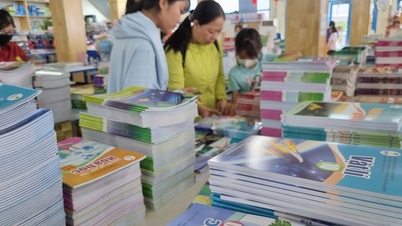
Many opinions suggest that reforming and reducing reliance on textbooks requires synchronized management from the subject department level and school leadership to the provincial and district education departments.
For a long time, during professional inspections and audits, inspection teams at all levels rarely paid attention to the curriculum, focusing only on how well the textbooks and lesson plans reflected the content of the textbooks. The new curriculum, which grants autonomy to teachers, cannot have the same content and assessment methods as the old curriculum; a suitable assessment method is needed to motivate teachers to innovate.
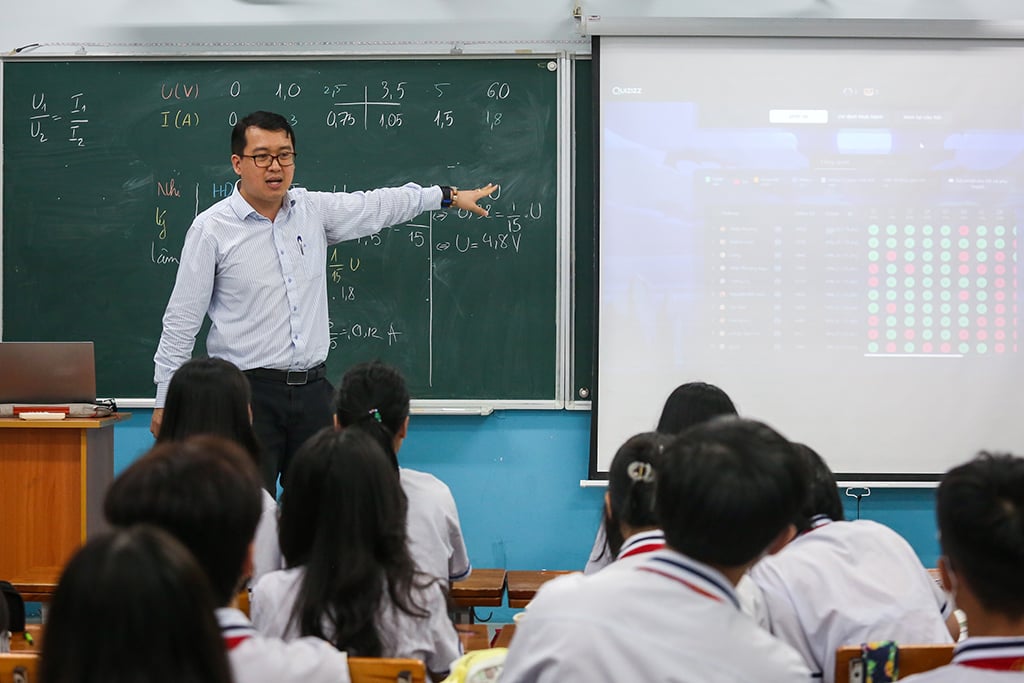
The new curriculum, which grants autonomy to teachers, requires changes in content and assessment methods.
Ms. Nguyen Thi Nhiep, Principal of Chu Van An High School ( Hanoi ), shared that when the new curriculum was first implemented, many teachers still couldn't shake the mindset of having to teach exactly and completely according to the textbook. Many teachers feared omitting any content from the textbook, fearing that their students would be left behind, and that students would be at a disadvantage if the exam questions focused on that specific area. Some teachers also believed that the lesson sequence in the textbook had to be followed exactly. Schools also hadn't fully utilized their autonomy to create an environment for innovation and support teachers in adopting new approaches. If this isn't addressed, it will be difficult to change the mindset regarding the use of the new textbooks.
"For teachers to change, schools must proactively develop comprehensive educational plans and plans for each subject. Based on the curriculum, the Ministry's objectives, teaching conditions, and student demographics, each subject must be redesigned. From that curriculum, subject departments and teachers can then visualize their tasks and proactively apply learning resources, methods, and teaching approaches to design lesson plans," Ms. Nhiep said.
Ms. Le Tue Minh, Chairwoman of the Edison Education System Council, argues that with such a goal of change, each set of textbooks only serves as one of the options, solutions, or tools to achieve the necessary competencies.
According to Ms. Minh, to find suitable, useful, truly high-quality, and feasible learning resources that can be used to serve the learning program and develop appropriate competencies, qualities, and skills, clear direction from school leaders is needed, along with specific criteria, careful selection, and quality control. Under the 2018 curriculum framework for each subject issued by the Ministry of Education and Training, the school must have a curriculum and training committee, in coordination with experts in each field, to design and develop detailed programs with specific directions on learning resources and methods suitable for each subject and learning topic.
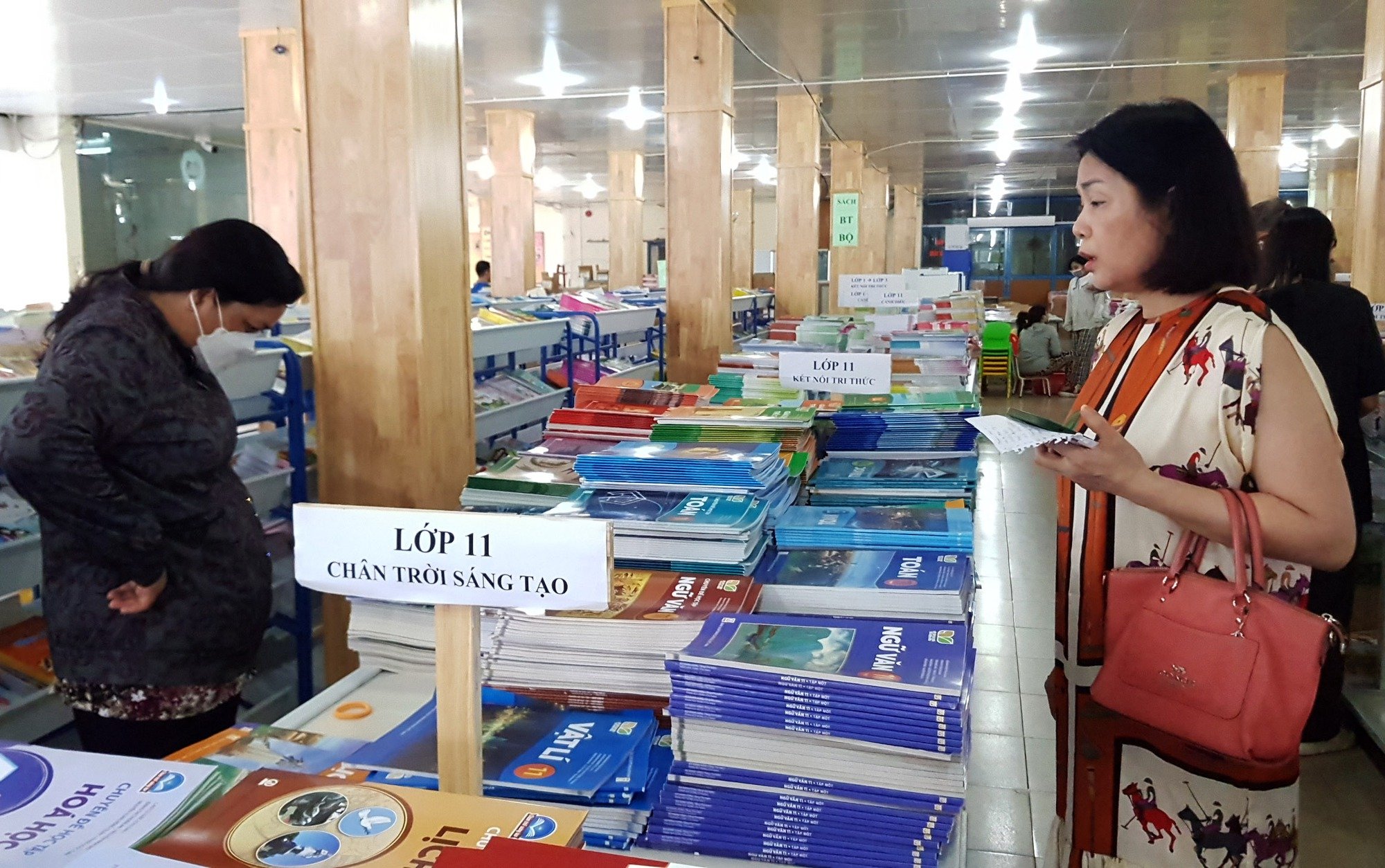
Reducing reliance on textbooks requires coordinated management from the subject department level and school leadership to the provincial and district education departments.
The governing body should not interfere in professional matters.
According to Ms. Minh, the most important factor in motivating teachers to continuously improve their knowledge and skills is: "Having the right criteria and mechanisms for evaluation, recognizing teachers' responses to the professional requirements set forth. When the school has such motivational mechanisms, the learning and creativity of each teacher is limitless."
Regarding the textbook selection process, National Assembly representative Luu Ba Mac ( Lang Son ) stated: "The most important thing is to give students and teachers the real right and professional responsibility to choose the textbooks that best suit their subjects and the practical situation at their educational institutions. State management agencies should focus on checking, urging, and supervising textbook selection, but should not interfere with teachers' professional work in choosing textbooks for their own educational institutions."
Organize teaching in an open-ended manner.
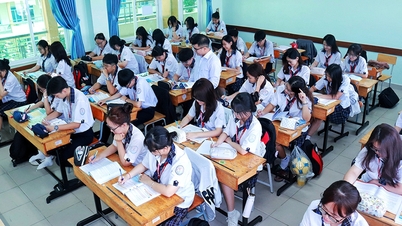
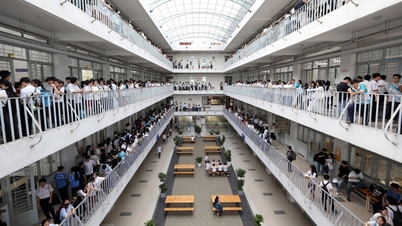
To teach independently of textbooks, Nguyen Binh Khiem Secondary and High School (Hanoi) has proactively researched the curriculum, specifying content and teaching methods to develop students' competencies. This involves organizing open-ended teaching and creating opportunities for students to participate in the lesson development process, with students acting as teachers, fostering interest, group collaboration, and a keen ability to use information technology. In addition, training and professional development for teachers on teaching methods and content is also a crucial issue that schools need to prioritize. Specifically, teacher training should be based on the curriculum rather than textbooks, as was the case before the comprehensive curriculum was in place.
Ms. To Lan Huong, a teacher at Nguyen Sieu Secondary and High School (Hanoi), said that the school's approach is to mobilize collective intelligence. Teachers in each subject group will jointly prepare resources for the group. Based on this, when they start teaching, they will "break through" and adapt the content to suit the specific needs of the students in each class. Professional development sessions will support teachers in overcoming difficulties when organizing teaching activities with students. "I told the teachers in the group that we have the right to choose what is appropriate; we can absolutely change or shorten the lesson. We have boldly done that, changing the teaching plan accordingly, and we have already done it," Ms. Huong said.
Source link




![[Photo] Prime Minister Pham Minh Chinh receives the Chinese Ambassador to Vietnam](https://vphoto.vietnam.vn/thumb/1200x675/vietnam/resource/IMAGE/2026/04/05/1775397481797_ndo_br_dsc-5512-jpg.webp)




























































Comment (0)