It can be said that Hanoi has never possessed as many favorable conditions for development as it does today. The 2026 Capital City Law creates a broader institutional space. The Capital City Planning defines a 100-year development vision. Many major policies of the Central Government are aimed at empowering the city government more strongly, considering Hanoi as a testing ground and benchmark. Along with that, Hanoi's economic potential, scientific and technological capabilities, the quality of its human resources, and its position as the national political and administrative center are advantages that no other locality possesses.
In this context, the biggest "obstacle" to implementation lies in the mindset, capacity, and sense of responsibility of the officials and civil servants directly implementing policies and resolutions in practice. Because if the system continues to operate according to traditional administrative thinking, specific mechanisms are easily eroded during implementation. In many cases, a sound policy is delayed by hesitation, fear of responsibility, or a procedural approach that prioritizes results over substance. In such situations, institutional advantages are not only not exploited but also risk becoming a wasted opportunity for development.
That is why Hanoi needs a strong shift from a managerial mindset to a constructive mindset, especially at the implementation level such as departments, agencies, communes, and wards. A managerial mindset primarily focuses on control, ensuring compliance with procedures, and mitigating risks. Meanwhile, a constructive mindset aims to solve problems, facilitate things for citizens and businesses, and promote development within the legal framework. While a managerial mindset often asks "is it permissible to do it?", a constructive mindset seeks answers to the question "how to do it most effectively?".
These seemingly small differences can be decisive for the future of the capital city. When an investment project is delayed for months, even years, the cause is not always due to legal obstacles. Often, it is the result of a lack of coordinated efforts between agencies, a tendency to avoid responsibility, or a habit of handling work in a bureaucratic manner. In the context of Hanoi being granted more autonomy, these limitations, if not overcome, will become a hindrance to development.



In particular, the role of departments and agencies has become more important than ever. If the City People's Council is the policy-making body and the City People's Committee is the governing body, then the specialized agencies are the direct "links" that determine the quality of implementation. All policies regarding investment, planning, land, environment, digital transformation, or science and technology ultimately have to be realized through the advisory and implementation activities of this team.
Therefore, the success of the Capital City Law will not be measured by the number of documents issued, but by the concrete changes in socio-economic life. These include shorter administrative procedure processing times, a more open investment environment, faster implementation of key projects, improved quality of public services, and above all, increased satisfaction among citizens and businesses.
In this new phase of development, Hanoi needs an administration that not only does things correctly but also does them effectively; not only manages but also serves; and not only adheres to procedures but also creates value.
The 2026 Capital City Law has opened a major door for development. However, whether that door will become a path to new breakthroughs depends heavily on the quality of the staff and the spirit of action of the entire political system. Ultimately, institutions are a necessary condition, but people are the decisive factor. And in the journey to realize the aspiration of building a cultured, civilized, and modern capital city, what Hanoi needs most right now is a team of officials with a constructive mindset, who dare to think, dare to act, dare to take responsibility, and dare to create new values for the common good.

Source: https://hanoimoi.vn/can-nhat-la-tu-duy-kien-tao-thuc-thi-1159360.html
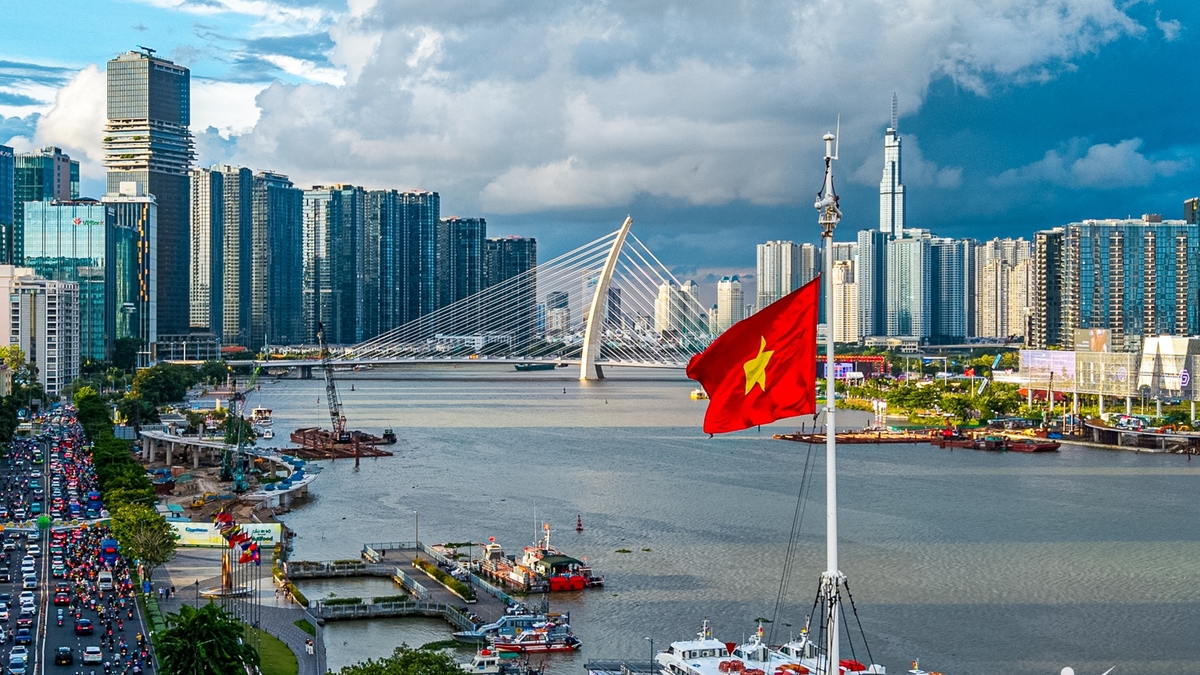
![[Image] Overview of the construction site for the underground station of metro line 5 at the Hanoi Ring Road 1 intersection.](https://vphoto.vietnam.vn/thumb/1200x675/vietnam/resource/IMAGE/2026/07/03/1783065595682_ndo_br_z7974930852369-100ca093c306e72675f1d3700966a86b-jpg.webp)