

Reflecting on the journey of preserving, conserving, and promoting the cultural identity of the Central Highlands, it becomes even clearer that this is something we need to continue striving for right from the beginning of the new year.
According to Associate Professor Dr. Bui Hoai Son, we are living in an unprecedented era: a flatter, more connected world , but also one that is changing more rapidly. The Fourth Industrial Revolution, with artificial intelligence, big data, digital platforms, etc., is transforming every aspect of life, including how we create, disseminate, and appreciate literature and art.
At the same time, the process of globalization and international integration also places us in the midst of a powerful flow of cultural interaction, in which identity and distinctiveness are not only advantages but also conditions for survival.
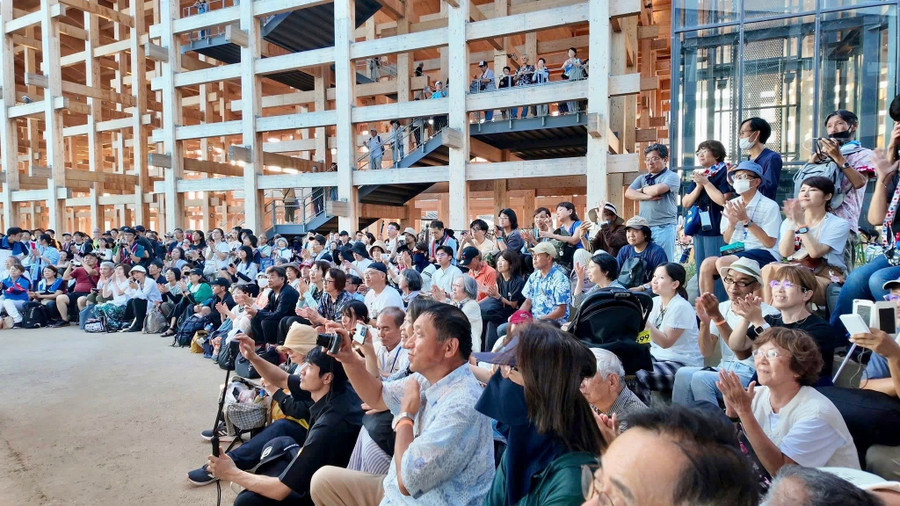
This advantage was clearly evident when the delegation of artisans and athletes from Gia Lai province participated in the Vietnam National Day program at the World Expo (EXPO 2025) held in Japan in September 2025. A large number of Japanese people and international tourists arrived early to witness the spectacular gong and traditional martial arts performances. Many waited to see the performances a second time and to meet the artisans and athletes privately to ask questions and learn more about their culture.
Accompanying the entire delegation, Vice Chairman of the Provincial People's Committee Nguyen Thi Thanh Lich took the opportunity to send Gia Lai Newspaper some images showing how much the delegation's activities at the EXPO were enjoyed, appreciated, and received special affection from the audience.
The Vice Chairman of the Provincial People's Committee further shared: "Gia Lai's performance was very unique and interesting, from the rudimentary musical instruments, self-made from bamboo and rattan tubes, to the impressive martial arts performances with confident, graceful, and courageous demeanor... On the outdoor stage, the gong and martial arts team created a great effect as they simultaneously performed and danced with the tourists." It was this very unique, very "local" cultural color of Gia Lai that completely captivated the international audience.
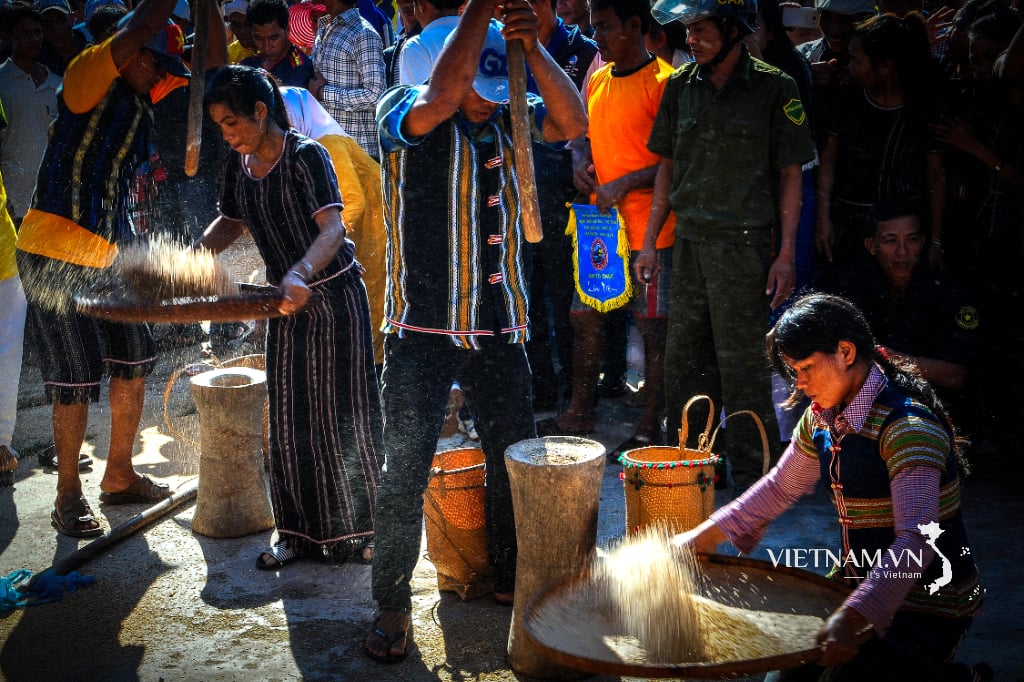
In further discussion with reporters regarding the exploitation of valuable resources in the Central Highlands, Associate Professor Dr. Bui Hoai Son emphasized: "Each locality should tell its own stories. For example, Gia Lai has 'specialties' such as gongs, brocade fabrics, the custom of eating buffalo meat, longhouses... When we tell those stories, they will clearly be incredibly fascinating to foreigners."
In cultural and artistic activities, drawing from their cultural identity, some artists and artisans in the province have had valuable and emotionally enriching encounters with tourists from various countries.
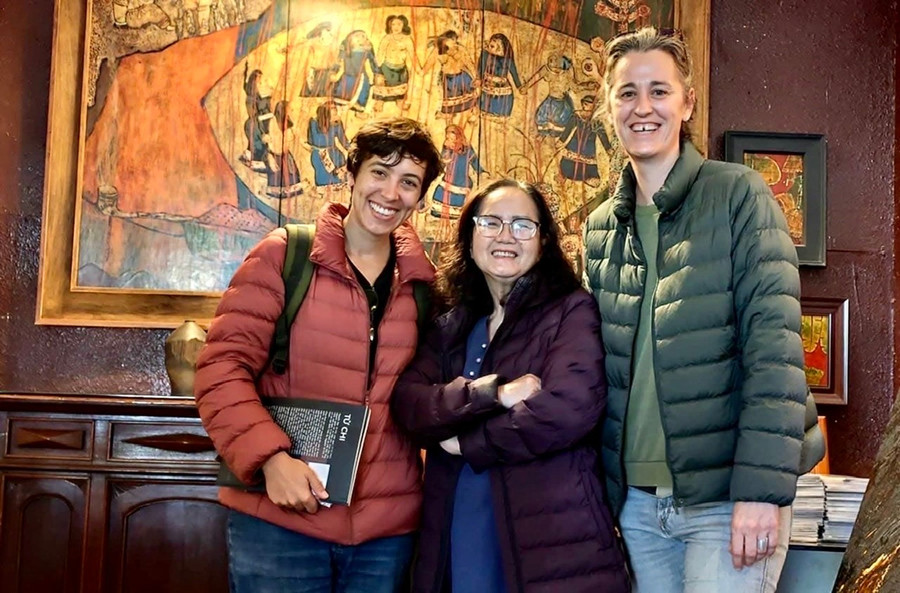
Not long ago, the gallery of female artist Ho Thi Xuan Thu (Pleiku ward) welcomed two groups of visitors from the United States and France. Not only were they amazed by the creativity of the artist, who is over 60 years old, but the international visitors were also captivated by the vivid depictions of Central Highlands culture in the paintings. Just one viewing allowed them to "hear" the stories of the villages in their entirety. Perhaps, they couldn't ask for more than such a connection when planning a trip to the Central Highlands.
Similarly, the musical instrument workshop of Meritorious Artisan Rơ Châm Tih (Ia Hrung commune) is no longer unfamiliar to visitors from Japan, Italy, France, China, and other countries. They come to the village, to the artisan's house, to learn and film documentary footage about the traditional crafting of musical instruments from bamboo by the Jrai people, and how they are played. And none of them leave empty-handed, always buying some additional products as gifts such as wind chimes and small t'rưng instruments. This shows the irresistible charm of Central Highlands culture in its most pristine and natural form.
Looking at the broader picture, this factor is also being exploited quite well in the field of community tourism. For example, travel agencies and local people have learned how to impress international tourists by organizing cultural experience tours in villages such as: sleeping in stilt houses, enjoying local cuisine combined with trekking, learning about the life, activities, and work of the people... From this, the local people have additional livelihoods and more motivation to preserve their heritage.
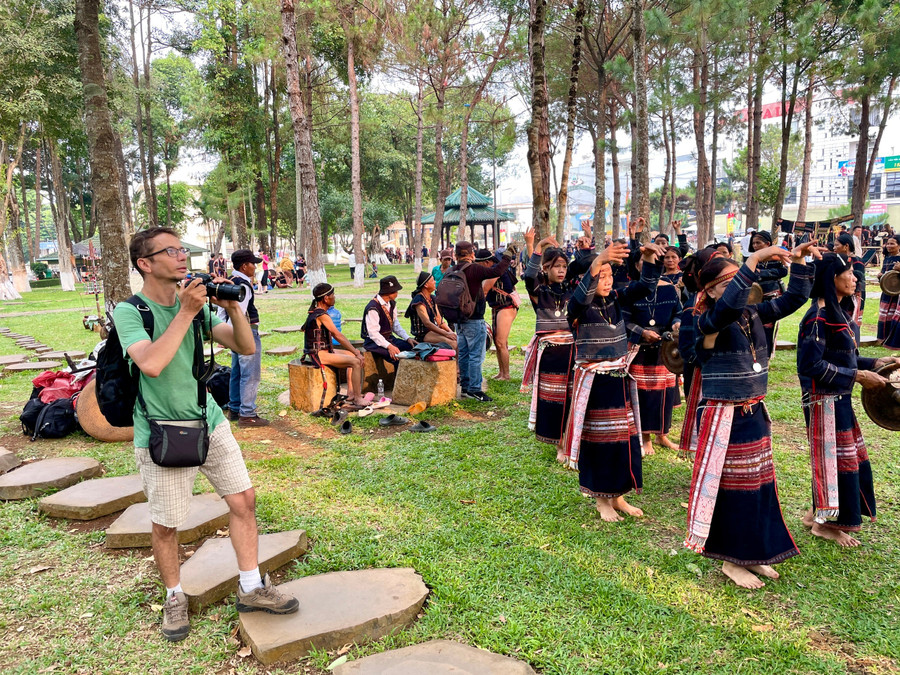
Clearly, Gia Lai possesses a wealth of cultural "resources," and their influence is considerable. Preserving these unique characteristics and local essence is both a responsibility and a goal for sustainable development. As Associate Professor Dr. Bui Hoai Son stated, "culture and art are not only places to preserve national memories but also places to shape the image of the nation in the future."
Source: https://baogialai.com.vn/cang-dia-phuong-cang-the-gioi-post580051.html



















































































Comment (0)