

The General Secretary's directive, along with the proposals from the leaders of the three provinces to upgrade National Highways 27 and 28 with a total cost of approximately 7,700 billion VND and renovate the Phan Thiet - Di Linh - Gia Nghia section (4,900 billion VND), further fuels the joy and expectations of the people regarding the development of the newly established Lam Dong province. Broadly speaking, in a country undergoing a strong transformation thanks to its transportation infrastructure, where expressways are opening up new development opportunities and shortening travel time, the fact that the three provinces of Binh Thuan, Lam Dong, and Dak Nong have yet formed a connecting expressway is a paradox that cannot be allowed to continue.
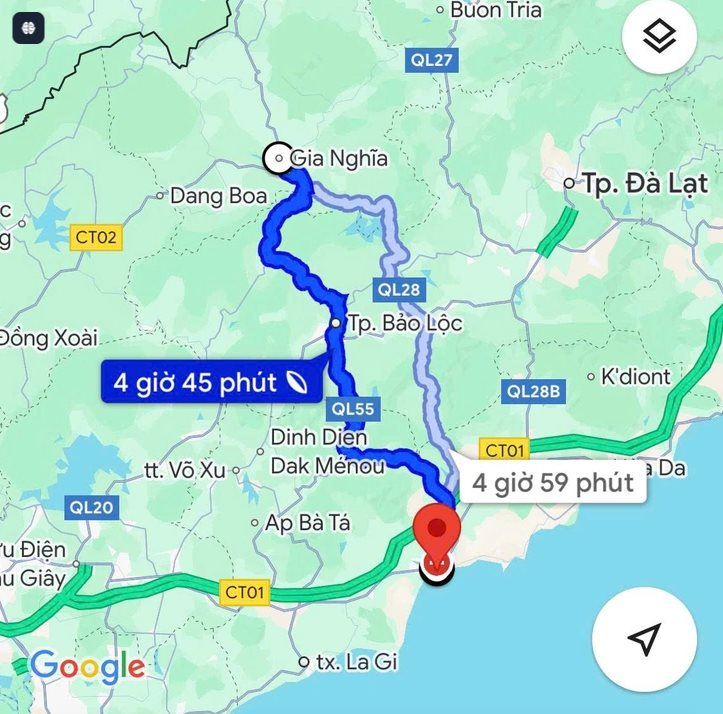
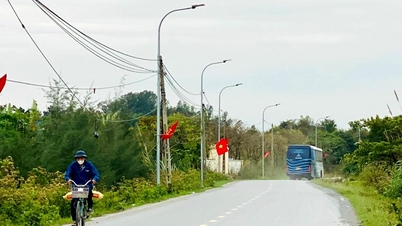
In reality, transportation between Binh Thuan , Lam Dong, and Dak Nong is currently both inadequate and inefficient due to outdated road networks, leading to a seemingly isolated connection between the centers of the three provinces. It's easy to imagine that people still have to spend hours traveling from Phan Thiet to Bao Loc, Gia Nghia, Da Lat, or vice versa to the coast, navigating narrow, winding mountain roads. The consequences are discouraged tourists, hindered goods circulation, and significantly increased logistics costs. Meanwhile, development cannot rely solely on the internal resources of each province but requires regional linkages, and a modern expressway could be the solution. Especially for Lam Dong – where Da Lat is becoming the new administrative center – the expressway would be a vital link, enabling the city of flowers to rise to the status of a true regional hub.
It's undeniable that building a highway will require significant resources, given the unique topography of the three provinces. However, the price to pay for prolonged delays could be even greater: backwardness. More importantly, it represents the long-held aspirations and hopes of the people in the region. A highway, a vital transportation link, is a key to economic integration, but above all, it sends a clear message about sustainable development, improving people's lives, and ensuring no one is left behind.
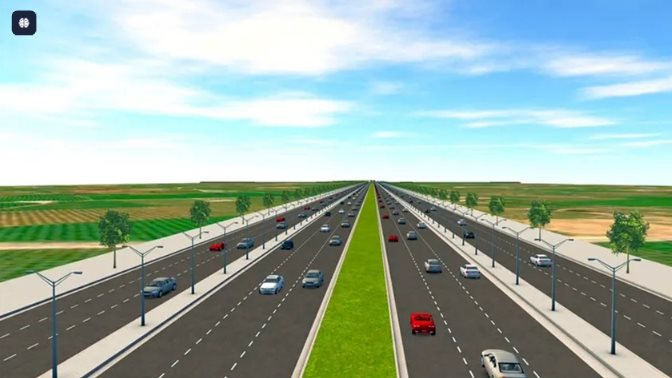
As General Secretary To Lam directed: “The (new) Lam Dong province must urgently rebuild its overall socio-economic development plan based on an open spatial structure, connecting three ecological zones: the Central Highlands, the midland, and the coastal region, creating a unified and synchronized development whole. In particular, it is necessary to form a strategic East-West development axis connecting the Central Highlands and the coastal region. This axis will not only open up development space connecting the Central Highlands to the East Sea with key economic, financial, and science and technology centers in the south, but also serve as a strategic corridor connecting crucial areas of significant importance for national defense, security, and protecting the western border of the Fatherland.”
With the above directive, investing in the expressway connecting the three provinces is not just a transportation solution, but a strategic development decision by the General Secretary for the newly established Lam Dong province. Therefore, it is now crucial to have the support of central and local ministries and agencies, and the entire political system must participate with the utmost determination, urgency, coordination, and responsibility to turn the General Secretary's vision and the people's expectations into reality as soon as possible.
Source: https://baobinhthuan.com.vn/cao-toc-lien-vung-cho-tinh-lam-dong-moi-130914.html






















































Comment (0)