The 'ticket' for Vietnamese goods to secure a place in the international market.
In April 2026, the European Commission (EC) announced the price of Carbon Border Adjustment Mechanism (CBAM) certificates for the first quarter of 2026 at €75.36 per ton of CO₂ equivalent emissions. This is the cost that importers into the EU market must pay for emissions exceeding the prescribed limits.
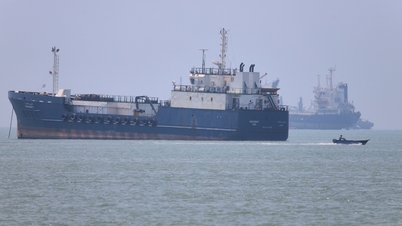
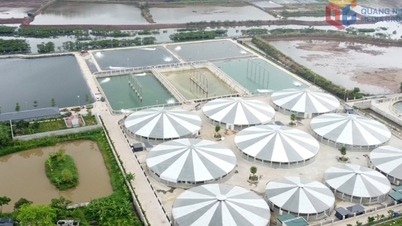
"Greening" is becoming the "ticket" for Vietnamese goods to continue maintaining their position in major export markets. (Illustrative image)
The official implementation of the CBAM mechanism is creating ripple effects across the entire supply chain. European importers are being forced to demand transparent and verifiable emission data from suppliers, and Vietnamese export businesses cannot remain outside this trend of emission reduction.
According to EU regulations, the price of CBAM certificates is directly linked to the European Carbon Market (EU-ETS). From 2026, prices will be published quarterly; from 2027, they will be updated weekly to closely reflect market developments. This shows that carbon is gradually becoming a volatile cost factor similar to raw materials, energy, or logistics. Not only the EU, but many major economies such as the United States, Japan, and South Korea are also pushing to build new technical barriers based on the "carbon footprint" of products instead of just quality or price as before.
For industries directly impacted by CBAMs, such as steel, cement, aluminum, fertilizers, and chemicals, the pressure is even greater. Without verifiable emission data, businesses may face very high default emission levels, leading to significantly increased carbon costs and reduced competitiveness. In this context, "greening" is no longer just a matter of social responsibility or brand image; it is becoming a "ticket" for Vietnamese goods to maintain their position in major export markets.
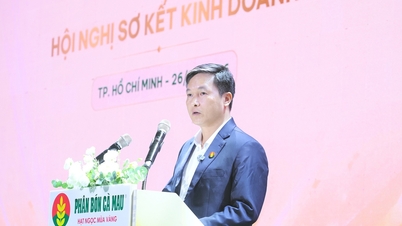
In fact, many Vietnamese businesses have recognized this trend early on and proactively prepared for it years in advance. At the National Forum on Environment and Climate 2026, Mr. Le Hoang Minh, CEO of Vinamilk's Production Division, stated that the company had implemented a green transformation strategy since 2012, a time when the concept was still quite new in Vietnam.
According to Mr. Minh, the transformation process is being implemented synchronously, from changing workers' perceptions and improving energy efficiency to innovating production technology. Businesses are gradually replacing fossil fuels with biomass fuels in boiler operation, investing in energy-saving equipment, and applying automation solutions to reduce greenhouse gas emissions.


Not only the dairy industry, but also the steel sector, one of the largest emitters today, is accelerating its carbon reduction roadmap. Mr. Nguyen Phu Duong, Deputy General Director of Vietnam Steel Corporation (VNSTEEL), said that the company has implemented a comprehensive set of solutions ranging from greenhouse gas inventory and energy efficiency optimization to increased raw material recycling and preparation for participation in the carbon market.
According to Mr. Duong, the allocation of emission quotas and the operation of the carbon market should not be seen as a new pressure, but rather as an impetus for businesses to innovate technologically, enhance competitiveness, and meet the green standards of the international market.
Observations reveal a growing gap between businesses. Those deeply involved in global supply chains have begun building carbon governance systems, inventorying emissions, and investing in clean technologies. Meanwhile, many businesses still view emission reduction as a compliance obligation rather than a business strategy.
However, in a low-carbon economy, emissions are no longer just a financial reporting issue. Businesses with higher emissions face greater compliance costs. A ton of steel exported to the EU now carries not only the cost of ore, electricity, or transportation, but also a "carbon bill." This represents a fundamental shift in global competitive thinking.
When emissions are converted into financial value.
While export markets are increasingly tightening emission requirements, Vietnam is also accelerating the institutional framework to establish a domestic carbon market. On April 1, 2026, the Government issued Decree No. 112/2026/ND-CP regulating the international exchange and transfer of greenhouse gas emission reduction results and carbon credits. This is the first specific legal document implementing Article 6 of the Paris Agreement, creating a legal foundation for domestic and international carbon credit trading.
According to Mr. Nguyen Tuan Quang, Deputy Director of the Climate Change Department, the Ministry of Agriculture and Environment is coordinating with the Ministry of Finance and other relevant agencies to finalize the last steps for the pilot operation of the carbon exchange. To date, the national registration system for greenhouse gas emission quotas and carbon credits has been largely completed. Regulations for monitoring transactions, databases, and technical infrastructure have also been developed, tested, and are ready for operation. If all procedures are completed on schedule, the domestic carbon exchange could begin pilot operation as early as June 2026.
Currently, there are 2,166 facilities nationwide that are required to conduct greenhouse gas inventories, accounting for approximately 70% of total direct emissions. Simultaneously, the government has allocated emission quotas to the 110 largest emitters, representing about 40% of the national total emissions. The formation of a carbon market is expected to create another economic tool to encourage businesses to reduce emissions at a lower cost. More importantly, the revenue from emission reduction activities can be retained within the economy instead of flowing abroad through the purchase of international carbon credits or the payment of carbon taxes on exports.
Speaking with a reporter from the Industry and Trade Newspaper, Associate Professor Dr. Nguyen Dinh Tho, Deputy Director of the Institute of Agricultural and Environmental Policy and Strategy, stated that the potential for emission reduction by Vietnamese businesses remains very large, especially in the industrial, energy, agricultural, and resource utilization sectors.



Mr. Tho noted that the carbon market not only opens up opportunities to access green finance and technological innovation but also creates more options for businesses to achieve their emission reduction goals. Businesses can invest in clean technologies to generate carbon credits, participate in emission quota auctions, or trade carbon credits on the market according to regulations. "Most importantly, when emissions are converted into financial value, businesses will have more incentive to invest in technology, energy transition, and more efficient resource use," Mr. Tho emphasized.
According to industry experts, the carbon market will be a crucial tool for Vietnam to fulfill its commitments to reduce greenhouse gas emissions, while simultaneously enhancing the competitiveness of businesses in the context of increasing green trade barriers. In this context, the carbon market is not only an environmental tool but is becoming a new "economic playing field." Businesses that proactively transition early will have the opportunity to access high-quality markets, attract green capital, and increase their competitive advantage. Conversely, businesses that are slow to adapt risk facing increasingly high compliance costs and even narrowed opportunities to participate in global supply chains.
The carbon game has essentially begun. And in that game, the competitiveness of businesses will increasingly be measured by their ability to reduce emissions, use resources efficiently, and adapt to the emerging green economy on a global scale.
Source: https://congthuong.vn/carbon-dang-tro-thanh-chi-phi-kinh-doanh-moi-461098.html